Jitendra Singh revives Ujh Multipurpose Project after 100 years
Synopsis
Union Minister Dr. Jitendra Singh has announced the revival of the long-stalled Ujh Multipurpose Project in Kathua, J&K, after nearly 100 years. The project will irrigate 90,000 hectares across J&K and Punjab, supply drinking and industrial water, and address cross-border security vulnerabilities along the riverbed.
Key Takeaways
The Ujh Multipurpose Project in Kathua district, J&K has been revived after nearly 100 years under the Modi government.
The project will provide irrigation to nearly 90,000 hectares of agricultural land across Kathua, Samba (J&K) and Pathankot, Gurdaspur (Punjab) .
It will also supply drinking water to Kathua district and ensure industrial water availability .
WAPCOS Ltd , under the Ministry of Jal Shakti , is the implementing agency and is already active on the project site.
Construction will proceed in phases, with land acquisition running simultaneously rather than as a prerequisite.
The project has an explicit security and border-management function — to plug cross-border infiltration routes along the riverbed.
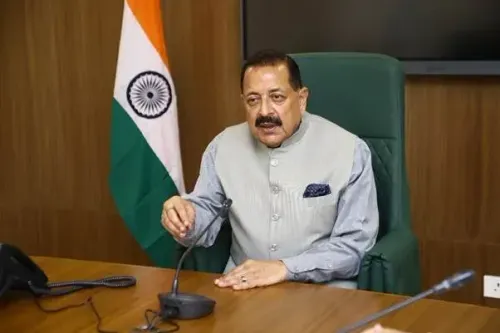
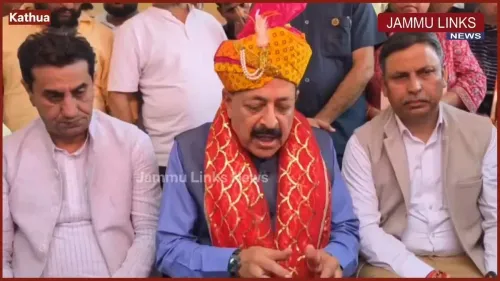
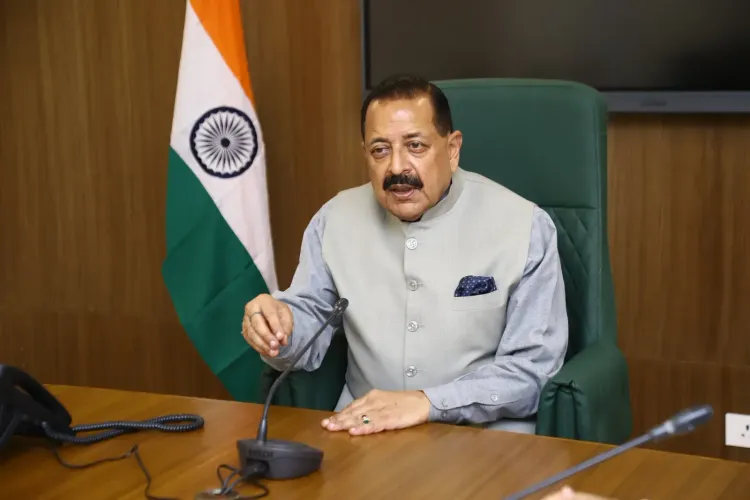
A water project that sat dormant for nearly a century is finally moving — and for Jammu and Kashmir and Punjab, the stakes could not be higher. Union Science and Technology Minister Dr. Jitendra Singh announced on Sunday, 2 August 2026, that the Ujh Multipurpose Project in Kathua district has been formally revived under a structured plan drawn up by the Narendra Modi government, with a detailed roadmap meeting held with officials of WAPCOS Ltd and the Ministry of Jal Shakti.
What the Ujh Project will deliver — and to whom
The numbers tell the story plainly. The project is designed to bring irrigation water to nearly 90,000 hectares of agricultural land, spanning Kathua and Samba districts in J&K, and Pathankot and Gurdaspur districts in Punjab. Beyond the fields, it will supply drinking water to district Kathua and ensure industrial water availability — a package that addresses three distinct needs in a single integrated project.
Dr. Singh described the revival as 'good news' for both regions, noting that the project 'will also create new opportunities for economic development.' For farming communities in these border districts, long dependent on erratic water access, the promise of assured irrigation is significant.
Phased rollout: construction begins without waiting for full land acquisition
The government has chosen a deliberately accelerated implementation model. Work will commence on the project site even as acquisition of remaining land is pursued simultaneously — without holding construction hostage to the completion of the entire land acquisition process. WAPCOS Ltd, the central public sector undertaking under the Ministry of Jal Shakti tasked with planning and execution, is already active on the project site and working through related requirements.
This phased approach is a direct signal that the administration intends to avoid the bureaucratic gridlock that has historically stalled large infrastructure projects in the region. The model trades sequential dependency for parallel progress.
The security dimension: plugging infiltration routes along the riverbed
Perhaps the sharpest edge of this project is one that goes well beyond agriculture. Dr. Singh explicitly flagged that the Ujh project carries 'an important security and border-management dimension to plug vulnerable cross-border infiltration routes along the riverbed.' In border districts where river courses have historically served as cover for cross-border movement, hydrological infrastructure doubles as a strategic asset.
The convergence of irrigation, drinking water, industrial supply, economic development, and active border management in a single project is what elevates the Ujh revival above routine infrastructure announcements. A hundred years of inaction, now answered with a phased, security-conscious plan — the riverbed itself becomes a line of defence.
Point of View
The government frames a water project as a national security asset, widening its political resonance beyond the farming constituencies it serves. The phased, parallel land-acquisition model signals a deliberate attempt to break the implementation logjam that has historically dogged large water projects in the region. Whether WAPCOS can deliver on the ambitious multi-district, multi-sector scope within credible timelines will be the real test of this revival.
NationPress
17 Sept 2026
Frequently Asked Questions
What is the Ujh Multipurpose Project?
The Ujh Multipurpose Project is a water infrastructure scheme in Kathua district, Jammu and Kashmir, designed to provide irrigation, drinking water, and industrial water supply to districts across J&K and Punjab. It has been revived after lying dormant for nearly 100 years.
Which districts will benefit from the Ujh Multipurpose Project?
The project will directly benefit Kathua and Samba districts in Jammu and Kashmir, and Pathankot and Gurdaspur districts in Punjab, covering nearly 90,000 hectares of agricultural land.
Who is implementing the Ujh Multipurpose Project?
WAPCOS Ltd, a central public sector undertaking under the Ministry of Jal Shakti, is the implementing agency. Officials from WAPCOS and the Ministry met with Dr. Jitendra Singh to finalise the project roadmap.
Why does the Ujh Project have a security dimension?
Dr. Jitendra Singh noted that the project will help plug vulnerable cross-border infiltration routes along the riverbed in the border districts of J&K, giving it a strategic border-management role beyond its water supply function.
When will work on the Ujh Multipurpose Project begin?
Work will commence in a phased manner, with construction starting even as land acquisition for remaining parcels is pursued simultaneously, so progress is not delayed by the full land acquisition process.