MP CMO: Modern STP for Ujjain under Namami Gange to clean Kshipra
Synopsis
The Madhya Pradesh Chief Minister's Office announced on 4 June 2026 that a modern sewage treatment plant will be set up in Ujjain under the Namami Gange Yojana to curb pollution in the Kshipra river, aligning central sanitation funding with the state's pilgrimage-city conservation push ahead of the 2028 Simhastha.
Key Takeaways
The Madhya Pradesh CMO announced a modern STP for Ujjain under Namami Gange Yojana .
Goal: make the Kshipra river pollution-free and accelerate cleanliness efforts.
Mohan Yadav and the Union Jal Shakti drinking water and sanitation handle.
Project extends the 2014-15 Namami Gange model from the Ganga to a sacred tributary.
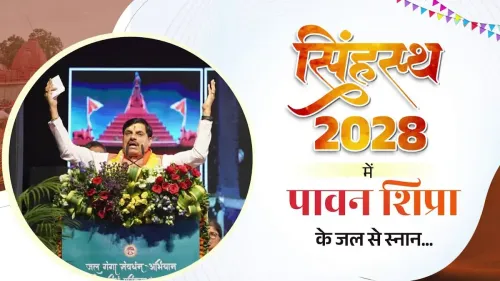
Comes ahead of the next Simhastha Kumbh Mela in Ujjain in 2028 .
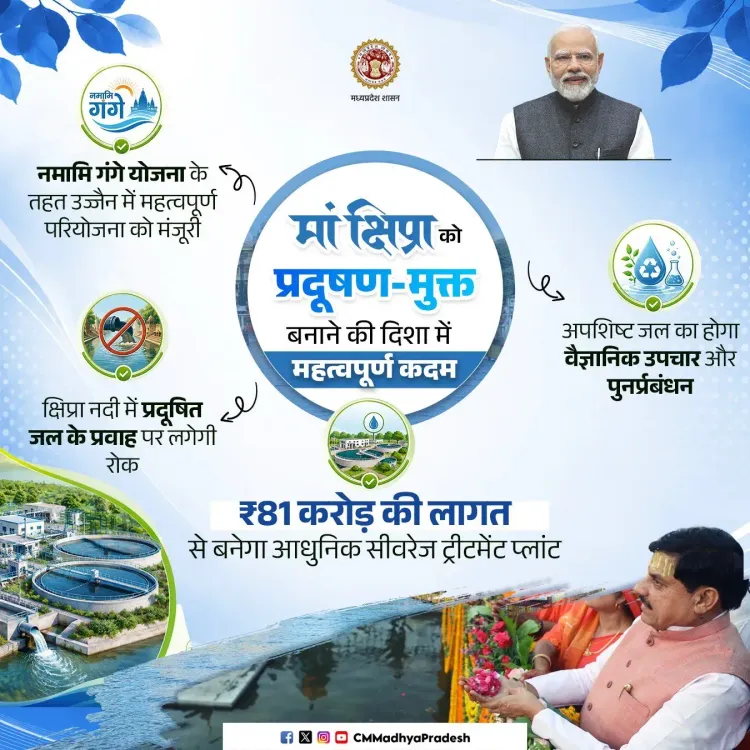
The Chief Minister's Office of Madhya Pradesh on 4 June 2026 announced that a modern sewage treatment plant will be set up in Ujjain under the Centre's Namami Gange Yojana to curb pollution in the Kshipra river. The post, tagging Chief Minister Dr. Mohan Yadav and the Union Jal Shakti Ministry's drinking water and sanitation handle, framed the project as advancing the state's pledge to conserve the sacred river.
In the original Hindi post, the CMO declared that 'Maa Kshipra ke sanrakshan aur swachhata ka sankalp ho raha sakaar' (the resolve for the protection and cleanliness of Mother Kshipra is being realised). It added that the establishment of an 'aadhunik sewerage treatment plant' (modern sewerage treatment plant) in Ujjain under Namami Gange will give 'new momentum' to efforts to make the Kshipra pollution-free.
Context
The Kshipra, a tributary of the Chambal, runs through Ujjain and anchors the city's religious geography, from the Mahakaleshwar Jyotirlinga to the ghats that host the once-in-twelve-years Simhastha Kumbh Mela. The river has long been strained by untreated sewage discharge from the urban core and by heavy ritual bathing loads during festivals.
State-led cleaning drives and ghat redevelopment work were intensified ahead of the 2016 Simhastha, but maintaining water quality between mela cycles has remained a recurring administrative challenge. The next Simhastha is due in Ujjain in 2028, sharpening the timeline pressure on new sanitation infrastructure.
Policy backdrop
The Namami Gange Programme, launched by the Union government in 2014-15, was originally designed to rejuvenate the Ganga through sewage treatment plants, riverfront development and industrial effluent control. Over successive phases, the scheme has expanded to fund pollution-abatement works on tributaries and culturally significant rivers beyond the Ganga main stem.
Extending a Namami Gange-funded STP to the Kshipra fits that wider mandate, channelling central capital expenditure into a state-run urban sanitation asset. The implementation is typically routed through the National Mission for Clean Ganga in coordination with the state urban development department and the local municipal body.
Stakeholders and impact
The most immediate beneficiaries are the lakhs of Ujjain pilgrims who bathe at the Ram Ghat and adjoining stretches each year, along with residents of riverside wards whose groundwater and ambient sanitation are tied to river health. The Ujjain Municipal Corporation will be central to land identification, trunk-sewer integration and downstream operations and maintenance.
For the state government, the project also dovetails with a broader push to upgrade Ujjain's civic infrastructure around the expanded Shri Mahakal Lok corridor, which has driven a sharp rise in religious tourism since its first phase opened in October 2022. Cleaner river flows are pitched as both an ecological and a tourism-economy gain.
What's next
Operational details, including plant capacity in MLD, project cost, the chosen site and the commissioning schedule, will emerge through the tendering process under the Jal Shakti Ministry and the state public health engineering department. Subsequent water quality monitoring on the Kshipra, including BOD and faecal coliform readings at key ghats, will be the practical test of whether the new STP shifts the river's pollution trajectory before the 2028 Simhastha draws crowds back to its banks.
Point of View
Not just the Ganga main stem. For the Madhya Pradesh BJP government, anchoring the Kshipra clean-up to a central scheme blends fiscal leverage with the politically resonant language of river worship. The real test will be operational: tendering speed, capacity sizing and post-commissioning water quality on the ghats. With Simhastha 2028 on the horizon, Ujjain is becoming a template for how temple-town infrastructure cycles are sequenced around mela calendars.
NationPress
23 Sept 2026
Frequently Asked Questions
What did the Madhya Pradesh CMO announce about the Kshipra river?
The Madhya Pradesh Chief Minister's Office announced that a modern sewage treatment plant will be set up in Ujjain under the Namami Gange Yojana to help make the Kshipra river pollution-free. The post described it as giving new momentum to ongoing river conservation efforts.
What is the Namami Gange Yojana and how does it cover the Kshipra?
Namami Gange is a Union government programme launched in 2014-15 to rejuvenate the Ganga and its tributaries through sewage treatment plants, ghat development and pollution control. Its mandate extends to culturally significant tributaries, which allows funding of STPs on rivers like the Kshipra in Ujjain.
Why is cleaning the Kshipra river important for Ujjain?
The Kshipra is central to Ujjain's identity as a Jyotirlinga city and host of the Simhastha Kumbh Mela, with lakhs of pilgrims bathing at its ghats. Years of untreated sewage and heavy festival use have degraded its water quality, making sanitation infrastructure critical for both religious and public health reasons.
When is the next Simhastha Kumbh Mela in Ujjain?
The next Simhastha Kumbh Mela in Ujjain is scheduled for 2028. Infrastructure projects such as the new sewage treatment plant are being lined up so that river conditions improve well before the mela draws large pilgrim crowds.
Who is Dr. Mohan Yadav?
Dr. Mohan Yadav is the Chief Minister of Madhya Pradesh, having taken charge in December 2023 as a BJP leader. He oversees state infrastructure, urban development and cultural site projects, including initiatives around Ujjain and the Mahakaleshwar temple corridor.