CM Office Uttarakhand Greets Citizens on Harela Festival
Synopsis
The Chief Minister's Office of Uttarakhand extended official greetings on Harela, the traditional Kumaoni folk festival that marks the onset of the monsoon. Rooted in agrarian seed-sowing rituals and ecological observance, Harela has received consistent state recognition since Uttarakhand's formation in 2000.
Key Takeaways
The Chief Minister's Office of Uttarakhand posted official greetings for Harela on 16 July 2026 .
Harela is a traditional Kumaoni folk festival marking the onset of the monsoon, observed through seed-sowing rituals and sapling planting.
The state is officially referred to as Devbhoomi — 'Land of the Gods' — in government messaging, underscoring its cultural identity.
Uttarakhand has issued official greetings and organised public events for Harela every year since statehood in 2000 .
The festival is positioned by state authorities as an eco-friendly agrarian observance aligned with monsoon cycles and environmental consciousness.
Subsequent festivals such as Ghee Sankranti and Bhitauli are expected to receive similar official recognition in the coming months.
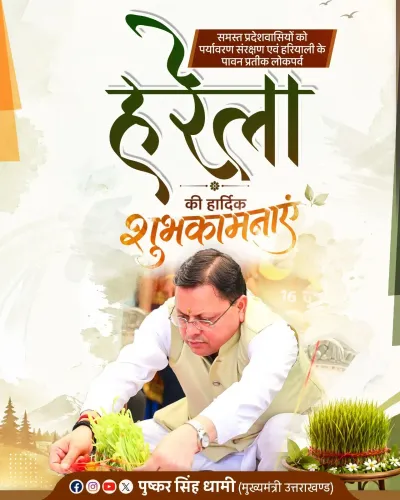
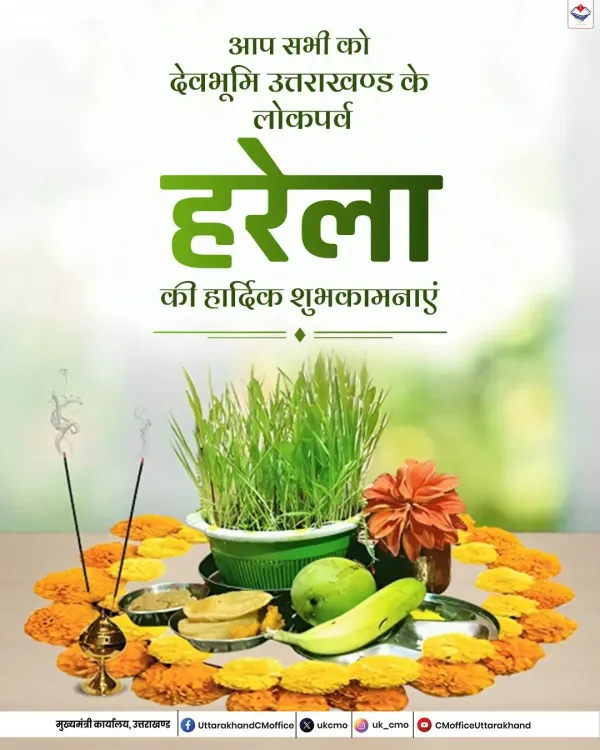
The Chief Minister's Office of Uttarakhand extended warm greetings to citizens on Harela, the beloved folk festival of Devbhoomi Uttarakhand, on Thursday, 16 July 2026. The official post, shared on X, conveyed heartfelt wishes for the agrarian celebration that marks the onset of the monsoon season across the Kumaoni region.
Context
The Chief Minister's Office posted in Hindi: 'Aap sabhi ko Devbhoomi Uttarakhand ke lokparv Harela ki hardik shubhkamnaen' ('Heartfelt greetings to all of you on Harela, the folk festival of Devbhoomi Uttarakhand'). The message underscores the state's enduring identification with its Himalayan cultural heritage, using the evocative term Devbhoomi — meaning 'Land of the Gods' — that has become synonymous with Uttarakhand's official identity since statehood.
Policy Backdrop
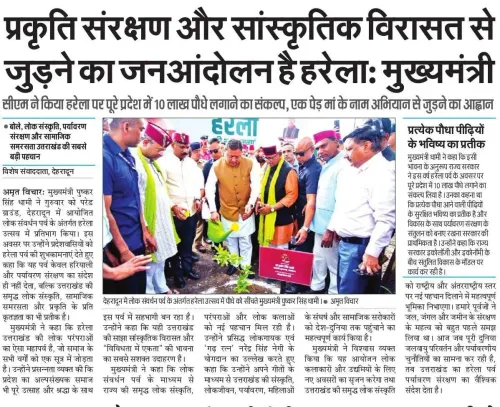
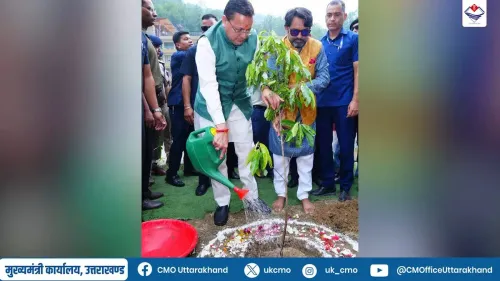
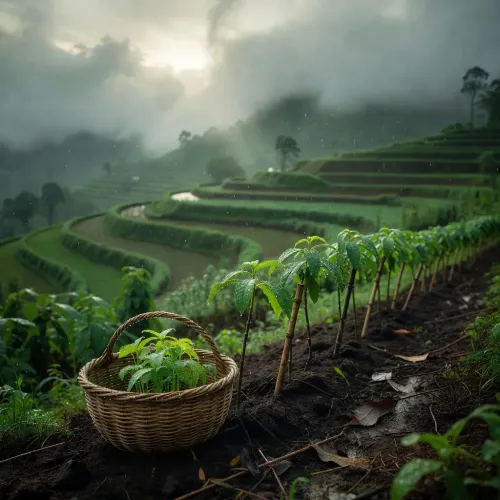
Harela is a traditional Kumaoni folk festival rooted in agrarian life, observed by sowing seeds days in advance and celebrating their germination as a symbol of prosperity and ecological renewal. The festival aligns with the arrival of the monsoon and carries deep ritual significance — households offer prayers to deities and communities plant saplings, making it one of the most eco-conscious folk observances in the Himalayan calendar.
Since Uttarakhand was carved out as a separate state in 2000, successive governments have consistently used official channels to mark Harela with public greetings and state-organised events. This practice has served the dual purpose of preserving regional traditions and reinforcing a distinct cultural identity for the relatively young state.
Stakeholders and Impact
Kumaoni communities across the hills and their diaspora spread through urban India and abroad look to official recognition of Harela as an affirmation of their cultural roots. For rural households in the Kumaon division, the festival is a living agrarian ritual tied to seed cycles, soil health, and the hope carried in each monsoon.
State governments across India have increasingly used official social-media accounts to amplify local festivals, and Uttarakhand's consistent messaging around Harela reflects a broader pattern of linking folk tradition with contemporary governance communication. The festival is frequently positioned by state authorities as an eco-friendly observance aligned with environmental consciousness and sustainable agriculture.
What's Next
With Harela marking the beginning of the monsoon festive calendar in Uttarakhand, state authorities are expected to similarly acknowledge subsequent regional observances such as Ghee Sankranti and Bhitauli in the months ahead. Official recognition of these festivals is likely to continue as part of the state's broader cultural promotion agenda, reinforcing Devbhoomi Uttarakhand's identity as a custodian of Himalayan folk heritage.
Point of View
Which has been a cornerstone of the state's public narrative since its formation in 2000. In a state where hill communities have historically felt culturally marginalised, official amplification of local festivals serves as a soft-power tool that builds grassroots goodwill. The consistent use of the term 'Devbhoomi' in state messaging also reflects a deliberate branding exercise that ties governance to spiritual and ecological heritage. Watching how the state scales this messaging — whether it remains social-media greetings or translates into funded cultural programmes — will indicate the depth of institutional commitment.
NationPress
15 Oct 2026
Frequently Asked Questions
What is Harela festival in Uttarakhand?
Harela is a traditional Kumaoni folk festival in Uttarakhand that marks the onset of the monsoon season. It is observed by sowing seeds days in advance, celebrating their germination as a symbol of prosperity, offering prayers to deities, and planting saplings in a community setting.
When is Harela celebrated in 2026?
The Chief Minister's Office of Uttarakhand extended official greetings for Harela on 16 July 2026 , which corresponds with the festival's observance marking the onset of the monsoon in the Kumaon region.
Why is Uttarakhand called Devbhoomi?
Uttarakhand is called Devbhoomi , meaning 'Land of the Gods', because of its dense concentration of Hindu pilgrimage sites, temples, and sacred rivers in the Himalayas. The state government officially uses this term in its branding and public communications.
How does the Uttarakhand government celebrate Harela?
Since statehood in 2000 , successive Uttarakhand governments have issued official greetings and organised public events for Harela each year. The festival is promoted as an eco-friendly agrarian observance aligned with monsoon cycles and environmental awareness.
What other festivals does Uttarakhand officially celebrate after Harela?
After Harela, the Uttarakhand government is expected to similarly recognise festivals such as Ghee Sankranti and Bhitauli , which are part of the state's broader Kumaoni and Garhwali folk calendar.