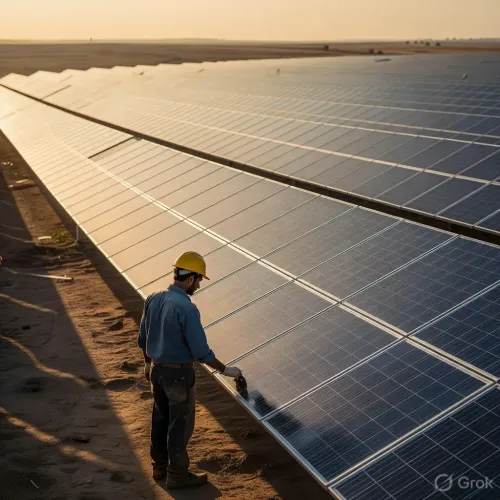
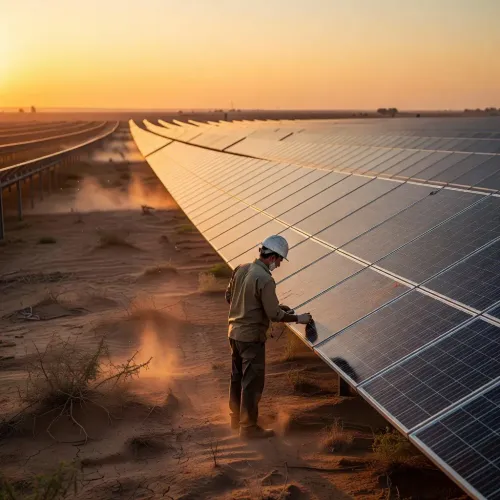
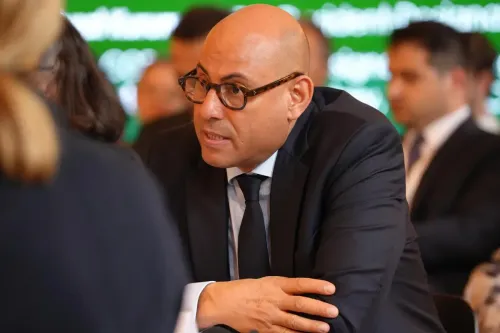
Giriraj Singh shares UN climate chief calling India solar superpower
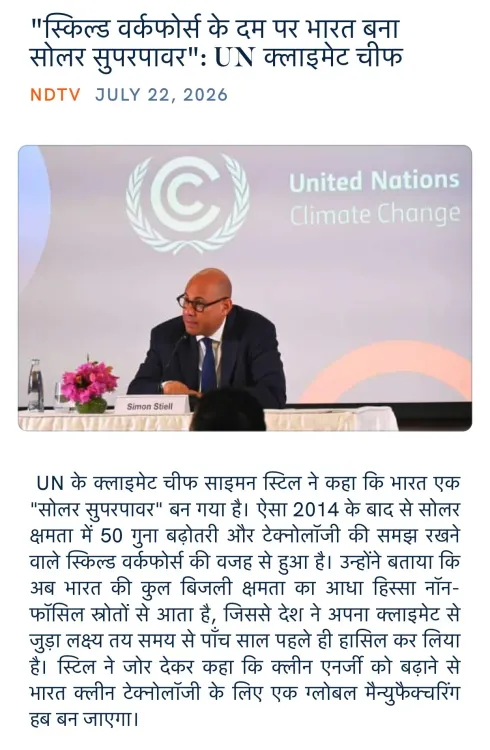
Synopsis
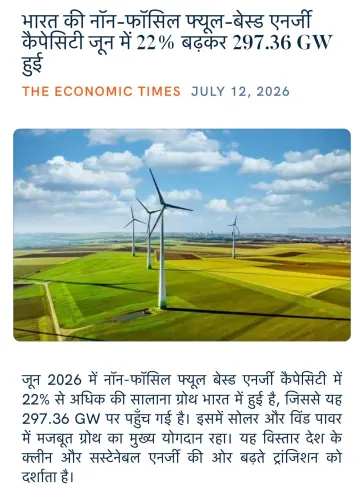
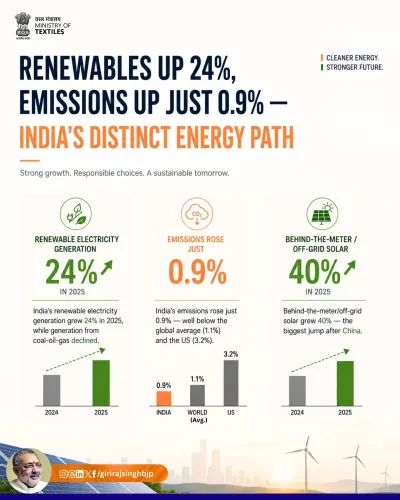
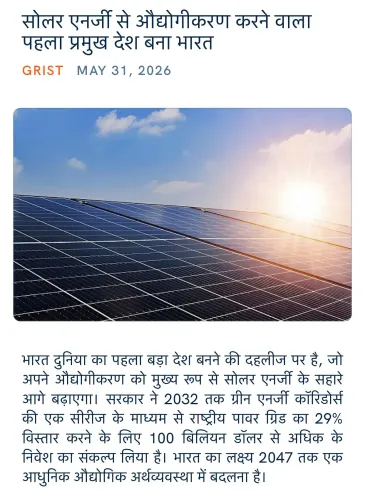
UN Climate Chief Simon Stiell has described India as a 'solar superpower' powered by its skilled workforce. Union Textiles Minister Giriraj Singh amplified the remark on 22 July 2026, underscoring India's rapid solar expansion from 2.6 GW in 2014 to over 70 GW and its 500 GW clean-energy target by 2030.
Key Takeaways
Union Textiles Minister Giriraj Singh shared UNFCCC Executive Secretary Simon Stiell's statement on 22 July 2026 calling India a 'solar superpower.' India's solar installed capacity grew from roughly 2.6 GW in 2014 to over 70 GW by the mid-2020s.
India has pledged 500 GW of non-fossil fuel capacity by 2030 , updated at COP26 in 2021 .
The International Solar Alliance , co-launched by India and France at COP21 in 2015 , has been a vehicle for multilateral solar investment.
Skill development programmes have run alongside capacity expansion, forming the basis of Stiell's 'skilled workforce' characterisation.
Future focus areas include UNFCCC climate finance talks and domestic PLI scheme extensions for solar modules.
Union Textiles Minister Giriraj Singh on Wednesday, 22 July 2026 shared a statement attributed to UN Climate Chief Simon Stiell describing India as a 'solar superpower' backed by its skilled workforce, amplifying the remark via his official X account through the NaMo App.
Context
The post, shared in a mix of Hindi and English, quotes Stiell as saying: 'Skilled workforce ke dam par Bharat bana solar superpower' ('India has become a solar superpower on the strength of its skilled workforce'). Simon Stiell has served as Executive Secretary of the UNFCCC since August 2022, overseeing the implementation of the Paris Agreement and coordinating global climate negotiations. His characterisation of India as a solar superpower carries significant diplomatic weight at a time when the country is asserting itself as a leader in the global clean-energy transition.
Policy Backdrop
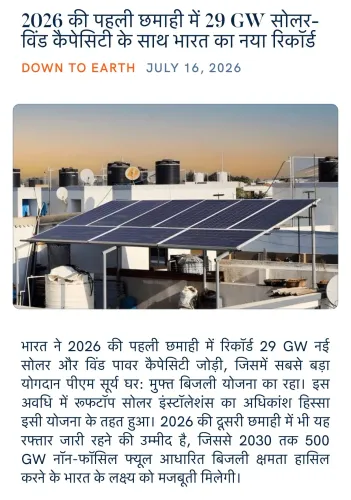
India's solar journey has been steep and deliberate. Installed solar capacity grew from roughly 2.6 GW in 2014 to over 70 GW by the mid-2020s, driven by utility-scale parks, rooftop solar programmes, and manufacturing incentives. The country pledged 175 GW of renewable energy capacity by 2022 at the 2015 Paris COP21 summit, and later updated its Nationally Determined Contribution at COP26 in 2021 to achieve 500 GW of non-fossil fuel capacity by 2030. The International Solar Alliance, co-launched by India and France at COP21 in 2015, has been central to mobilising solar investment across member nations and cementing India's multilateral climate credentials.
Skill development has run in parallel with capacity expansion. Central and state programmes have targeted labour demand in green sectors, integrating workforce training into the broader renewable energy push. This alignment of manufacturing incentives, large-scale deployment, and human capital development appears to be the basis for Stiell's characterisation.
Stakeholders and Impact
The remark is significant for several constituencies. Solar manufacturers and component makers stand to benefit from the international validation, which can attract foreign investment and ease export pathways. Renewable energy workers — a growing segment of India's labour market — gain visibility as a strategic asset rather than an incidental byproduct of the energy transition. For the BJP-led government, the UN climate chief's endorsement provides a strong multilateral imprimatur for domestic energy policy ahead of future climate negotiations. Prime Minister Narendra Modi has made renewable energy a signature of his administration, and Giriraj Singh's decision to amplify the statement underscores the political value the ruling party attaches to such international recognition.
What's Next
Attention will now turn to upcoming UNFCCC COP deliberations on climate finance and technology transfer for solar supply chains, where India is expected to press for greater support for developing-country manufacturers. Domestically, parliamentary debate on extensions to the Production Linked Incentive (PLI) scheme for solar modules will be a key indicator of whether the government intends to sustain the manufacturing momentum that has earned India this global recognition. If India maintains its current trajectory, it is well positioned to deepen its role as both a major solar market and a supplier to the Global South.
Point of View
Say, the Environment or Power Minister — signals how broadly the BJP is distributing the political dividend from India's renewable energy success. Stiell's characterisation feeds directly into India's established multilateral narrative: that it is both a responsible emitter and an emerging clean-energy exporter. The timing, ahead of expected UNFCCC finance negotiations, is unlikely to be coincidental; such endorsements strengthen India's hand when pressing developed nations for technology transfer and concessional capital. The skilled-workforce framing also ties the solar story to domestic employment, giving the government a dual talking point on climate and jobs.
NationPress
21 Oct 2026
Frequently Asked Questions
What did the UN climate chief say about India's solar energy?
UNFCCC Executive Secretary Simon Stiell described India as a 'solar superpower' backed by its skilled workforce, a statement shared by Union Textiles Minister Giriraj Singh on 22 July 2026.
How much solar capacity has India installed?
India's solar installed capacity grew from roughly 2.6 GW in 2014 to over 70 GW by the mid-2020s, driven by utility-scale parks, rooftop solar schemes, and manufacturing incentives.
What is India's renewable energy target for 2030?
India updated its Nationally Determined Contribution at COP26 in 2021 to achieve 500 GW of non-fossil fuel energy capacity by 2030.
What is the International Solar Alliance?
The International Solar Alliance is a treaty-based intergovernmental body co-launched by India and France at COP21 in 2015 to mobilise solar investment and deployment among member countries.
Why did Giriraj Singh share this statement?
Giriraj Singh, a senior BJP leader and Union Textiles Minister, shared the UN climate chief's remark via the NaMo App, amplifying international validation of India's solar and skilled-workforce achievements.