Uruguay FM hails Modi's BRICS leadership: 'Look at results India achieved'
Synopsis
Uruguay's Foreign Minister didn't just compliment India — he made the case that the New Delhi Declaration's consensus-based outcome, achieved on the very first day despite warring BRICS members at the table, is proof of Modi's place as a genuine reference point for the Global South. That, combined with India's first-ever Embassy in Uruguay and a three-track partnership roadmap, signals this is more than flattery.
Key Takeaways
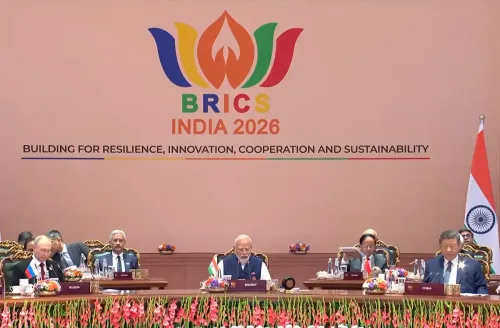
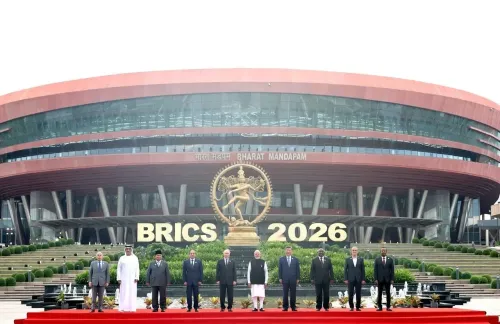
Uruguay's Foreign Minister Mario Lubetkin called India's hosting of the BRICS Summit an 'incredible success,' crediting PM Modi 's chairmanship for the consensus-based New Delhi Declaration .
The declaration was adopted on the first day of the summit despite sharply divergent geopolitical positions among member nations, including parties to ongoing global conflicts.
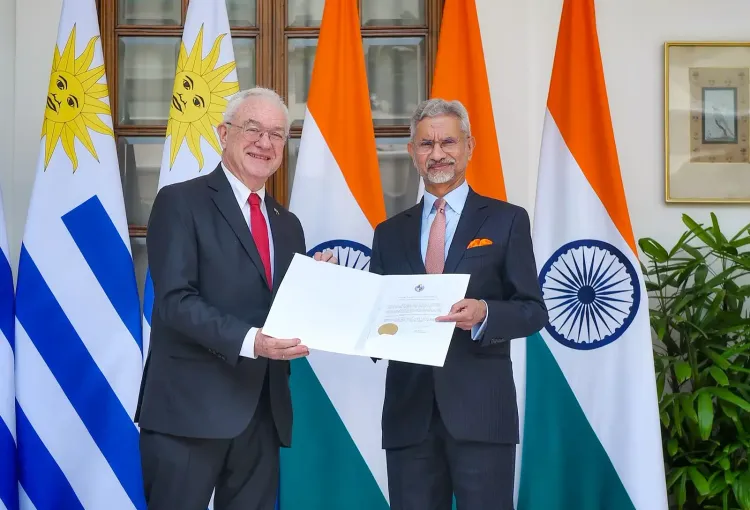
Lubetkin met Commerce Minister Piyush Goyal and EAM S.
Jaishankar in New Delhi to deepen bilateral ties and launch the next phase of Mercosur-India trade negotiations .
A 'roadmap for India-Uruguay relations' was created during the visit, covering economic, political, cultural, and sports cooperation.
India has opened its first-ever Embassy in Uruguay ; Jaishankar is expected to visit Montevideo to inaugurate it in the coming months.
Uruguay's President Yamandu Orsi is scheduled to visit India in October 2027 ; Lubetkin and Jaishankar are set to meet again in New York later this month.
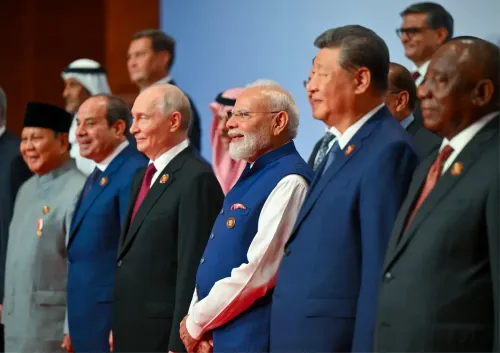
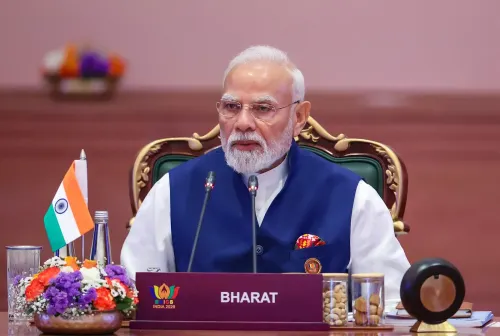
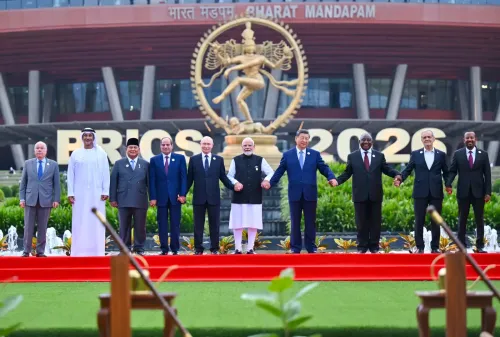
Uruguay's Foreign Minister Mario Lubetkin has praised Prime Minister Narendra Modi's stewardship of the BRICS Summit in New Delhi, calling the consensus-driven New Delhi Declaration an 'incredible success' that demonstrated India's emergence as a key voice in the Global South. Lubetkin's remarks, made in an interview on 15 September 2026, underline the diplomatic weight India carried as BRICS chair — shepherding nations with sharply divergent geopolitical positions toward a unified final declaration on the very first day of the summit.
The BRICS Outcome: Why It Was Seen as a Diplomatic Feat
'I think the outcome of the summit was an incredible success. There were many questions and very few answers during the process of preparing for the summit about what might happen. But, we ultimately achieved a very serious, concrete and consensus-based final declaration, which addressed and reached agreement on many important and highly sensitive issues,' Lubetkin said.
He noted that several BRICS nations are directly or indirectly party to ongoing global conflicts, making the achievement of a consensus document particularly remarkable. 'There were different protagonists involved in some of the ongoing wars and conflicts, but I think the Prime Minister and the Government of India, as the chair of the meeting, were able to facilitate the process and achieve consensus,' he added. 'That shows India as one of the key leaders at this moment, especially in the Global South. We do not need to simply use words, we need to look at the results and understand what India achieved.'
Modi's Personal Diplomacy on Display
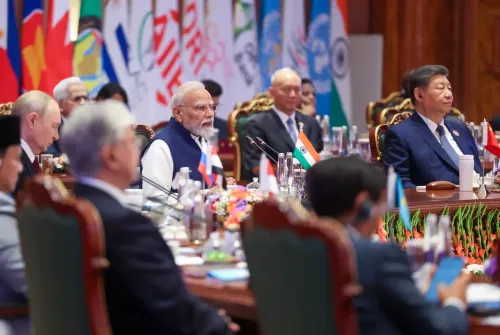
Lubetkin singled out PM Modi's bilateral and plenary interactions as a signal of India's elevated global stature. 'The success of the summit was an Indian success, and it was also PM Modi's success. You could see during Saturday and Sunday how Prime Minister Modi interacted with some of the most important leaders in the world, and how those leaders listened to him and treated him as a real point of reference,' he said.
The Uruguayan minister recalled that when Modi announced consensus had been reached at the close of the summit, it 'speaks louder than thousands of words about what Prime Minister Modi means at this moment.' This came after a period of uncertainty during the summit's preparatory phase, when the prospects of an agreed declaration were reportedly unclear.
India-Uruguay Bilateral Ties: A Roadmap Taking Shape
Beyond BRICS, Lubetkin said a central purpose of his New Delhi visit was to deepen the bilateral relationship between India and Uruguay, as well as to advance ties between India and Mercosur. During his four-day visit, he held key meetings with Commerce and Industry Minister Piyush Goyal and External Affairs Minister S. Jaishankar.
He recalled a formative moment at the 2025 BRICS Summit in Rio de Janeiro, where Modi and Uruguayan President Yamandu Orsi met for the first time in years. 'I was very impressed by Prime Minister Modi because he came to that meeting with a piece of paper beside him on which he had outlined his vision for the relationship over the next 10 to 15 years. It was a long-term mission,' Lubetkin said.
In New Delhi, Lubetkin and Jaishankar created a 'roadmap for India-Uruguay relations for the coming year,' translating broad strategic intent into actionable steps across economic, political, and cultural cooperation. Lubetkin also confirmed an agreement with Minister Goyal to 'launch the next step in negotiations between Mercosur and India' — a process he described as strategically significant for all four Mercosur member states: Uruguay, Argentina, Brazil, and Paraguay.
Three Tracks and the CELAC Dimension
Lubetkin outlined three parallel 'tracks' for the India-Uruguay partnership: bilateral cooperation spanning the economy, culture, audiovisual (including Bollywood), and sports; Mercosur-India trade negotiations; and engagement through CELAC, the 33-nation regional body that Uruguay currently chairs alongside its Mercosur chairmanship. 'This provides another important avenue to develop relations between India and CELAC,' he said.
Later in September 2026, Lubetkin and Jaishankar are scheduled to meet again in New York, where a broader meeting of Latin American and Caribbean foreign ministers through CELAC is also likely to take place, with the goal of deepening regional engagement with India. The visit by President Orsi to India is planned for October 2027.
India's First Embassy in Uruguay and What Comes Next
A concrete marker of the upgraded relationship is India's decision to open its first-ever Embassy in Uruguay. Lubetkin expressed hope that Jaishankar would travel to Montevideo in the coming months to formally inaugurate it. 'In Uruguay, this is a time for India,' Lubetkin said. 'India is much stronger today than we could have imagined 20 or even 10 years ago. This creates a new scenario… No country can work alone. Now is the moment to reach concrete agreements and move forward in a world marked by fragmentation, divisions and conflicts.'
The planned ministerial meetings in New York and the October 2027 presidential visit to India are now the key milestones on the India-Uruguay diplomatic calendar.
Point of View
Rather than just a chairmanship formality, adds third-party credibility to what could otherwise read as diplomatic niceties. The more substantive story, however, is the Mercosur-India trade track: India has long struggled to close trade deals with Latin American blocs, and a Uruguayan push to 'launch the next step' under its dual Mercosur-CELAC chairmanship opens a rare window. Whether New Delhi moves decisively — or lets another opening drift — will test whether this summit energy translates into durable economic architecture.
NationPress
15 Sept 2026
Frequently Asked Questions
What did Uruguay's Foreign Minister say about India's BRICS leadership?
Uruguay's Foreign Minister Mario Lubetkin described India's hosting of the BRICS Summit as an 'incredible success,' saying PM Modi facilitated consensus among nations with sharply divergent geopolitical positions, including parties to ongoing global conflicts. He said India's achievement of the New Delhi Declaration on the first day of the summit demonstrated India's standing as a key leader in the Global South.
What is the New Delhi Declaration from the BRICS Summit?
The New Delhi Declaration is the consensus-based final document adopted by BRICS nations at the summit held in New Delhi under India's chairmanship. It was reached on the first day of the summit and addressed several sensitive geopolitical issues, despite wide divergences among member states.
What bilateral agreements did Uruguay and India reach during the visit?
During Foreign Minister Lubetkin's four-day visit to New Delhi, India and Uruguay created a roadmap for bilateral relations covering economic, political, cultural, and sports cooperation. Lubetkin also agreed with Commerce Minister Piyush Goyal to launch the next round of Mercosur-India trade negotiations, a process Lubetkin described as strategically significant for all four Mercosur member states.
What is India's new Embassy in Uruguay, and why does it matter?
India has opened its first-ever diplomatic Embassy in Uruguay, marking a significant upgrade in bilateral ties. External Affairs Minister S. Jaishankar is expected to visit Montevideo in the coming months to formally inaugurate it, which would further cement the renewed strategic focus between the two countries.
What are the next steps in India-Uruguay and India-CELAC relations?
Lubetkin and Jaishankar are scheduled to meet in New York later in September 2026, with a broader CELAC-India foreign ministers' meeting also likely. Uruguayan President Yamandu Orsi is planned to visit India in October 2027, with both sides working to translate the leaders' strategic vision into concrete agreements before that visit.