CM Uttarakhand: 7.33 Lakh Beneficiaries Get Nutrition via Anganwadis
Synopsis
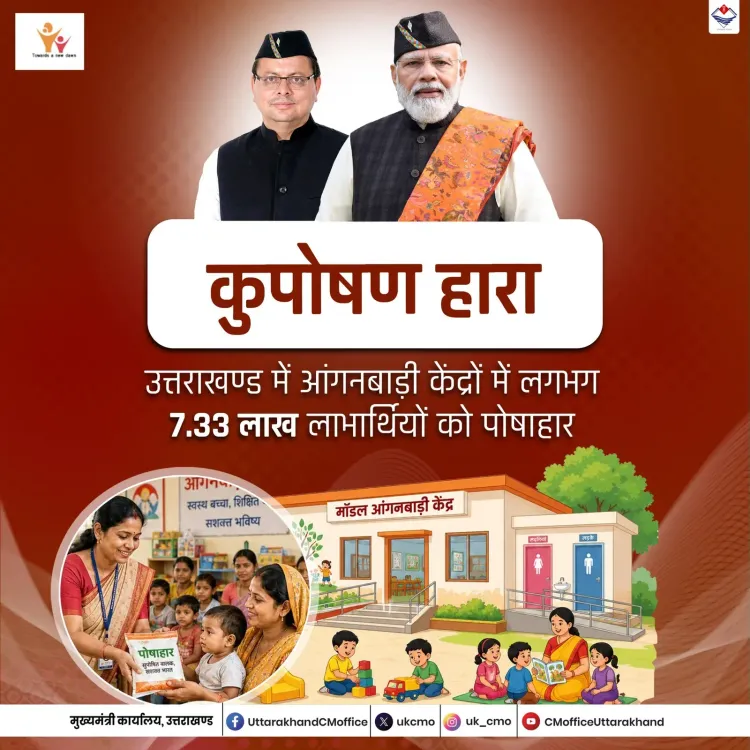
The Chief Minister's Office of Uttarakhand announced on 10 June 2026 that approximately 7.33 lakh beneficiaries are receiving supplementary nutrition at Anganwadi centres statewide, highlighting the reach of ICDS and Garib Kalyan welfare delivery in the Himalayan state.
Key Takeaways
The Chief Minister's Office of Uttarakhand announced on 10 June 2026 that approximately 7.33 lakh beneficiaries are receiving nutrition support at Anganwadi centres.
Anganwadi centres under the Integrated Child Development Services (ICDS) scheme — launched in 1975 — are the primary delivery mechanism for supplementary nutrition.
Key beneficiaries include children under six years and pregnant and lactating women , the groups most vulnerable to malnutrition.
The update is linked to the #12YearsofGaribKalyan campaign, situating it within the central government's broader social protection communication framework.
POSHAN Abhiyaan , launched in 2018 , provides the overarching national framework for nutrition convergence within which Uttarakhand's ICDS delivery operates.
Future NFHS and POSHAN tracker data will be critical in assessing whether coverage numbers translate into improved nutrition outcomes in the state.
The Chief Minister's Office of Uttarakhand announced on Wednesday, 10 June 2026 that approximately 7.33 lakh beneficiaries across the state are receiving supplementary nutrition through Anganwadi centres, highlighting the reach of the government's ongoing welfare delivery under the Garib Kalyan framework.
Context
The post, shared with the hashtags #Uttarakhand and #12YearsofGaribKalyan, states in Hindi: 'Pradesh ke lagbhag 7.33 lakh labhaarthiyon ko Anganwadi kendron mein mil raha poshahar' — meaning, 'Approximately 7.33 lakh beneficiaries in the state are receiving nutritional support at Anganwadi centres.' The announcement underscores the state government's emphasis on grassroots nutrition delivery as part of a broader anti-poverty agenda.
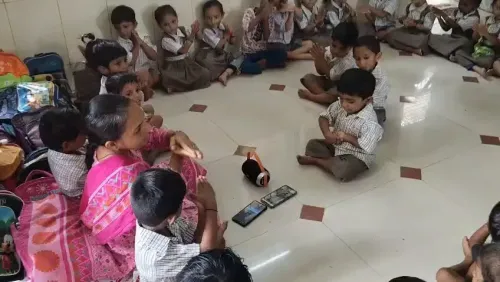
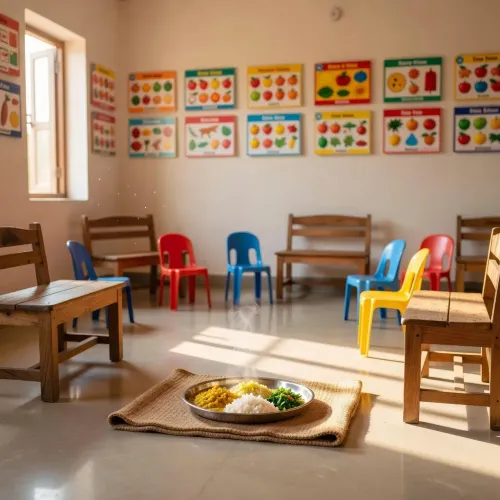
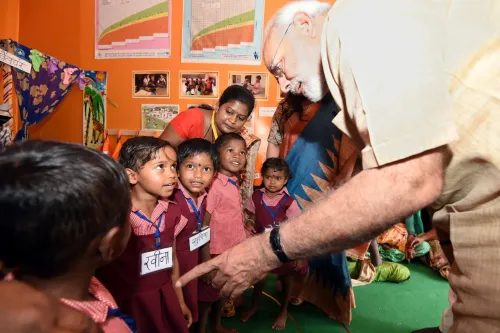
Anganwadi centres are village-level frontline institutions that distribute take-home rations or hot cooked meals to registered beneficiaries, primarily children under six years of age and pregnant and lactating women. These centres operate under the Integrated Child Development Services (ICDS) scheme, one of India's oldest and largest child welfare programmes.
Policy Backdrop
The Integrated Child Development Services scheme was launched nationwide in 1975 to combat malnutrition through Anganwadi-based delivery of supplementary nutrition, health check-ups, and pre-school education. The scheme's Supplementary Nutrition Programme was revised in 2009 and again in 2017 to strengthen nutritional norms and expand entitlements for beneficiaries.
In 2018, the central government launched POSHAN Abhiyaan — the National Nutrition Mission — to reduce stunting, under-nutrition, and anaemia through convergence of schemes, technology-driven monitoring, and behaviour-change communication. Uttarakhand, a Himalayan state, implements ICDS through its Women and Child Development department, reporting coverage figures as part of routine scheme monitoring under centrally sponsored nutrition programmes.
Stakeholders and Impact
The primary beneficiaries of Anganwadi-based nutrition support are children aged 0–6 years and pregnant and lactating women — groups identified as most vulnerable to malnutrition and anaemia. For a state like Uttarakhand, with significant rural and remote populations in hilly terrain, Anganwadi centres serve as critical last-mile delivery points for both nutrition and basic health services.
Coverage announcements of this nature are routinely issued by state administrations to demonstrate the reach of welfare entitlements and to maintain public accountability for scheme implementation. The #12YearsofGaribKalyan hashtag situates this update within the central government's broader Garib Kalyan (welfare for the poor) communication campaign, which spans multiple social protection schemes.
What's Next
Observers and policy analysts will watch for upcoming releases from the National Family Health Survey (NFHS) or the POSHAN tracker to assess whether reported beneficiary coverage translates into measurable improvements in Uttarakhand's malnutrition and anaemia indicators. State budget allocations for the Women and Child Development department, as well as any revisions to supplementary nutrition norms or Anganwadi worker honoraria, will be key signals of the government's commitment to sustaining and expanding this coverage.
As India continues to push human-capital development as a pillar of its growth agenda, the consistency of state-level nutrition delivery — and the quality of that delivery beyond raw coverage numbers — will remain a closely watched benchmark.
Point of View
While significant, reflects the state's ongoing implementation of a five-decade-old federal scheme rather than a new policy intervention. What matters more than the headline number is whether Uttarakhand's remote, hilly geography allows consistent quality of nutrition delivery — a question that coverage statistics alone cannot answer. The post fits a broader pattern of BJP-governed states using Garib Kalyan branding to reinforce the central government's welfare narrative ahead of political cycles.
NationPress
20 Sept 2026
Frequently Asked Questions
What is the Anganwadi nutrition scheme in Uttarakhand?
Uttarakhand delivers supplementary nutrition to eligible beneficiaries through Anganwadi centres under the central government's Integrated Child Development Services (ICDS) scheme, which has been operational since 1975. The state's Women and Child Development department oversees implementation, covering children under six and pregnant or lactating women.
How many beneficiaries receive nutrition at Anganwadi centres in Uttarakhand?
According to the Chief Minister's Office of Uttarakhand, approximately 7.33 lakh beneficiaries across the state are currently receiving nutritional support at Anganwadi centres.
What is POSHAN Abhiyaan and how does it relate to Anganwadi centres?
POSHAN Abhiyaan is India's National Nutrition Mission, launched in 2018, which uses technology and convergence of schemes to reduce malnutrition, stunting, and anaemia. Anganwadi centres are a core delivery point for POSHAN Abhiyaan's supplementary nutrition goals at the village level.
What is the Garib Kalyan scheme referred to in the Uttarakhand post?
Garib Kalyan, meaning 'welfare for the poor,' refers to a family of central government social protection initiatives. The hashtag #12YearsofGaribKalyan in the post marks a campaign milestone linking state-level welfare delivery to the broader national programme.
Who benefits from Anganwadi centres in Uttarakhand?
The primary beneficiaries are children aged 0–6 years and pregnant and lactating women, who receive supplementary nutrition, health check-ups, and early childhood education services through Anganwadi centres in villages across the state.