Uttarakhand CM Office Shapes State STI Policy-2026

Synopsis
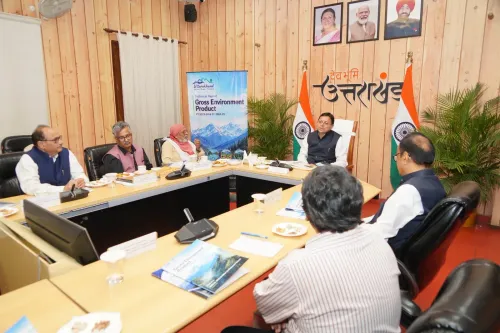
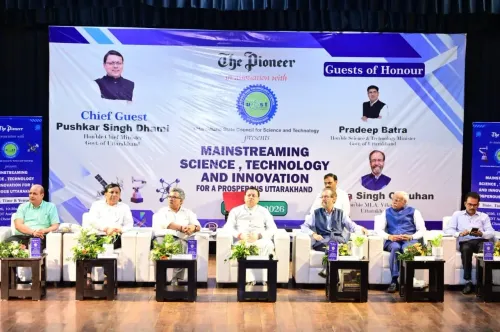
Uttarakhand's CM Office met ANRF CEO Prof. Shiv Kumar, IIT Roorkee Director Prof. K.K. Pant, HESCO founder Dr. Anil Prakash Joshi and UCOST chief Prof. Durgesh Pant on 26 September 2026 to finalise a Science, Technology and Innovation Policy-2026 targeting glaciology, disasters, migration and entrepreneurship.
Key Takeaways
The Uttarakhand STI Policy-2026 was reviewed at a high-level meeting convened by the Chief Minister's Office on 26 September 2026 .
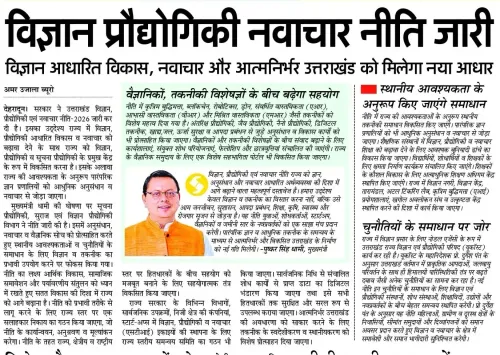
Priority sectors include glaciology, natural disaster management, water resources, agriculture, health, out-migration, skill development, entrepreneurship and intellectual property rights .
Shiv Kumar , CEO of the Anusandhan National Research Foundation (ANRF) , attended — signalling national research funding alignment with the state policy.
Pant (IIT Roorkee Director) and Dr.
Anil Prakash Joshi (HESCO founder) brought institutional and ecological expertise to the discussion.
UCOST Director General Prof.
Durgesh Pant and UCOST officials Surendra Singh Manral and Dr.
Vipin Sati represented the state's science council.
Next steps involve formal policy adoption and budgetary allocation to launch project calls in priority research areas.
Glaciers are retreating, villages are emptying, and disasters strike with mounting ferocity — and now, Uttarakhand's government is betting that a targeted science policy can change the calculus. The Chief Minister's Office of Uttarakhand convened a high-level review meeting on 26 September 2026 to shape the Uttarakhand Science, Technology and Innovation Policy-2026, bringing together some of India's sharpest research minds around a single mandate: make the science match the mountain.
Glaciology to Skill Gaps: What the Policy Targets
The policy framework is deliberately built around Uttarakhand's lived realities. As the CMO's post states, priority areas include glaciology, natural disaster management, energy, water resources, agriculture, and health — alongside thornier structural problems like out-migration, educational challenges in mountain regions, skill development, entrepreneurship, and intellectual property rights protection. That last cluster matters: a state cannot retain talent it does not first train, and cannot commercialise innovation it does not protect.
These are not abstract policy priorities. Uttarakhand has recorded some of India's most devastating flash floods and glacial lake outburst events in recent years. Entire hill districts bleed population steadily. Picking these fights — and funding research to win them — represents a meaningful institutional commitment.
Who Was in the Room
The participant list signals the seriousness of the exercise. Prof. Shiv Kumar, Chief Executive Officer of the Anusandhan National Research Foundation (ANRF), led the national research perspective. ANRF was established by an Act of Parliament in 2023 specifically to coordinate and fund research across India — its CEO's presence at a state-level STI meeting reflects the centre-state research coordination model that has been gaining traction since the early 2020s.
Dr. Anil Prakash Joshi, founder of the Himalayan Environment Studies and Conservation Organisation (HESCO), brought decades of mountain-ecology fieldwork to the table. Prof. K.K. Pant, Director of IIT Roorkee, represented the state's premier technical institution — one with a long history of research in water engineering and disaster resilience. Rounding out the group were Prof. Durgesh Pant, Director General of UCOST (Uttarakhand State Council for Science and Technology); educationist Dr. Reema Pant; senior scientist Dr. Parminder Mann from ANRF; and UCOST officials Surendra Singh Manral and Dr. Vipin Sati.
Uttarakhand in India's Broader Research Push
Himalayan states have long occupied a blind spot in India's science-funding ecosystem — their challenges are too specific for generic national schemes, yet too localised to attract large institutional investment. The STI Policy-2026 is Uttarakhand's answer: a bespoke framework that channels national resources, including ANRF funding pipelines, toward problems that only a hill state truly understands. The model mirrors what other ecologically distinct states have attempted, but the ANRF-IIT-UCOST triangle gives Uttarakhand an unusually credible institutional spine.
What comes next is the harder part — formal adoption of the policy, budgetary allocation, and the launch of specific project calls in disaster management, glaciology, and skill development. Frameworks are only as powerful as the money and deadlines behind them.
Point of View
Not just a Delhi-centric funding body. For a state defined by glacial retreat, chronic out-migration and recurring disasters, this policy — if backed by real budgets — could mark a structural inflection point. The test, as always, will be implementation speed against the pace of the problems it seeks to solve.
NationPress
26 Sept 2026
Frequently Asked Questions
What is the Uttarakhand Science Technology and Innovation Policy-2026?
It is a state-level policy framework being developed by the Uttarakhand government to address the state's specific challenges including glaciology, natural disaster management, water resources, agriculture, out-migration, skill development and entrepreneurship through targeted science and technology interventions.
Who attended the Uttarakhand STI Policy-2026 meeting?
The meeting was attended by ANRF CEO Prof. Shiv Kumar, senior scientist Dr. Parminder Mann, HESCO founder Dr. Anil Prakash Joshi, IIT Roorkee Director Prof. K.K. Pant, UCOST Director General Prof. Durgesh Pant, educationist Dr. Reema Pant, and UCOST officials Surendra Singh Manral and Dr. Vipin Sati.
What is ANRF and why does it matter for Uttarakhand?
The Anusandhan National Research Foundation (ANRF) is a national body established by an Act of Parliament in 2023 to coordinate and fund research across India. Its CEO's participation in the Uttarakhand STI meeting signals that state priorities could receive national research funding support.
Why does Uttarakhand need a region-specific science policy?
Uttarakhand faces unique ecological and developmental challenges — glacial retreat, flash floods, chronic out-migration from hill districts and limited mountain connectivity — that generic national schemes do not adequately address. A bespoke STI policy allows the state to direct research funding toward these specific vulnerabilities.