Uttarakhand CMO highlights Komal's rise via NRLM, Hilans Kitchen
Synopsis
The Uttarakhand Chief Minister's Office on 24 June 2026 featured Komal, a Dehradun woman who built 'Hilans Kitchen' with NRLM support, showcasing how the Central scheme is enabling rural women to achieve economic self-reliance in the hill state under the Aatmanirbhar Bharat framework.
Key Takeaways
The Uttarakhand CMO on 24 June 2026 shared a video spotlighting Komal of Dehradun as an NRLM beneficiary.
Komal established Hilans Kitchen , a micro-enterprise supported through the National Rural Livelihood Mission's SHG framework.
The National Rural Livelihood Mission was launched in 2011 to promote self-employment among rural households via self-help groups.
The post aligns with the Aatmanirbhar Bharat campaign launched in 2020 , which frames local entrepreneurship as a national priority.
Uttarakhand's hill geography and high male out-migration make women-led enterprises a critical component of the state's livelihood strategy.
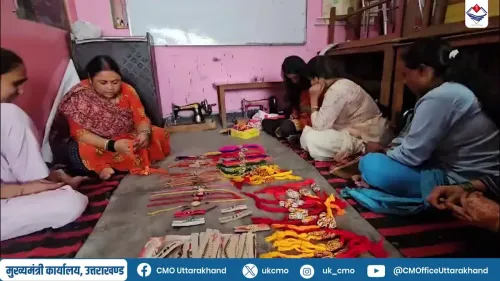
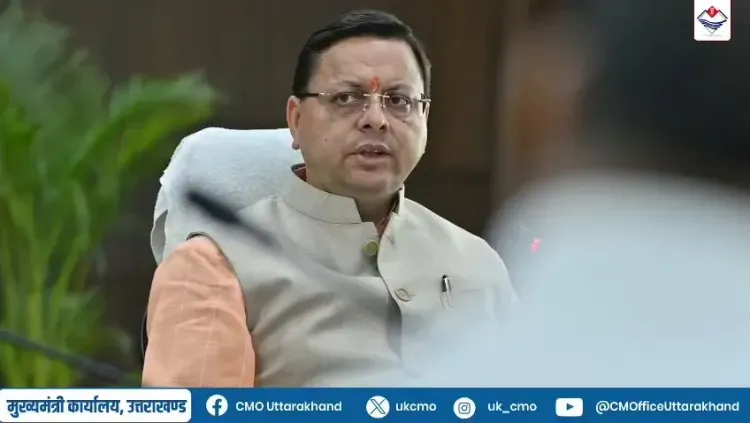
The Chief Minister's Office of Uttarakhand on Wednesday, 24 June 2026 spotlighted Komal, a woman entrepreneur from Dehradun, crediting the National Rural Livelihood Mission (NRLM) with giving her a new identity through her venture, 'Hilans Kitchen' — and holding her up as a model of self-reliance under the Aatmanirbhar Bharat initiative.
Context
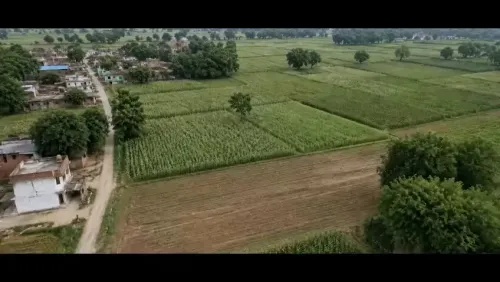
The official post reads: 'Rashtriya Gramin Ajeevika Mission se mili nayi pehchaan, Hilans Kitchen ke maadhyam se aatmanirbhar bani Dehradun ki Komal' — translated: 'Komal of Dehradun found a new identity through the National Rural Livelihood Mission and became self-reliant through Hilans Kitchen.' The message, shared with hashtags #WomenEmpowerment, #NRLM, #AatmanirbharBharat, and #Dehradun, was accompanied by a video, underscoring that the state government is actively amplifying individual success stories to demonstrate the on-ground impact of centrally sponsored welfare schemes.
Komal's story is presented as a direct outcome of NRLM's self-help group (SHG) ecosystem, which provides rural women with credit access, skill training, and market linkages. Hilans Kitchen — the enterprise she established — represents the kind of locally rooted, food-based micro-enterprise that NRLM has sought to nurture across hill states.
Policy Backdrop
The National Rural Livelihood Mission was launched by the Central government in 2011 as a restructured successor to the Swarnjayanti Gram Swarozgar Yojana. Its core architecture rests on mobilising rural households — particularly women — into SHGs, federating those groups into larger community institutions, and channelling financial and technical support to enable sustainable livelihoods.
Uttarakhand, with its dispersed hill geography and high male out-migration, has been a significant focus state for NRLM implementation. Women-led enterprises in food processing, handicrafts, and hospitality have emerged as priority sectors under the state's implementation framework. The broader Aatmanirbhar Bharat campaign, launched in 2020, provided fresh political momentum to these grassroots livelihood stories by framing local entrepreneurship as a national goal.
Stakeholders and Impact
The primary beneficiaries of NRLM in Uttarakhand are rural women, particularly those from economically marginalised households who lack collateral for formal bank credit. SHGs act as the first institutional touchpoint, building savings discipline before members access larger loans for enterprise creation.
A venture such as Hilans Kitchen in Dehradun carries significance beyond one individual: it signals that the scheme's support chain — from SHG formation to enterprise incubation — can produce commercially viable outcomes in an urban-adjacent setting. For policymakers, such stories also serve as communication tools to encourage enrolment among women who remain outside the SHG network.
What's Next
The Uttarakhand government's continued amplification of NRLM success stories suggests that women-led rural enterprise will remain a visible plank of the state's welfare and economic narrative in the near term. Observers will watch for state budget allocations directed at women-led micro-enterprises and any expansion of schemes that provide market access or branding support to SHG-backed ventures like Hilans Kitchen.
As hill-state economies grapple with migration pressures, stories of women achieving local economic independence carry both policy and social weight — and the frequency of such official posts points to a deliberate strategy of building public confidence in NRLM's delivery architecture.
Point of View
Such visibility campaigns can also function as soft outreach to women not yet enrolled in SHGs. The frequency of such posts from the CMO's office signals that women's economic empowerment will remain a central pillar of Uttarakhand's political messaging ahead of any future electoral cycle.
NationPress
22 Sept 2026
Frequently Asked Questions
What is the National Rural Livelihood Mission (NRLM)?
The National Rural Livelihood Mission is a Central government programme launched in 2011 to promote self-employment and financial inclusion for rural households, primarily by organising women into self-help groups that access credit, training, and market support.
Who is Komal and what is Hilans Kitchen?
Komal is a woman entrepreneur from Dehradun, Uttarakhand, credited by the state's Chief Minister's Office with achieving economic self-reliance by establishing Hilans Kitchen, a micro-enterprise supported through the NRLM framework.
How does NRLM support women entrepreneurs in Uttarakhand?
NRLM mobilises rural women into self-help groups, builds their savings and credit capacity, and connects them with skill training and market linkages — enabling members to start locally rooted enterprises in sectors such as food processing and handicrafts.
What is Aatmanirbhar Bharat and how does it relate to NRLM?
Aatmanirbhar Bharat is a national self-reliance campaign launched in 2020 that frames local entrepreneurship as a priority goal; NRLM success stories like Komal's are highlighted under this campaign to demonstrate grassroots economic independence.
Why is Uttarakhand a focus state for women's livelihood schemes?
Uttarakhand's dispersed hill geography and high rates of male out-migration mean women are often the primary economic actors in rural households, making women-led enterprise schemes particularly significant for the state's development strategy.