Uttarakhand CMO Highlights Women's Self-Employment Push in Chamoli
Synopsis
The Chief Minister's Office of Uttarakhand has highlighted three state schemes — Mukhya Mantri Swarozgar Yojana, Kaushal Vikas, and Gramotthan — that are providing rural women in Chamoli district with vocational training and enterprise support to foster self-reliance.
Key Takeaways
The Uttarakhand CMO spotlighted women's self-employment initiatives in Chamoli district on 20 August 2026 .
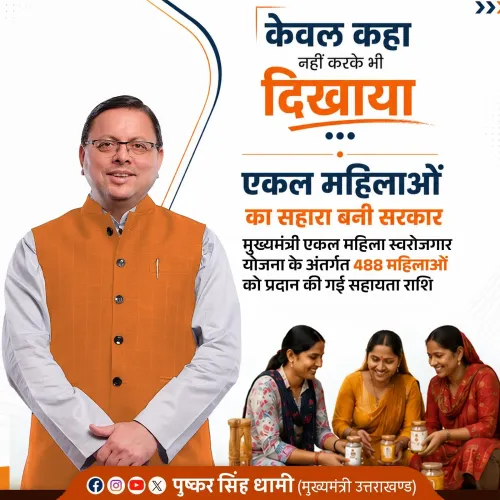
Mukhya Mantri Swarozgar Yojana provides financial support, subsidies, and training for self-employment among women and youth.
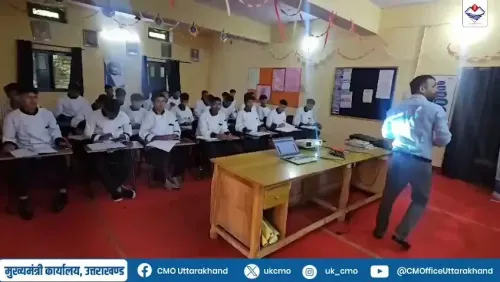
Kaushal Vikas delivers vocational training to improve employability and entrepreneurship in the state.
Gramotthan Yojana focuses on rural economic activities and infrastructure to uplift village communities.
Chamoli's high male outmigration rate makes women-centric schemes especially critical in the district.
The Uttarakhand Skill Development Mission coordinates these three programmes across districts.
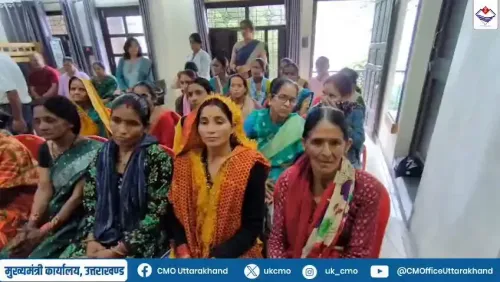
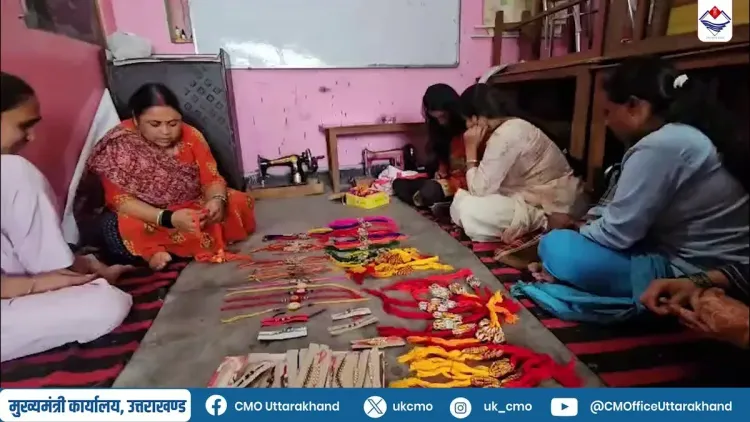
In the hills of Chamoli, where male outmigration has long left women as the backbone of rural households, the Chief Minister's Office of Uttarakhand is spotlighting a cluster of state schemes designed to turn that quiet resilience into economic agency. On Thursday, 20 August 2026, the CMO posted on X, drawing attention to how women in the state are being equipped with skills and startup support through government programmes.
The post, in Hindi, stated that through schemes such as Mukhya Mantri Swarozgar Yojana, Kaushal Vikas and Gramotthan (Chief Minister's Self-Employment Scheme, Skill Development, and Rural Upliftment), women in Uttarakhand are receiving 'training alongside support for self-employment and enterprise.' The hashtags #Chamoli and #Uttarakhand signal the district as a focal point for this push.Three Schemes, One Goal: Women Off the Margins
The Mukhya Mantri Swarozgar Yojana offers financial support, subsidies, and training to promote self-employment among youth and women across the state. Alongside it, the Kaushal Vikas initiative provides vocational training aimed at boosting employability and entrepreneurship — a critical intervention in a state where the industrial base is thin and formal jobs are scarce.
The third pillar, Gramotthan Yojana, targets rural upliftment directly — funding economic activities and basic infrastructure in Uttarakhand's villages. Together, the three schemes form a layered approach: train women, fund their ventures, and strengthen the village economy around them. The Uttarakhand Skill Development Mission coordinates these efforts across districts.
Why Chamoli — and Why Now
Chamoli is a telling choice of focus. The high-altitude district has one of the state's most pronounced migration patterns — men leave for plains cities, and women manage farms, children, and households with limited cash income. State governments across India's mountain belt have increasingly recognised this dynamic, running women-centric self-employment schemes in parallel with central programmes precisely because the standard industrial-growth model does not reach these valleys.
Uttarakhand's emphasis on women in these initiatives reflects that geography. The combination of skill training and direct enterprise support is designed to convert subsistence activity — weaving, farming, food processing — into market-linked income streams that do not require women to leave their communities.
The CMO's spotlight on Chamoli could be a precursor to expanded outreach — additional blocks, new training centres, or fresh beneficiary targets. District-level data on how many women have been enrolled and what enterprises have taken root will be the real measure of whether the schemes are moving beyond announcement into transformation.
Point of View
Which is a standard state-government communication pattern ahead of ground-level outreach. That said, the deliberate focus on Chamoli signals that mountain districts with high outmigration are being positioned as priority zones for women's economic empowerment, a politically resonant frame in Uttarakhand. The convergence of three schemes — financial, vocational, and rural-infrastructure — suggests a more integrated approach than single-window programmes of the past. The real test will be district-level beneficiary data, which the post does not provide.
NationPress
20 Aug 2026
Frequently Asked Questions
What is Mukhya Mantri Swarozgar Yojana in Uttarakhand?
Mukhya Mantri Swarozgar Yojana is a state government scheme in Uttarakhand that provides financial assistance, subsidies, and training to promote self-employment among women and youth, particularly in rural and hilly areas.
How is Uttarakhand helping women become self-reliant?
Uttarakhand is supporting women's self-reliance through three key schemes: Mukhya Mantri Swarozgar Yojana for financial and enterprise support, Kaushal Vikas for vocational training, and Gramotthan Yojana for rural economic upliftment.
What is Gramotthan Yojana in Uttarakhand?
Gramotthan Yojana is a rural upliftment programme in Uttarakhand focused on boosting economic activities and improving infrastructure in villages, with women among its primary beneficiaries.
Why is Chamoli district a focus for women's self-employment schemes?
Chamoli is a high-altitude district in Uttarakhand with significant male outmigration, leaving women as the primary economic managers of households. This makes targeted self-employment and skill schemes especially important there.
What is the Uttarakhand Skill Development Mission?
The Uttarakhand Skill Development Mission is a state-level body that coordinates vocational training and self-employment initiatives across districts, including schemes like Kaushal Vikas, to improve employability and entrepreneurship.