Uttarakhand CMO Invokes Dadhichi, King Shibi to Highlight Sacrifice
Synopsis
The Uttarakhand Chief Minister's Office cited the mythological stories of Maharshi Dadhichi and King Shibi on 27 June 2026 to champion themes of self-sacrifice, compassion and dharma as foundational to Indian civilisation and the state's public ethos.
Key Takeaways
The Uttarakhand CMO posted on 27 June 2026 invoking two major figures from Hindu mythology to promote cultural values.
Maharshi Dadhichi is cited for donating his bones to forge the weapon Vajra, protecting humanity from the demon Vritra.
King Shibi is referenced for offering his own flesh to protect a dove from a hawk, symbolising compassion and altruism.
The post reflects a broader pattern of BJP-led state governments integrating Puranic narratives into official public communications.
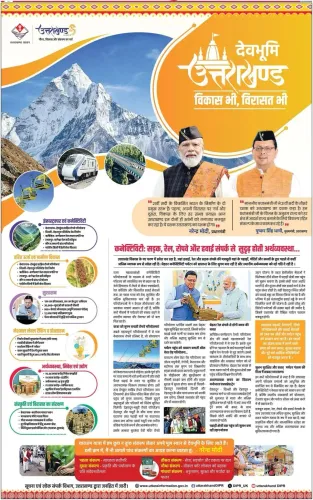
Uttarakhand , known as Dev Bhoomi , has consistently positioned itself as a custodian of Indian civilisational heritage in its administrative messaging.
The Chief Minister's Office of Uttarakhand shared a message on Saturday, 27 June 2026, invoking the mythological figures of Maharshi Dadhichi and King Shibi to underscore themes of compassion, self-sacrifice, and the protection of dharma as enduring values of Indian civilisation.
Context
The post, shared from the official @ukcmo handle, quotes a speaker — whose identity is not specified in the post — citing the legend of Maharshi Dadhichi, the revered Vedic sage who, according to Hindu scripture, donated his own bones so that the god Indra could forge the weapon Vajra to vanquish the demon Vritra and protect humanity and dharma. The speaker drew on this story to illustrate the highest form of selfless sacrifice.
The post also references the story of King Shibi, a legendary ruler celebrated in Hindu texts for offering a portion of his own flesh to a hawk in order to save a dove seeking his protection — a tale long regarded as a defining example of karuna (compassion) and paropkar (altruism) in Indian cultural memory.
Policy Backdrop
State governments across India, particularly those led by the Bharatiya Janata Party, have increasingly woven Puranic narratives and references to classical Indian heritage into official public communications. Uttarakhand, which holds special significance as a state encompassing major pilgrimage sites and the Dev Bhoomi (Land of the Gods), has been at the forefront of integrating such cultural messaging into administrative discourse.
This approach is part of a broader pattern of linking governance with traditional Indian values — positioning the state not merely as an administrative unit but as a custodian of civilisational ethos. References to figures like Dadhichi and King Shibi serve to anchor contemporary public messaging in a shared cultural and moral vocabulary.
Stakeholders and Impact
The primary audience for such messaging is the citizens of Uttarakhand, particularly those engaged with questions of cultural identity, value-based education, and the role of heritage in public life. By invoking figures from the Puranas and epic traditions, the CMO's office signals an intent to keep classical Indian moral philosophy visible in the public sphere.
Cultural educators, religious institutions, and civil society groups working on heritage promotion in the state are likely to find resonance in such communications. The stories of Dadhichi and Shibi are widely taught in schools and referenced in religious discourse, giving the messaging broad accessibility across age groups.
What's Next
Observers will watch for follow-up statements or events from the Uttarakhand CMO that translate these cultural references into concrete policy initiatives — such as programmes on value-based education, cultural preservation, or public outreach rooted in indigenous heritage. Whether this messaging precedes or accompanies a specific government initiative remains to be seen, but it signals a continued emphasis on cultural identity as a pillar of the state's public communication strategy.
Point of View
Embedding classical moral philosophy into the state's official voice. This fits a well-established pattern among BJP-governed states of using Puranic imagery to frame governance as an extension of civilisational duty rather than mere administration. For Uttarakhand — a state whose identity is inseparable from religious pilgrimage and the Dev Bhoomi designation — such messaging carries particular weight with its core constituency. The absence of a named speaker or specific occasion, however, limits the post's immediate policy legibility and may reflect a broader, ambient cultural outreach rather than a targeted programme announcement.
NationPress
27 Jun 2026
Frequently Asked Questions
Who is Maharshi Dadhichi and why is he significant in Indian culture?
Maharshi Dadhichi is a revered sage in Hindu mythology who sacrificed his own bones so that the god Indra could forge the thunderbolt weapon Vajra to defeat the demon Vritra and protect dharma. His story is one of the most celebrated examples of selfless sacrifice in the Puranic tradition.
What is the story of King Shibi and what does it represent?
King Shibi is a legendary ruler in Hindu texts who offered a portion of his own flesh to a hawk in order to protect a dove that had sought his shelter. The story is a foundational example of compassion and altruism in Indian cultural and moral philosophy.
Why did the Uttarakhand CMO reference these mythological figures?
The Uttarakhand Chief Minister's Office used the stories of Maharshi Dadhichi and King Shibi to highlight values of self-sacrifice, compassion and the protection of dharma as core to Indian civilisation, aligning with the state's broader cultural communication strategy.
Is it common for Indian state governments to use Puranic stories in official messaging?
Yes, particularly BJP-led state governments have increasingly incorporated references to Puranic narratives and classical Indian heritage in official communications to link governance with traditional cultural and moral values.
What is the significance of Uttarakhand being called Dev Bhoomi?
Uttarakhand is called Dev Bhoomi , meaning 'Land of the Gods', because it is home to major Hindu pilgrimage sites including Char Dham. This identity makes cultural and religious messaging from the state government particularly resonant with its population and visitors.