Vaishnaw Visits Marhowra Loco Plant, Flags Make in India Vision
Synopsis
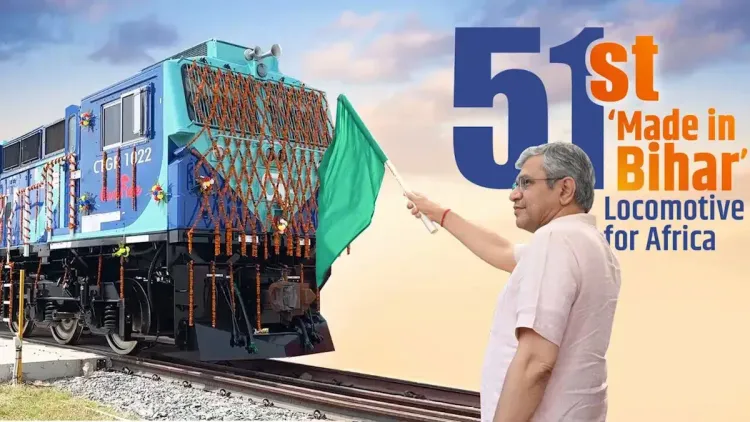
Union Minister Ashwini Vaishnaw visited the Marhowra Locomotive Plant in Bihar on June 19, 2026, invoking 'Make in India, Make for the World' to highlight the facility's role in indigenous rail manufacturing and India's ambitions as a locomotive exporter.
Key Takeaways
Union Minister Ashwini Vaishnaw visited the Marhowra Locomotive Plant in Saran district, Bihar on June 19, 2026 .
The minister invoked the phrase 'Make in India, Make for the World' , signalling the plant's dual role in domestic supply and export ambition.
The Marhowra Plant was established under a public-private partnership following a 2015 tender awarded to GE Transportation .
The facility is a product of the Make in India programme launched in September 2014 and reinforced by the Atmanirbhar Bharat package of 2020 .
Indian Railways and Bihar's industrial workforce are the primary stakeholders benefiting from the plant's output and employment generation.
Future export orders and capacity-expansion announcements linked to the Dedicated Freight Corridor will be key milestones to watch.
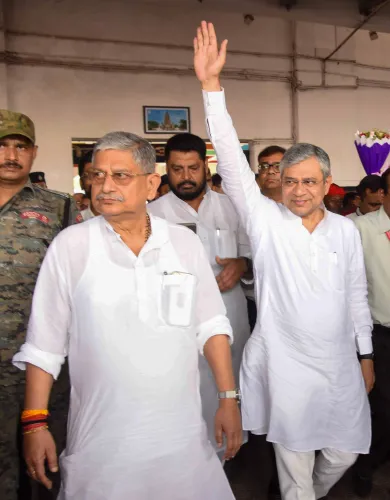
Union Minister Ashwini Vaishnaw visited the Marhowra Locomotive Plant in Bihar on Friday, June 19, 2026, invoking the government's flagship manufacturing mantra — 'Make in India, Make for the World' — to underscore the facility's role as a pillar of India's rail-sector self-reliance.
Context
The Marhowra Plant, located in Saran district, Bihar, is a greenfield locomotive manufacturing facility established under a public-private partnership. It was conceived as part of a broader strategy to shift Indian Railways away from import dependence and toward indigenous production of high-horsepower locomotives. The minister's visit and his pointed use of the 'Make in India, Make for the World' phrase signals continued political attention to the plant's strategic importance.
Policy Backdrop
The Make in India programme was launched by Prime Minister Narendra Modi in September 2014 with the goal of raising manufacturing's share of GDP and positioning India as a global export hub for engineering goods. The Marhowra facility was a direct product of that push: a 2015 tender awarded to GE Transportation brought a world-class diesel locomotive factory to Bihar, with contractual obligations for progressive indigenisation of components over time.
The Atmanirbhar Bharat package of 2020 reinforced this trajectory, explicitly prioritising domestic production of railway equipment and rolling stock. Marhowra sits at the intersection of both policy pillars — domestic supply security for Indian Railways and export ambition for Indian-made locomotives.
Stakeholders and Impact
Indian Railways, which operates one of the world's largest rail networks, is the primary beneficiary of expanded domestic locomotive output — reducing procurement timelines and foreign-exchange outflows. For Bihar, the plant represents an anchor industrial investment, generating direct employment for skilled and semi-skilled workers in a state historically underserved by large-scale manufacturing. The 'Make for the World' framing also points toward locomotive exporters and the global freight rail market, where Indian-made units could compete on cost and quality.
India has pursued vertical integration in the rail sector by pairing large domestic orders with technology-transfer clauses, enabling local plants to move from assembly to full manufacturing and, eventually, exports. This mirrors similar efforts in defence and electronics, where greenfield facilities in states like Bihar and Uttar Pradesh are intended to anchor regional supply chains.
What's Next
Observers will watch for any announcements tied to export orders for locomotives produced at Marhowra, particularly as the Dedicated Freight Corridor network expands and demand for high-horsepower freight locomotives rises. Capacity-expansion plans at the plant, and the pace of indigenisation of critical sub-systems, will be key indicators of whether the 'Make for the World' ambition translates into confirmed overseas contracts. Vaishnaw's visit, shared publicly, keeps political momentum behind the facility at a time when rail infrastructure investment is a centrepiece of the government's economic narrative.
Point of View
A maturation of the original 2014 pitch. Bihar's inclusion in the rail-manufacturing map also carries political weight, as the state remains a key electoral battleground for the BJP-led alliance. How quickly Marhowra-built locomotives find overseas buyers will determine whether the export rhetoric hardens into a verifiable industrial achievement.
NationPress
19 Sept 2026
Frequently Asked Questions
What is the Marhowra Locomotive Plant in Bihar?
The Marhowra Locomotive Plant is a greenfield locomotive manufacturing facility in Saran district, Bihar, set up under a public-private partnership. It was established following a 2015 tender awarded to GE Transportation to produce high-horsepower locomotives for Indian Railways, with a mandate for progressive indigenisation of components.
What did Ashwini Vaishnaw say at Marhowra plant?
Ashwini Vaishnaw invoked the phrase 'Make in India, Make for the World' during his visit to the Marhowra Plant on June 19, 2026, highlighting the facility's role in both domestic locomotive supply and India's ambitions as a global exporter of rail equipment.
What is the Make in India programme and how does it relate to Indian Railways?
Make in India is a national manufacturing initiative launched by Prime Minister Modi in September 2014 to boost domestic production and position India as an export hub. For Indian Railways, it has translated into greenfield locomotive factories like Marhowra that reduce import dependence and build indigenous manufacturing capability.
How does the Marhowra plant benefit Bihar?
The Marhowra plant serves as a major industrial anchor for Bihar, generating direct employment for skilled and semi-skilled workers in a state that has historically had limited large-scale manufacturing. It also positions Bihar within a broader rail-sector supply chain.
What are the next steps for the Marhowra locomotive plant?
Key milestones to watch include potential export orders for Marhowra-produced locomotives, capacity-expansion announcements tied to India's Dedicated Freight Corridor requirements, and the pace at which the plant achieves deeper indigenisation of critical sub-systems.