Vaishnaw Highlights LOHUM Startup Under Electronics Component Scheme
Synopsis
Union Minister Ashwini Vaishnaw has highlighted LOHUM, a startup supported under the Electronics Component Manufacturing Scheme, for scaling production of rare earth permanent magnets, lithium battery materials, and photoresist chemicals — advancing India's Aatmanirbhar Bharat goals in critical electronics supply chains.
Key Takeaways
Union Minister Ashwini Vaishnaw spotlighted LOHUM as a startup supported under the Electronics Component Manufacturing Scheme on 30 May 2026 .
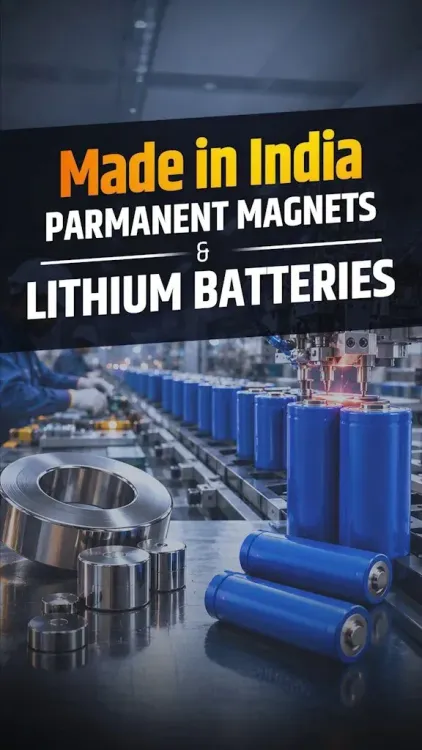
LOHUM is developing permanent magnets using cutting-edge R&D in rare earth materials, targeting EV and renewable energy applications.
The startup is also advancing lithium refining and cathode active materials for next-generation batteries.
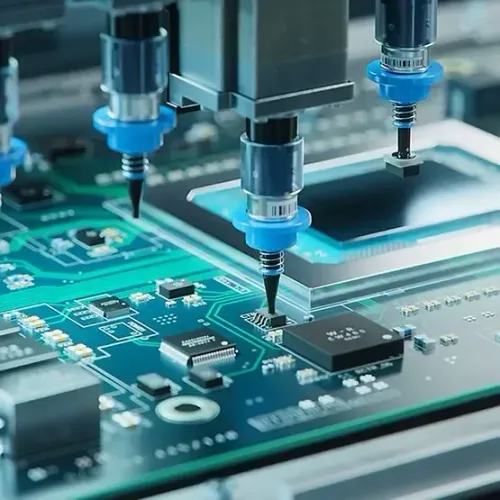
A third capability area covers photoresist chemicals , a critical input for semiconductor fabrication.
The Electronics Component Manufacturing Scheme is part of India's post- 2020 Aatmanirbhar Bharat policy architecture, which includes PLI schemes and the National Programme on Advanced Chemistry Cells.
Commercial-scale output from scheme-backed startups will be a key indicator of whether India's critical-materials industrial strategy is delivering results.
Union Minister Ashwini Vaishnaw on Saturday, 30 May 2026 spotlighted LOHUM, a young Indian startup receiving support under the Electronics Component Manufacturing Scheme, describing its scale-up journey as a live example of Prime Minister Narendra Modi's vision of Aatmanirbhar Bharat.
Context
In his post, Vaishnaw outlined three distinct capability areas being developed by LOHUM: manufacturing permanent magnets through research and development in rare earth materials; advancing lithium refining and cathode active materials for next-generation batteries; and building competencies in photoresist chemicals that feed into semiconductor manufacturing. The minister framed the startup's trajectory as a transition 'from lab to industry,' signalling that early-stage R&D is now moving toward commercial-scale production.
LOHUM is among a cohort of electronics and advanced-materials startups that have received central government backing as India works to build domestic supply chains for critical inputs used in electric vehicles, consumer electronics, and semiconductor fabrication.
Policy Backdrop
The Electronics Component Manufacturing Scheme is part of a broader policy architecture assembled since 2020, when the Aatmanirbhar Bharat package was announced with targeted incentives for electronics and component manufacturing. Subsequent Production Linked Incentive schemes for IT hardware and electronics components were notified in 2021, with later expansions covering rare-earth and battery materials.
Parallel programmes — including PLI outlays for semiconductors and the National Programme on Advanced Chemistry Cells — share the same strategic logic: building end-to-end domestic value chains to reduce dependence on concentrated overseas suppliers, particularly for rare earths and battery precursors. India's policy posture in this space also responds to global 'friend-shoring' trends and tightening export-control regimes that have made access to critical minerals and semiconductor inputs a geopolitical concern.
Vaishnaw has held the Electronics and Information Technology portfolio since 2021 and has been a consistent public voice for India's semiconductor and critical-materials ambitions, regularly highlighting scheme-supported firms as proof-of-concept for the government's industrial strategy.
Stakeholders and Impact
The sectors most directly affected by LOHUM's scale-up span electric vehicle battery supply chains, renewable energy systems that rely on permanent magnets in wind turbines and motors, and the nascent domestic semiconductor ecosystem that requires photoresist chemicals as a key fabrication input. For electronics startups operating in advanced materials, government recognition and scheme support can be critical in attracting further private capital and technology-transfer partnerships.
Magnet and battery-material manufacturing has historically been dominated by a small number of overseas producers, making domestic capability-building a supply-chain security priority for both the government and large industrial buyers in India.
What's Next
The key milestones to watch are commercial-scale output figures from LOHUM and other scheme-supported firms, and whether the next iteration of India's electronics or critical-minerals policy introduces fresh capital allocation or technology-transfer clauses to accelerate the lab-to-industry transition. As India deepens its semiconductor and EV ambitions, the ability of startups like LOHUM to deliver at industrial scale will be a practical test of whether the policy incentive architecture is translating into tangible manufacturing capacity.
Point of View
Using a single startup to illustrate the government's broader argument that its incentive architecture is producing real manufacturing capability rather than just policy documents. Highlighting three distinct technology verticals — magnets, batteries, and semiconductor chemicals — in one post suggests an effort to demonstrate breadth across the critical-materials value chain. The timing fits a pattern of pre-budget or policy-cycle messaging in which the Electronics and IT Ministry showcases scheme outcomes to build the case for continued or expanded outlays. For analysts watching India's semiconductor and EV ambitions, the more significant question is whether firms like LOHUM can sustain the lab-to-industry transition without persistent subsidy, a test that will define the credibility of the entire Aatmanirbhar Bharat manufacturing narrative.
NationPress
14 Oct 2026
Frequently Asked Questions
What is LOHUM and what does it do?
LOHUM is an Indian startup focused on advanced materials manufacturing, including rare earth permanent magnets, lithium refining and cathode active materials for batteries, and photoresist chemicals used in semiconductor production. It is supported under the central government's Electronics Component Manufacturing Scheme.
What is the Electronics Component Manufacturing Scheme?
The Electronics Component Manufacturing Scheme is a central government programme designed to expand domestic production capacity for electronics components and critical materials. It forms part of India's broader Aatmanirbhar Bharat industrial policy framework launched in 2020.
Why are rare earth magnets important for India?
Rare earth permanent magnets are critical inputs for electric vehicle motors, wind turbines, and a range of consumer electronics. Domestic manufacturing capability reduces India's dependence on concentrated overseas suppliers and strengthens supply-chain security for the EV and renewables sectors.
What is Aatmanirbhar Bharat and how does it relate to electronics manufacturing?
Aatmanirbhar Bharat, meaning 'self-reliant India,' is a policy campaign launched in May 2020 that includes targeted incentives for electronics, semiconductor, and component manufacturing. Its goal is to build end-to-end domestic value chains and reduce reliance on imports for strategic materials and technologies.
What role do photoresist chemicals play in semiconductor manufacturing?
Photoresist chemicals are essential materials used in the lithography process of semiconductor fabrication, enabling the precise patterning of circuits on chips. Building domestic capacity in photoresists is a key step toward a self-sufficient semiconductor manufacturing ecosystem in India.