Vaishnaw: India's Electronics Exports Grew 8x, Now a Top Commodity
Synopsis
Union Minister Ashwini Vaishnaw has claimed an eightfold rise in India's electronics exports, crediting a policy mix of PLI incentives, Make in India, and FDI liberalisation for transforming the sector from import-dependent to a leading export commodity. The announcement forms part of a government series on economic milestones.
Key Takeaways
Union Minister Ashwini Vaishnaw stated on June 10, 2026 that India's electronics exports have grown by 8 times .
Electronics is now described as one of India's leading export commodities , a significant shift from historic import dependence.
The PLI Scheme for Large Scale Electronics Manufacturing was approved in 2020 with an outlay of over Rs 38,000 crore .
The National Policy on Electronics 2019 and Foreign Trade Policy 2023 together set the export-orientation framework for the sector.
The growth aligns with the Atmanirbhar Bharat goal of integrating India into diversified global supply chains.
Quarterly merchandise export data from the Commerce Ministry will be the next official checkpoint for verifying the sector's trajectory.
Union Minister Ashwini Vaishnaw on Wednesday, June 10, 2026 highlighted an eightfold rise in India's electronics exports, describing the sector as one of the country's leading export commodities in a post shared on X that forms part of a series documenting India's economic milestones.
Context
The minister's post, numbered 9 in a running thread titled 'From India to the world,' states that electronics exports have grown by 8 times, cementing the sector's place among India's most significant export earners. The claim is part of a broader government communication drive cataloguing what the ruling dispensation frames as transformative economic achievements under its watch.
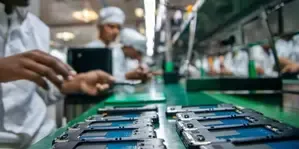
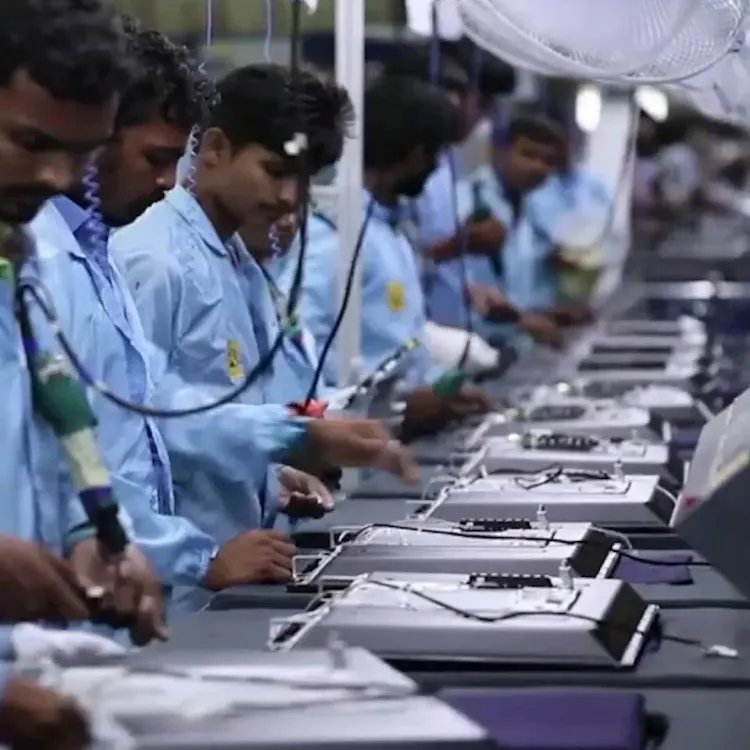
Electronics — once a sector dominated by imports — has undergone a structural shift over the past several years, with India moving from being a net importer to a growing exporter of finished goods and components.
Policy Backdrop
The surge in electronics exports is widely attributed to a deliberate policy stack assembled since 2014. The Make in India programme set the directional intent, while the National Policy on Electronics 2019 formalised targets for domestic value addition and export-oriented manufacturing.
The most consequential intervention has been the Production Linked Incentive (PLI) Scheme for Large Scale Electronics Manufacturing, approved in 2020 with an outlay exceeding Rs 38,000 crore. The scheme incentivises mobile phones, IT hardware, and components, and has attracted both domestic manufacturers and global firms to expand or establish assembly and production capacity in India.
The Foreign Trade Policy 2023 reinforced this trajectory by embedding high-value electronics exports as a priority, with integration into global supply chains as an explicit objective. The Ministry of Electronics and Information Technology (MeitY) has served as the nodal agency for policy design and PLI implementation throughout this period.
Stakeholders and Impact
The beneficiaries of this export expansion span a wide value chain: large-scale electronics manufacturers, IT hardware exporters, and component suppliers have all seen order books grow as India becomes a more credible alternative sourcing destination for global buyers.
The shift also sits within the Atmanirbhar Bharat framework, which seeks to diversify global supply chains away from single-country concentration — a geopolitical imperative that has gained urgency among multinational corporations reassessing procurement strategies. Rising foreign direct investment inflows into the sector and new plant announcements have accompanied the export growth trend.
For workers and component suppliers, the expansion has translated into incremental employment and ancillary industry development, particularly around electronics manufacturing clusters.
What's Next
Analysts and industry participants will watch the Commerce Ministry's quarterly merchandise export data for official confirmation of the scale of growth cited by the minister. Any mid-term review or extension of PLI outlays in the next Union Budget will be a key signal of whether the government intends to sustain the current incentive architecture or recalibrate it.
With global supply chain realignment still in progress, India's ability to move up the electronics value chain — from assembly to component manufacturing and design — will determine whether the export trajectory holds and deepens over the medium term.
Point of View
If borne out by official trade data, would represent one of the more striking sectoral shifts in India's export basket over the past decade. The timing underscores how electronics has become a centrepiece of the BJP government's economic identity, sitting at the intersection of industrial policy, geopolitical supply-chain realignment, and the Atmanirbhar Bharat brand. Whether the momentum can be sustained will hinge on India's ability to move beyond final assembly into deeper component and design capabilities — the harder, higher-value part of the electronics ladder.
NationPress
26 Oct 2026
Frequently Asked Questions
How much have India's electronics exports grown?
Union Minister Ashwini Vaishnaw has stated that India's electronics exports have grown by 8 times , though the specific base year for this comparison has not been officially specified in the post.
What government schemes drove India's electronics export growth?
The primary driver has been the Production Linked Incentive (PLI) Scheme for Large Scale Electronics Manufacturing , approved in 2020 with an outlay exceeding Rs 38,000 crore , alongside the Make in India programme and the National Policy on Electronics 2019 .
What is MeitY's role in India's electronics exports?
The Ministry of Electronics and Information Technology (MeitY) is the nodal ministry responsible for electronics policy design, PLI scheme implementation, and export promotion in the sector.
Is India now a major electronics exporter globally?
India has shifted from being a net importer to a growing exporter of electronics, with the government describing the sector as one of the country's leading export commodities as of 2026.
What is the Atmanirbhar Bharat connection to electronics exports?
Electronics export growth is a key pillar of the Atmanirbhar Bharat framework, which aims to reduce import dependence and position India as an alternative node in diversified global supply chains.