Vaishnaw confirms Pachpadra railway line on historic alignment
Synopsis
Union Minister Ashwini Vaishnaw has confirmed that the Pachpadra railway line in Barmer, Rajasthan will be constructed on its original historic alignment, a decision taken after drone-based ground inspections and in deference to the town's heritage significance.
Key Takeaways
Union Minister Ashwini Vaishnaw announced on 27 May 2026 that the Pachpadra railway line will be built on its old, historic alignment.
The decision followed a drone-based inspection of ground conditions at Pachpadra, Barmer district, Rajasthan .
The minister explicitly cited Pachpadra's glorious history as a key factor in choosing the original alignment over alternatives.
Indian Railways has been expanding rail connectivity across western Rajasthan's desert districts since 2014 .
Key next steps include tendering, land acquisition, and fixing a construction start date for the line segment.
Local stakeholders — including Pachpadra's residents and salt producers — are the primary beneficiaries of improved rail access.
Union Minister Ashwini Vaishnaw announced on Wednesday, 27 May 2026 that the proposed railway line at Pachpadra in Barmer district, Rajasthan, will be built on its original historic alignment, a decision reached after drone-based ground surveys and deliberations respecting the town's heritage.
Posting on X, the minister wrote: 'आज पचपदरा की रेलवे लाइन के विषय में चर्चा हुई' ['Today, discussions were held regarding the Pachpadra railway line'], adding that ground conditions were inspected via drone and that, keeping in mind the 'glorious history' of Pachpadra, the decision was taken to construct the line on the old alignment itself.
Context
Pachpadra is a historically significant town in Barmer district, long associated with salt production and local heritage. The town's legacy has made alignment choices for infrastructure projects a sensitive local matter, with residents and stakeholders advocating for routes that respect existing heritage features.
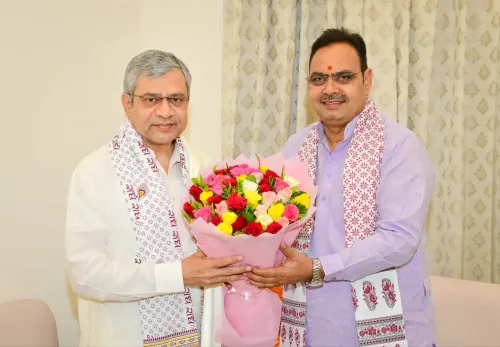
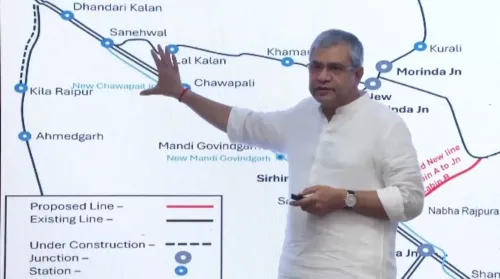
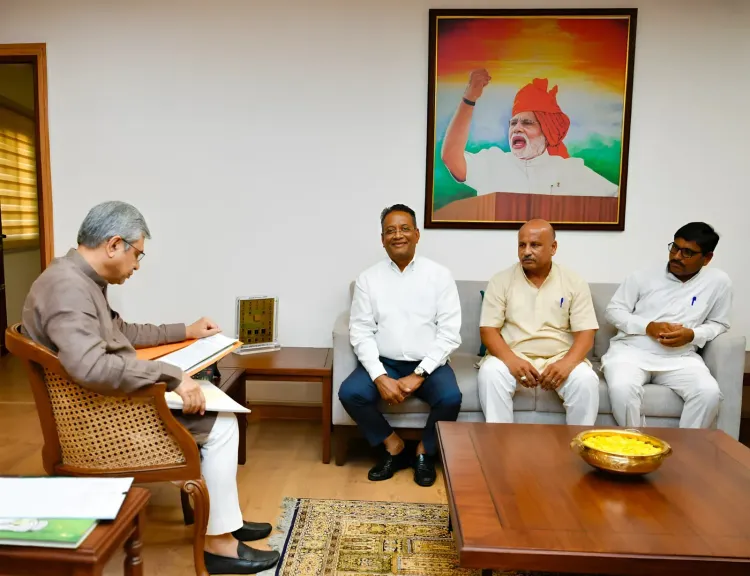
The minister's post was accompanied by two images, indicating an on-site or near-site review. The use of drone inspection signals a ground-truthing exercise carried out before the alignment was formally confirmed.
Policy Backdrop
Indian Railways has been expanding its network across western Rajasthan's desert districts since 2014, with several new-line projects targeting improved connectivity in areas like Barmer. These projects frequently navigate a balance between engineering feasibility, cost, and local heritage or environmental sensitivities.
Drone surveys have become a standard tool in Indian Railways' project-planning toolkit for alignment finalisation, enabling planners to assess terrain, encroachments, and heritage structures without extensive ground mobilisation. The reversion to a historic alignment in response to heritage concerns reflects a pattern seen in other Rajasthan rail projects.
Stakeholders and Impact
Pachpadra's residents and its local salt-producing community stand to benefit directly from improved rail connectivity, which can reduce logistics costs and open wider markets. Local stakeholders had previously raised concerns about alignment options that might have bypassed or disrupted the town's historic core.
The decision to retain the old alignment addresses those concerns and is likely to be welcomed by civic groups in Barmer. For Indian Railways, the choice also potentially simplifies land acquisition by following a corridor with prior rail-use history.
What's Next
The immediate next steps for the Pachpadra railway line project will involve the tendering process, detailed land acquisition proceedings, and the fixing of a construction start date. Observers will watch whether the alignment decision accelerates approvals given the heritage rationale already on record.
With Vaishnaw personally signalling the decision, the project now carries ministerial momentum — a factor that often speeds up inter-departmental clearances within the Indian Railways project cycle.
Point of View
The move fits a pattern of framing connectivity projects as culturally respectful, not merely utilitarian. The real test will come at the tendering and land-acquisition stage, where heritage-alignment decisions can sometimes add complexity.
NationPress
11 Oct 2026
Frequently Asked Questions
What is the Pachpadra railway line project?
The Pachpadra railway line is a proposed rail connectivity project in Barmer district, Rajasthan, aimed at linking the historically significant town of Pachpadra to the broader Indian Railways network.
Why was the old alignment chosen for the Pachpadra railway line?
Union Minister Ashwini Vaishnaw stated the old alignment was chosen after drone-based ground surveys and in consideration of Pachpadra's glorious history and heritage significance.
What role did drone surveys play in the Pachpadra rail decision?
Drone surveys were used to inspect ground conditions and assess the feasibility of the historic alignment, providing planners with aerial data before the formal alignment decision was made.
How does this fit into Indian Railways' plans for Rajasthan?
Indian Railways has been expanding its network in western Rajasthan's desert districts since 2014; the Pachpadra line is part of this broader push to improve connectivity in Barmer and surrounding areas.
What are the next steps for the Pachpadra railway line?
The project will now move toward tendering, land acquisition proceedings, and finalisation of a construction start date, with ministerial backing expected to help accelerate clearances.