Vaishnaw Shares 'Vande Mataram' Echo from Red Fort on I-Day
Synopsis
Union Minister Ashwini Vaishnaw shared a video of Vande Mataram echoing from Red Fort's ramparts on Independence Day 2026, invoking a tradition unbroken since 1947 when India first hoisted its flag at the Mughal-era monument in Delhi.
Key Takeaways
Union Minister Ashwini Vaishnaw posted a video of Vande Mataram from Red Fort on 15 August 2026 .
Red Fort has been the venue for India's Independence Day flag-hoisting and address every year since 1947 .
Vande Mataram was composed by Bankim Chandra Chatterjee in the 1870s and adopted by the Constituent Assembly in 1950 .
The cultural programme at Red Fort, including the national song, is a formal protocol maintained by successive governments.
The post carried a video — no additional text beyond the caption and a tricolour emoji.
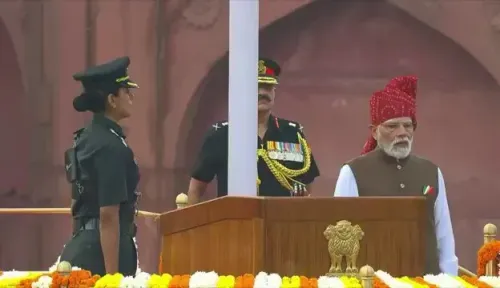
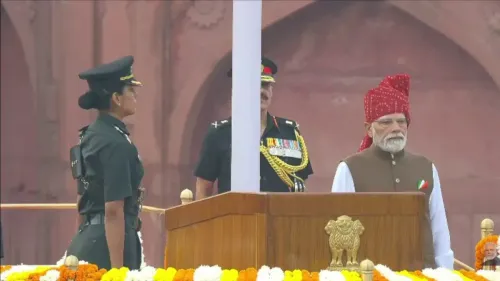
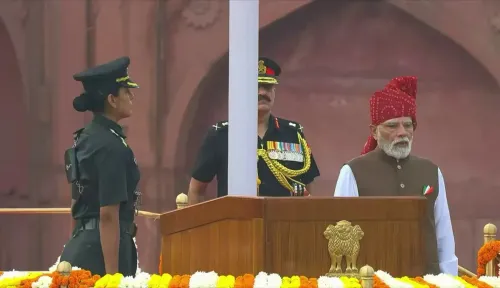
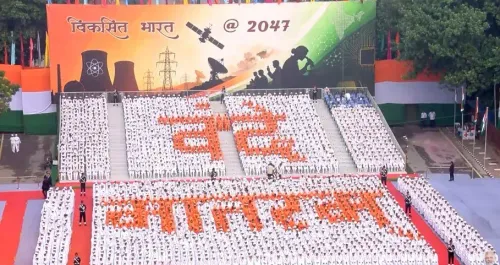
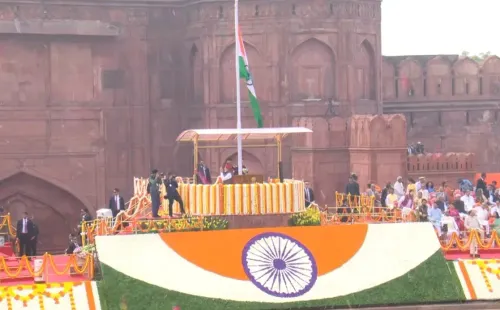
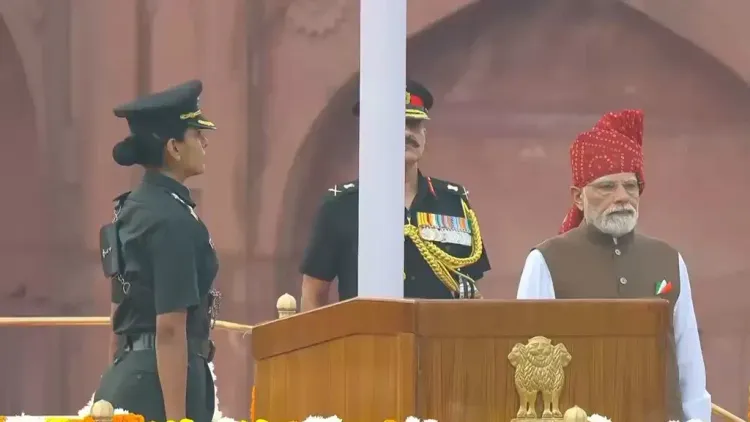
The walls of Red Fort rang with Vande Mataram on Independence Day, 15 August 2026 — and Union Minister Ashwini Vaishnaw made sure the moment reached every screen in the country.
Vaishnaw posted a video from the ramparts of the historic fort, captioning it: 'लाल किले की प्राचीर से वंदे मातरम् की गूंज!' — 'The echo of Vande Mataram from the ramparts of Red Fort!' The tricolour emoji punctuated what needed no further explanation.
Seventy-nine years of the same stage
Red Fort has been the unbroken venue for India's Independence Day address and flag-hoisting since 15 August 1947. The Mughal-era sandstone fort in Old Delhi functions less as a backdrop and more as a living symbol — the place where, each year, the Prime Minister speaks to the nation and patriotic songs fill the morning air.
Vande Mataram, composed by Bankim Chandra Chatterjee in the 1870s and formally adopted by the Constituent Assembly in 1950, is the national song that anchors those cultural performances. Its presence at Red Fort is not incidental — it is protocol, tradition, and emotion rolled into one.
A ritual that successive governments have kept intact
Every administration since Independence has maintained the Red Fort format: flag, address, cultural programme, Vande Mataram. The consistency is itself a statement — that the symbols of nationhood sit above the politics of the day. Vaishnaw's post, brief and unadorned, fits squarely inside that tradition.
For 79 years, the echo has returned. It returned again today.
Point of View
But its timing and platform are deliberate — a senior Cabinet minister amplifying the Independence Day moment reinforces the ruling dispensation's consistent effort to associate itself with nationalist cultural symbols. The choice of Vande Mataram at Red Fort is particularly resonant: the song carries a long history of political contestation in India, and its uncomplicated celebration here signals confidence in its mainstream acceptance. Across administrations, the Red Fort ceremony has functioned as a soft-power stage; Vaishnaw's share is a small but telling piece of that larger performance.
NationPress
15 Aug 2026
Frequently Asked Questions
Why is Vande Mataram sung at Red Fort on Independence Day?
Vande Mataram is India's national song and has been part of the cultural programme at Red Fort's Independence Day ceremony since 1947. It was composed by Bankim Chandra Chatterjee in the 1870s and formally adopted by the Constituent Assembly in 1950.
What did Ashwini Vaishnaw post on Independence Day 2026?
Vaishnaw shared a video of Vande Mataram resonating from the ramparts of Red Fort on 15 August 2026, captioning it 'The echo of Vande Mataram from the ramparts of Red Fort!'
Why is Independence Day celebrated at Red Fort?
Red Fort in Old Delhi has been the venue for India's Independence Day flag-hoisting and the Prime Minister's national address every year since 15 August 1947. The Mughal-era monument serves as the country's most prominent ceremonial stage.
Who composed Vande Mataram?
Bankim Chandra Chatterjee composed Vande Mataram in the 1870s. It was adopted as India's national song by the Constituent Assembly in 1950.
What is Ashwini Vaishnaw's role in the Union Cabinet?
Ashwini Vaishnaw is a senior BJP leader and Union Minister holding the portfolios of Railways, Information and Broadcasting, and Electronics and Information Technology.