Vaishnaw: UPI to Integrate with Indonesia's Payment System
Synopsis
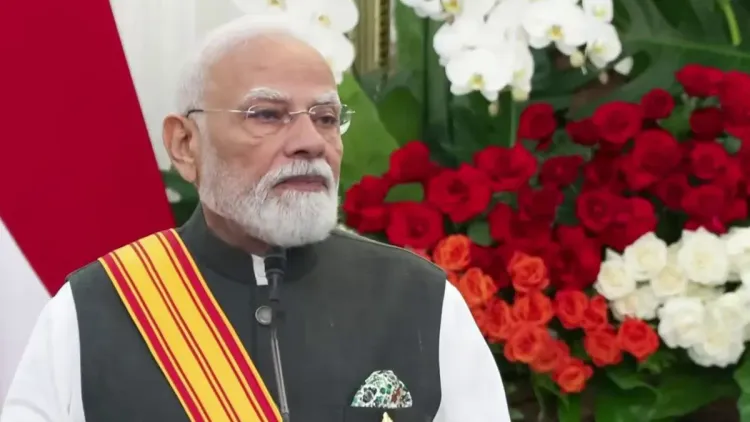
Prime Minister Modi, speaking in Jakarta, announced that India's UPI will integrate with Indonesia's payment system. Union Minister Ashwini Vaishnaw shared the statement on July 7, 2026. The move aims to enhance ease of doing business and travel between the two nations.
Key Takeaways
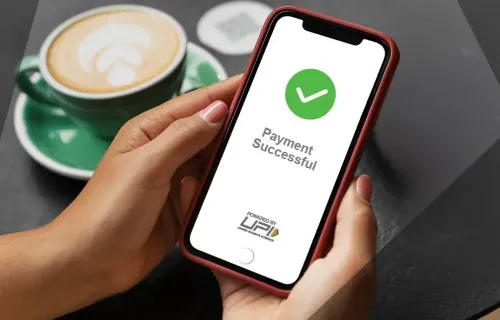
PM Modi announced in Jakarta that UPI will integrate with Indonesia's domestic payment system.
UPI was developed by NPCI and launched in 2016 ; its international rollout began with Bhutan in 2021 .
The integration is expected to benefit Indian tourists , Indonesian merchants , and fintech companies on both sides.
Indonesia is one of the largest digital economies in Southeast Asia and a key ASEAN partner for India.
The move aligns with India's broader strategy of exporting its digital public infrastructure to Global South and ASEAN nations.
Next steps include formal MoUs , a technical integration timeline, and potential pilot launches post the Jakarta visit.
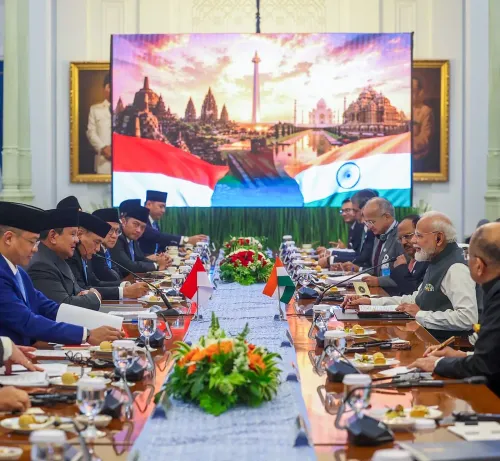
Union Minister Ashwini Vaishnaw on Tuesday, July 7, 2026, shared a statement by Prime Minister Narendra Modi made from Jakarta, Indonesia, announcing that India's Unified Payments Interface (UPI) is set to integrate with Indonesia's domestic payment system — a move expected to boost both trade and travel between the two nations.
Quoting the Prime Minister, Vaishnaw posted: 'Bharat ki UPI Indonesia ke payment system ke saath integrate hone ja rahi hai' — 'India's UPI is going to integrate with Indonesia's payment system. This will give a boost to both ease of doing business and ease of travel.'
Context
The announcement was made during PM Modi's bilateral visit to Jakarta, the capital of Indonesia. The statement signals a formal intent to link the two countries' real-time digital payment infrastructures, enabling cross-border transactions for citizens, merchants, and travellers from both sides.
Indonesia is one of Southeast Asia's largest digital economies, with a substantial and fast-growing mobile payments user base. A UPI linkage would allow Indian visitors and businesses operating in Indonesia to transact directly without relying on cash or international card networks.
Policy Backdrop
UPI was developed by the National Payments Corporation of India (NPCI) and launched in 2016 as a real-time inter-bank mobile payment system. Since then, India has systematically extended UPI's reach beyond its borders — beginning with Bhutan in 2021, followed by the UAE and Singapore in 2022–2023.
The Indonesia integration fits into a broader Indian strategy of exporting its digital public infrastructure stack — including UPI and Aadhaar-linked services — to partner nations across the ASEAN region and the Global South. The goal is interoperable, low-cost payment corridors that reduce friction in remittances, tourism, and bilateral trade.
India has positioned this initiative prominently at multilateral forums, including G20 and ASEAN digital economy meetings, framing UPI's international expansion as a model for emerging-market financial inclusion.
Stakeholders and Impact
Indian tourists travelling to Indonesia — one of the most visited destinations for Indian travellers in Southeast Asia — stand to benefit directly, as do Indonesian merchants who would gain access to a large, digitally active Indian consumer base. Fintech companies on both sides are expected to play a key role in building and operating the integration layer.
For businesses, a live UPI-Indonesia link would lower transaction costs and settlement times compared to conventional international wire transfers or card-based cross-border payments. Remittance corridors between the two countries could also see reduced fees once the technical integration is operational.
What's Next
The immediate focus will be on the technical roadmap and any Memoranda of Understanding (MoUs) or pilot programme announcements that follow the Jakarta visit. Observers will watch whether a formal timeline is published by NPCI and its Indonesian counterpart for live transaction capability.
Broader momentum for similar bilateral UPI linkages is expected to continue at upcoming ASEAN and G20 digital economy meetings. The Indonesia announcement reinforces India's ambition to make UPI a globally interoperable payment standard, particularly across the Indo-Pacific.
Point of View
With UPI now reaching into the heart of ASEAN. By framing the integration around 'ease of doing business' and 'ease of travel,' the government is pitching UPI not merely as a fintech product but as a diplomatic and economic instrument. Each new bilateral linkage strengthens India's argument at multilateral forums that UPI is a viable global payments standard. The Indonesia integration, if executed swiftly, could accelerate similar announcements with other ASEAN economies where Indian diaspora and trade flows are significant.
NationPress
7 Jul 2026
Frequently Asked Questions
What is the UPI Indonesia integration announced by PM Modi?
PM Modi announced in Jakarta on July 7, 2026 that India's Unified Payments Interface (UPI) will be integrated with Indonesia's domestic payment system, enabling cross-border real-time transactions between the two countries.
Which countries have UPI integration so far?
UPI's international expansion began with Bhutan in 2021, followed by the UAE and Singapore in 2022–2023. Indonesia is among the latest countries to be linked, as announced during PM Modi's Jakarta visit in 2026.
Who developed UPI and when was it launched?
UPI was developed by the National Payments Corporation of India (NPCI) and launched in 2016 to enable real-time inter-bank mobile payments within India.
How will UPI integration with Indonesia benefit Indian travellers?
Indian tourists visiting Indonesia will be able to make payments directly using UPI without needing cash or international cards, reducing transaction costs and improving convenience.
What is India's broader strategy behind expanding UPI internationally?
India is systematically exporting its digital public infrastructure stack, including UPI, to ASEAN and Global South partner nations as part of a strategy to build interoperable, low-cost payment corridors and reduce friction in trade and remittances.