Vande Mataram Bill passed: Opposition warns of polarisation, cites Constitution

Synopsis
Parliament has made insulting Vande Mataram a criminal offence, placing it on par with the national anthem. But the bill's mandatory six-stanza clause has united an unlikely coalition of opposition voices — from DMK's federalism concerns to AIMIM's constitutional challenge — raising questions about compelled expression that the Supreme Court's own precedent may not support.
Key Takeaways
The Lok Sabha passed the Prevention of Insults to National Honour (Amendment) Bill, 2026 by voice vote on 30 July , after the Rajya Sabha had already cleared it.
The bill criminalises insult to Vande Mataram and mandates singing of all six stanzas , equating it legally with the national anthem Jana Gana Mana .
Kanimozhi warned the bill would push state songs like Tamil Nadu's to third place, hurting regional sentiments.
AIMIM chief Asaduddin Owaisi cited Articles 19 and 25 and the Bijoe Emmanuel Supreme Court ruling against compelled singing.
Congress MP Tariq Anwar criticised the manner of passage, saying the opposition was not taken into confidence.
The bill now awaits presidential assent; legal challenges on constitutional grounds are widely anticipated.
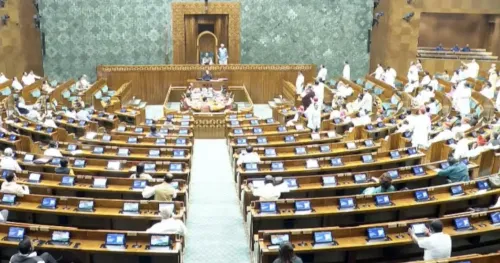
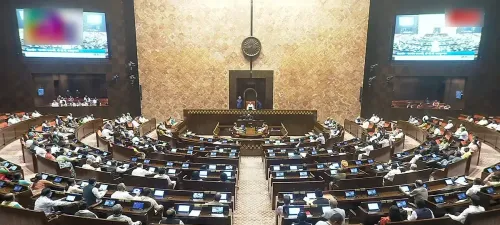
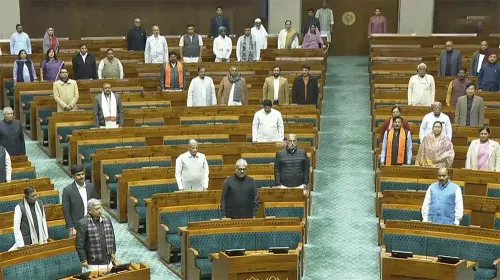
Parliament on Thursday, 30 July passed the Prevention of Insults to National Honour (Amendment) Bill, 2026, criminalising insult to the national song 'Vande Mataram' — a move that drew sharp pushback from opposition parties who called it an attempt to 'polarise' the country. The Lok Sabha cleared the bill by voice vote after the Rajya Sabha had already done so, placing Vande Mataram on the same legal footing as the national anthem, 'Jana Gana Mana'.
What the Bill Does
The amendment makes it a criminal offence to insult Vande Mataram, effectively equating it in legal status with the national anthem. Critically, the legislation also makes it mandatory to sing all six stanzas of the song — a provision that opposition members argue goes well beyond protecting national honour and into compelled expression.
Opposition's Core Concerns
Dravida Munnetra Kazhagam (DMK) MP K. Kanimozhi argued that requiring all six stanzas to be sung 'goes against national interests and is an attempt to polarise the country.' She raised a specific concern about the status of state songs, noting that in Tamil Nadu, the state song has been sung as the first song for over 50 years. 'Today, many state songs will be pushed to the third place; this will hurt the sentiments of the people in our state,' she said.
Congress MP Tariq Anwar questioned the manner of the bill's passage: 'The manner in which it was passed was not appropriate. Everyone should have been taken into confidence, including the Opposition.'
Muslim Community's Objection and the Religious Freedom Argument
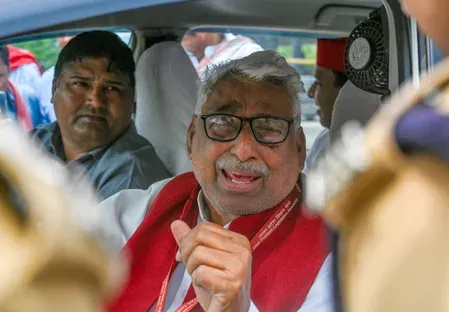
Samajwadi Party MP Ziaur Rahman Barq said the sentiments and concerns of India's Muslim population cannot be ignored, and argued the bill was designed to 'create a divide between Hindus and Muslims.' He clarified that the community's objection is limited to certain words in the national song that are 'in conflict with our religious beliefs,' adding: 'That is why we cannot sing it.' Barq further contended that the legislation would not address material concerns — jobs, corruption, inflation, or the NEET controversy — and amounted to a distraction from governance failures.
All India Majlis-e-Ittehadul Muslimeen (AIMIM) chief and MP Asaduddin Owaisi invoked Articles 19 and 25 of the Indian Constitution, which protect personal liberty and freedom of conscience respectively, and cited the Supreme Court's ruling in the landmark Bijoe Emmanuel versus State of Kerala case. 'Articles 19 and 25 of the Constitution say that your love for India is not determined by whether or not you sing a song,' Owaisi said. He also referenced the Preamble's guarantees of liberty of thought, expression, belief, faith, and worship, questioning how the state could compel anyone — including Sikhs or atheists — to sing a song invoking a deity.
Context and What Comes Next
This comes amid a broader pattern of legislation touching on national symbols and cultural identity during the current parliamentary session. The Bijoe Emmanuel precedent, set in 1986, had affirmed that students belonging to Jehovah's Witnesses could not be compelled to sing the national anthem on grounds of religious belief — a ruling opposition members say is directly relevant here. With the bill now passed by both Houses, it awaits presidential assent before becoming law. Legal challenges citing the constitutional provisions flagged by opposition members are widely expected.
Point of View
A territory the Supreme Court has historically treated with caution. The Bijoe Emmanuel ruling was not an outlier; it was a clear articulation of constitutional limits. What is striking is the breadth of opposition: federalism concerns from the DMK, religious freedom arguments from AIMIM and the SP, and procedural objections from the Congress suggest the government did not build cross-aisle consensus before pushing this through. Whether presidential assent is followed by a constitutional challenge will be the real test of how durable this legislation is.
NationPress
14 Sept 2026
Frequently Asked Questions
What does the Vande Mataram Amendment Bill 2026 do?
The Prevention of Insults to National Honour (Amendment) Bill, 2026 makes it a criminal offence to insult the national song Vande Mataram and mandates that all six stanzas be sung, placing it on the same legal footing as the national anthem Jana Gana Mana. Both the Rajya Sabha and Lok Sabha passed it on 30 July 2026.
Why is the opposition opposing the Vande Mataram Bill?
Opposition parties have raised concerns on multiple grounds: DMK's K. Kanimozhi argues it will marginalise state songs and polarise the country; AIMIM's Asaduddin Owaisi cites Articles 19 and 25 of the Constitution protecting freedom of conscience; and Congress's Tariq Anwar has criticised the manner of passage as excluding the opposition from deliberations.
What is the Bijoe Emmanuel case and why is it relevant?
The Bijoe Emmanuel versus State of Kerala is a 1986 Supreme Court ruling that held students cannot be compelled to sing the national anthem if it conflicts with their religious beliefs, affirming Articles 19 and 25 of the Constitution. Opposition members argue this precedent directly applies to mandatory singing of Vande Mataram under the new bill.
How does the bill affect state songs like Tamil Nadu's?
DMK MP K. Kanimozhi has argued that making Vande Mataram mandatory will push state songs to third place in order of precedence. She noted that Tamil Nadu has been singing its state song as the first song for over 50 years, and the change would hurt the sentiments of people in the state.
What happens next after Parliament passed the Vande Mataram Bill?
The bill now awaits presidential assent to become law. Legal challenges on constitutional grounds — particularly around Articles 19 and 25 — are widely expected from opposition parties and civil liberties groups.