Varanasi launches e-bike sharing at 18 stations under Fit India initiative
Synopsis
Varanasi — a city of 4-5 lakh daily visitors and labyrinthine lanes — has launched a QR-code-enabled e-bike sharing network across 18 stations, blending PM Modi's Fit India agenda with a practical fix for one of India's most congested heritage cities. If Phase 1 works, it could become a blueprint for tourist-heavy urban centres nationwide.
Key Takeaways
Varanasi launched a public e-bike sharing service on 2 November 2026 under PM Modi's Fit India initiative.
E-bikes and bicycles are available at 18 dedicated stations , each with 10 to 15 vehicles fitted with GPS trackers .
Users access vehicles by scanning a QR code and paying a nominal fee — no complex registration required.
Phase 1 covers Sigra , Sarnath , Kachhari , and the Cantonment area; Phase 2 will expand citywide.
Varanasi receives an estimated 4 to 5 lakh visitors daily , making last-mile eco-mobility a pressing urban need.
Varanasi rolled out a public e-bike sharing service on Monday, 2 November 2026, making e-bikes and bicycles available for rent across 18 dedicated stations in the city under Prime Minister Narendra Modi's 'Fit India' initiative. The project, jointly executed by the Varanasi Municipal Corporation and Smart City mission, is designed to promote fitness among residents and advance eco-friendly urban mobility in one of India's most densely visited heritage cities.
How the Service Works
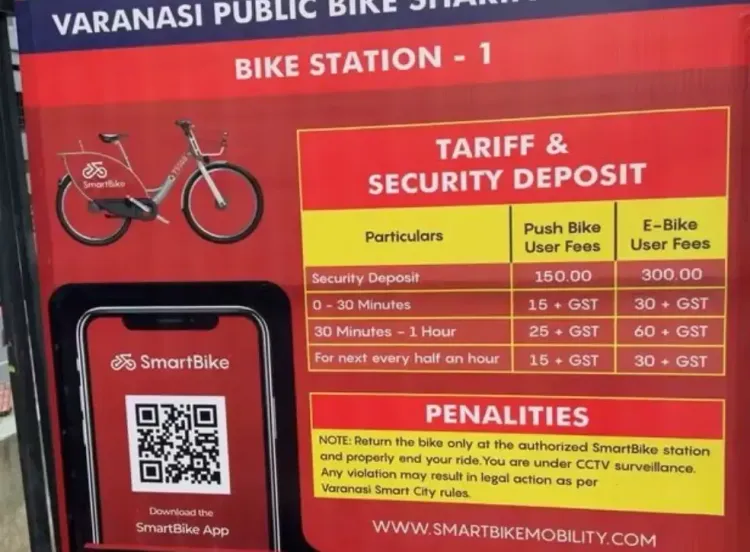
Riders can access an e-bike or a regular bicycle at any designated stand simply by scanning a QR code and paying a nominal fee — no prior registration process has been specified. Each stand is equipped with 10 to 15 vehicles, and all units carry GPS trackers for fleet management. Usage charges have been kept deliberately affordable to encourage adoption across income groups.
The QR-code-based payment system removes the need for physical tokens or cash, making the service accessible to tourists unfamiliar with local transport options.
Phase-wise Rollout Plan
The launch follows a two-phase blueprint. Phase 1 covers four key urban zones — Sigra, Sarnath, Kachhari, and the Cantonment area. Following an assessment of uptake and operational performance, Phase 2 will extend the network to other parts of the city, including areas with wider arterial roads.
According to Varanasi Municipal Commissioner Himanshu Nagpal, the service is particularly well-suited to the city's topography. Large vehicles are unable to navigate Varanasi's historic narrow lanes, making compact, low-speed e-bikes a practical last-mile solution for both locals and tourists.
Tourism Angle: A City of 4-5 Lakh Daily Visitors
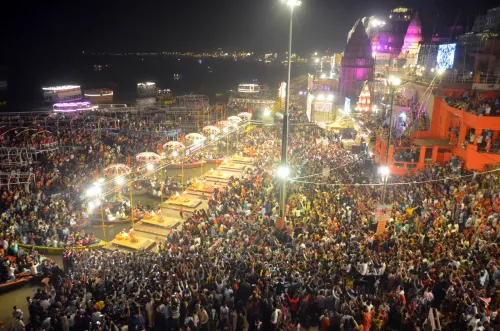
The timing of the launch is significant. Varanasi — also known as Kashi — attracts an estimated 4 to 5 lakh visitors daily, drawn to the Ganga Aarti, the ghats, and boat rides along the river. Tourism has surged in recent years, placing pressure on the city's already congested road network. The e-bike service is expected to reduce private vehicle use in congested zones while giving tourists a low-emission way to explore the old city.
This comes amid a broader national push for green urban transport, with several smart cities piloting public cycling infrastructure under central government schemes.
Fit India and Green Mobility Goals
The initiative aligns with two policy priorities: the Fit India Movement, launched by Prime Minister Modi in 2019 to promote physical activity, and the Centre's green mobility agenda, which seeks to reduce vehicular emissions in urban areas. Notably, Varanasi — as Modi's own parliamentary constituency — has been a test bed for several flagship urban infrastructure and sustainability projects in recent years.
If Phase 1 demonstrates strong ridership, the expanded network could set a replicable model for other heritage cities grappling with the twin challenges of congestion and air quality.
Point of View
But its real test will be sustained ridership beyond the novelty period. Heritage cities in India have a patchy record with cycling infrastructure — stands get built, then underutilised for want of maintenance or safety concerns. The GPS-and-QR model addresses access, but the narrow-lane advantage only holds if the city simultaneously restricts or prices private vehicles in those same corridors. Without demand-side pressure on car use, shared bikes tend to remain a tourist amenity rather than a genuine modal shift tool. The Phase 2 expansion to wider roads will be the truer indicator of whether this is urban mobility reform or a well-photographed launch event.
NationPress
2 Nov 2026
Frequently Asked Questions
What is the e-bike sharing service launched in Varanasi?
It is a public bike-sharing scheme launched on 2 November 2026 under PM Modi's Fit India initiative, offering e-bikes and regular bicycles for rent at 18 dedicated stations across Varanasi. Users can access any vehicle by scanning a QR code at the stand and paying a nominal fee.
Which areas are covered under Phase 1 of the Varanasi e-bike service?
Phase 1 covers Sigra, Sarnath, Kachhari, and the Cantonment area of Varanasi. Following an assessment of ridership and operations, Phase 2 will extend the network to other parts of the city, including wider-road areas.
How can someone use the Varanasi e-bike sharing service?
Users can access an e-bike or bicycle by scanning a QR code displayed at the bike stand and paying a nominal charge. No complex prior registration has been specified; the system is designed for quick, cashless access.
Why is the e-bike service significant for Varanasi specifically?
Varanasi's historic narrow lanes are difficult to navigate in large vehicles, making compact e-bikes a practical mobility solution. The city also receives an estimated 4 to 5 lakh visitors daily, and the service provides tourists an eco-friendly way to explore the ghats and old-city areas.
Who is overseeing the Varanasi e-bike project?
The project has been jointly developed by the Varanasi Municipal Corporation and the Smart City mission. Municipal Commissioner Himanshu Nagpal has outlined the operational details, including the QR-code access system and GPS tracking fitted on all vehicles.