CM Himanta: Vrindavani Vastra to Return to Assam from UK in 2027
Synopsis
Assam CM Himanta Biswa Sarma announced that the 16th-century Vrindavani Vastra — a silk tapestry woven under saint-scholar Srimanta Sankardev's guidance — will return from the UK to a new Guwahati museum in 2027, marking a landmark cultural repatriation.
Key Takeaways
The Vrindavani Vastra , a 16th-century silk tapestry depicting Krishna's life, will return to Assam from the UK in 2027 .
The artifact was created under the guidance of Mahapurush Srimanta Sankardev , founder of Ekasarana Dharma and Assam's defining saint-scholar.
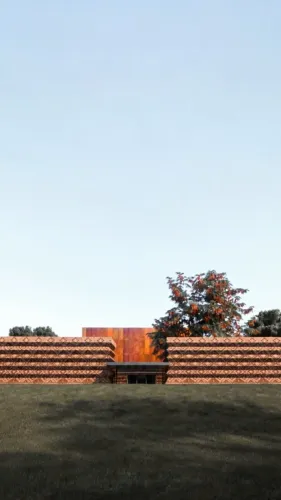
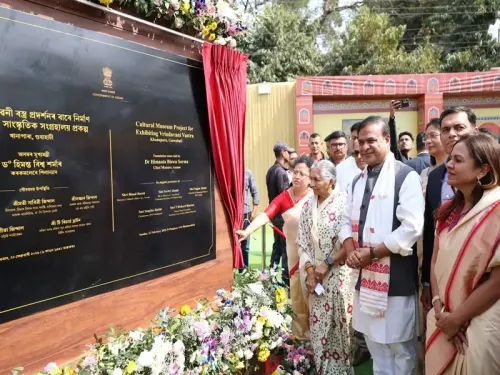
A dedicated museum is under construction in Guwahati to house and publicly display the returning artifact.
Assam CM Himanta Biswa Sarma shared a video of the museum's construction progress on 22 November 2026 .
The repatriation is part of India's broader push to reclaim historical artifacts held in foreign collections for display in their regions of origin.
A 500-year-old silk tapestry that once moved under the hands of Assam's greatest saint-scholar is coming home. Assam Chief Minister Himanta Biswa Sarma announced on Sunday, 22 November 2026, that the Vrindavani Vastra — the celebrated 16th-century textile woven under the guidance of Mahapurush Srimanta Sankardev — will return to Assam from the United Kingdom in 2027, and offered a first look at the museum taking shape in Guwahati that will house it.
What the Vrindavani Vastra is — and why it matters
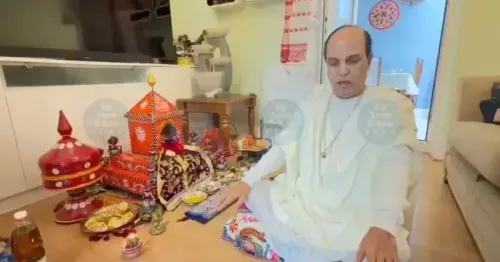
The Vrindavani Vastra is no ordinary textile. Created in the 16th century under the direct guidance of Srimanta Sankardev — the saint-philosopher who founded Ekasarana Dharma and reshaped Assamese identity through devotional art, music, and literature — the tapestry depicts episodes from Lord Krishna's life with a visual and spiritual depth that places it among the most significant artifacts of Vaishnavite heritage anywhere in India. It is woven in silk, and every thread carries the weight of a cultural movement that defined the Brahmaputra valley for centuries.
The piece has been held in a United Kingdom collection for years, beyond the reach of the Assamese public who regard Sankardev not just as a historical figure but as the defining moral and spiritual architect of their civilisation. Its absence has been a quietly felt wound in Assam's cultural consciousness.
The Guwahati museum taking shape for the homecoming
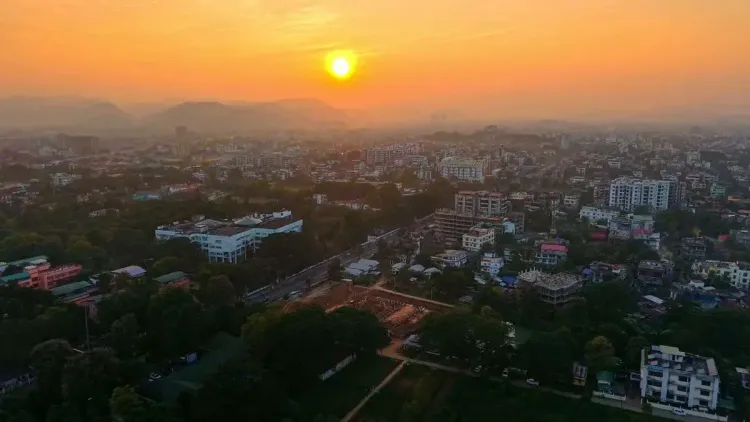
Sarma's post offered a glimpse of construction progress on the dedicated museum in Guwahati — Assam's capital and commercial heart — that will be the permanent home for the Vrindavani Vastra once it arrives. The move signals that the return is not simply a diplomatic milestone but a full public-access cultural event: a space where Assamese citizens and visitors can stand before the artifact that their forefather-saint helped create.
The museum's construction timeline is calibrated to the 2027 repatriation. While specifics of the formal handover agreements are not yet in the public domain, the government's visible investment in the display infrastructure signals confidence that the return is on track.
Repatriation as a broader cultural reclamation
The Vrindavani Vastra's homecoming fits into a larger, accelerating pattern of India negotiating the return of historical artifacts from foreign museums and private collections to their regions of origin. For Assam specifically, the repatriation carries an added dimension: it is inseparable from the state government's sustained effort to amplify Sankardev's legacy as the civilisational anchor of the Northeast. Bringing the tapestry back is, in that sense, both a cultural act and a statement of identity.
When the Vrindavani Vastra finally rests in Guwahati, it will be the first time in living memory that Assamese people can see it — not in a photograph, not in a foreign gallery, but in the land it was made to illuminate.
Point of View
Who has consistently framed Srimanta Sankardev's Vaishnavite legacy as the civilisational core of the Northeast. By anchoring the homecoming to a purpose-built Guwahati museum, the state government converts a diplomatic achievement into a durable public institution. The move also slots neatly into New Delhi's accelerating global effort to negotiate the return of Indian heritage artifacts, giving Assam a prominent regional chapter in that national narrative. The 2027 timeline will be a credibility test: museum delivery and formal handover will determine whether this becomes a genuine cultural landmark or a promise that outruns execution.
NationPress
22 Nov 2026
Frequently Asked Questions
What is the Vrindavani Vastra?
The Vrindavani Vastra is a 16th-century silk tapestry woven under the guidance of Assamese saint-scholar Mahapurush Srimanta Sankardev, depicting episodes from Lord Krishna's life. It is one of the most significant artifacts of Vaishnavite heritage from Assam.
When will the Vrindavani Vastra return to Assam?
The Vrindavani Vastra is set to return to Assam from the United Kingdom in 2027, as announced by Chief Minister Himanta Biswa Sarma on 22 November 2026.
Where will the Vrindavani Vastra be displayed after its return?
A dedicated museum is under construction in Guwahati, the capital of Assam, which will house and publicly display the Vrindavani Vastra after its repatriation.
Who was Srimanta Sankardev?
Srimanta Sankardev was a 15th-16th century Assamese saint-scholar who founded Ekasarana Dharma, a Vaishnavite devotional movement, and guided the creation of devotional arts including the Vrindavani Vastra. He is widely regarded as the defining cultural and spiritual architect of Assam.
What is India's policy on repatriating historical artifacts from abroad?
India has been actively negotiating the return of historical artifacts held in foreign museums and private collections to their regions of origin. The Vrindavani Vastra's return from the UK is part of this broader repatriation effort.