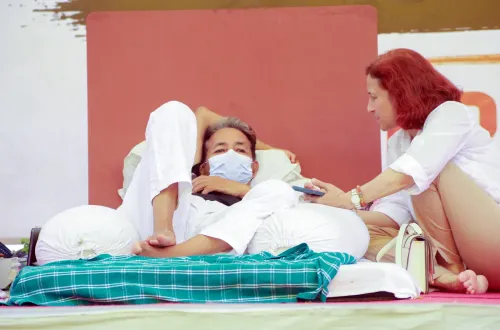
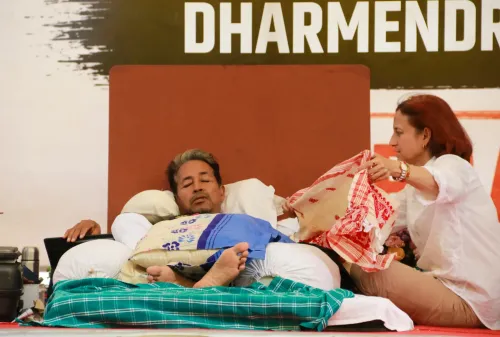
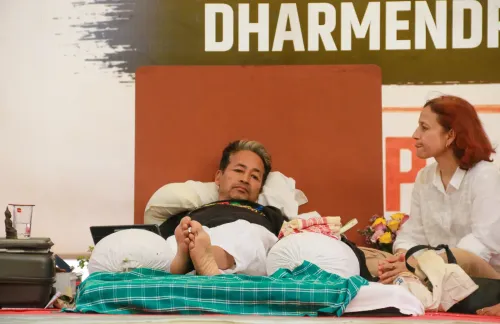
Wangchuk hunger strike day 24: Will continue till Parliament acts on student crackdown
Synopsis
Twenty-four days into his hunger strike, Sonam Wangchuk is refusing to stand down — and his wife's account of MPs being blocked from visiting him, police entering protest vehicles, and an ICU allegedly used to cut off communication paints a picture far more fraught than a simple health-and-safety hospitalisation.
Key Takeaways
Sonam Wangchuk is on day 24 of his hunger strike as of 21 July .
He will continue until Parliament takes cognisance of alleged Delhi Police brutality during the 'Sansad Chalo' march.
The Delhi High Court on 21 July ordered his transfer from Safdarjung Hospital to Medanta .
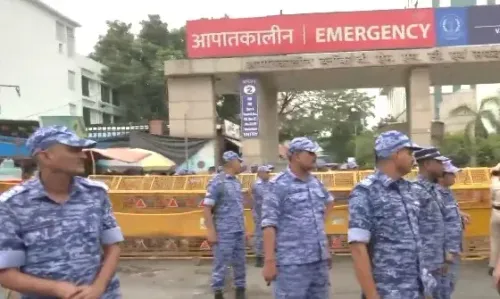
Angmo alleged that visiting MPs were denied entry at Safdarjung and that Wangchuk was brought there by police, not medical staff.
Wangchuk is reported to be currently stable , though some variation in vitals is expected at this stage of the fast.
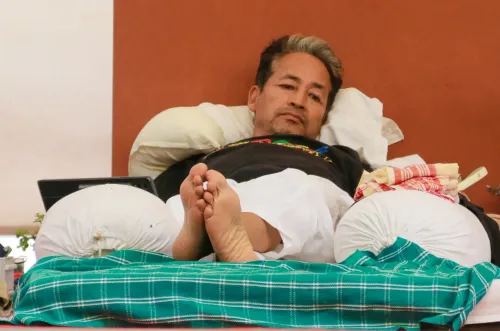
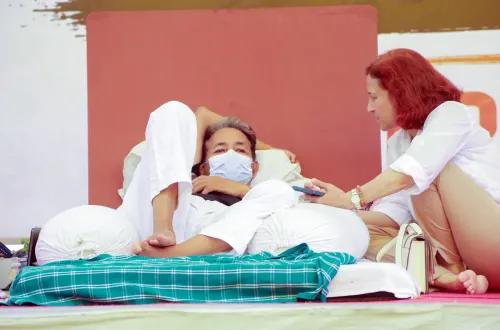
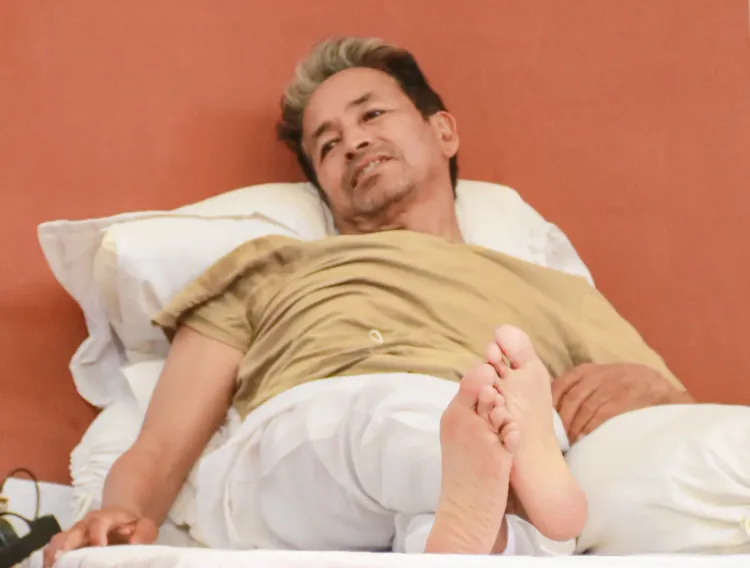
Innovator and climate activist Sonam Wangchuk, now on the 24th day of his hunger strike, has resolved to press on with his agitation until Parliament takes cognisance of the Delhi Police's alleged 'brutal action' against protesters during the 'Sansad Chalo' march, his wife Gitanjali J. Angmo said on Tuesday, 21 July. Angmo made the statement after a Delhi High Court order permitted Wangchuk to be transferred from Safdarjung Hospital to Medanta.
Why Wangchuk Is Extending the Strike
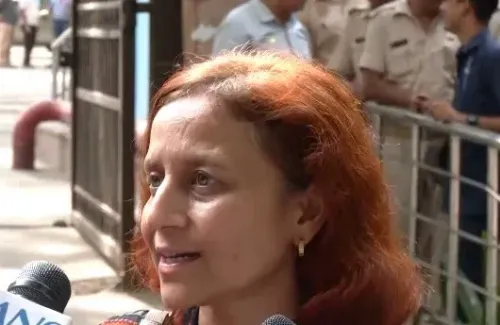
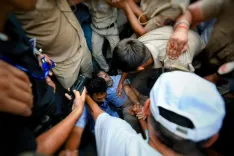
'Sonam has decided to continue his hunger strike because of the cruelty and ruthlessness with which the students were treated,' Angmo told reporters. 'They were beaten, lathi-charged, and tear gas was used against them. In solidarity with those students, he has extended his hunger strike until Parliament takes cognisance of their demands and they are heard.'
She also described the previous day's demonstrations as a moment of 'unprecedented peaceful resilience' by the youth of India — a characterisation that stands in contrast to police accounts alleging that some agitators attacked personnel.
Angmo's Account of the Police Action
Responding to allegations that certain protesters had attacked police, Angmo offered a first-person account. She said she was inside a truck when police entered and attempted to forcibly remove a person identified as Abhijit. 'Around me, everyone made a human chain and protected me,' she said, adding: 'If I had been alone and something was done to me, I would have defended myself too.'
She further alleged that Members of Parliament who had travelled to Safdarjung Hospital to meet Wangchuk were denied entry — an allegation that, if verified, would raise questions about access rights during the activist's hospitalisation.
The Hospital Transfer and Trust Deficit
The Delhi High Court disposed of the matter in Wangchuk's favour on 21 July, clearing his transfer to Medanta. Angmo said doctors who had been treating Wangchuk for the preceding 20 days appeared in court and testified that it was irregular for a patient's own physicians to be barred from seeing him at a government hospital.
Angmo alleged that Wangchuk's hospitalisation at Safdarjung was itself unnecessary, as his vitals were reportedly being monitored at Jantar Mantar. 'He was intentionally being kept in the ICU in order to curb his communication with the outside world,' she claimed. She also noted that Wangchuk was 'brought to the Safdarjung Hospital not by medical staff but by police in civil dress,' describing this as a key reason for her 'trust deficit' regarding his care.
Wangchuk's Current Health Status
Angmo confirmed that Wangchuk is currently stable, while acknowledging that some variation in his vital parameters is 'natural after around 25 days of hunger strike.' The activist's condition will continue to be monitored as the strike enters what could be a prolonged phase pending any parliamentary response.
What Happens Next
With the hunger strike now past three weeks, pressure is mounting on the Centre and Parliament to formally acknowledge the protesters' demands. Wangchuk's transfer to Medanta may restore some medical autonomy, but his wife made clear that no change in venue alters the political calculus — the strike ends only when Parliament acts.
Point of View
Blocked MPs, and police-led hospitalisation, if substantiated, point to a pattern of administrative containment that sits uneasily with constitutional guarantees. Parliament's silence so far is itself a political signal. And with the hunger strike past three weeks, the health risk is no longer theoretical — the government faces a narrowing window to respond before the situation escalates beyond its control.
NationPress
21 Jul 2026
Frequently Asked Questions
Why is Sonam Wangchuk on a hunger strike?
Sonam Wangchuk is on a hunger strike to press demands related to Ladakh, and has extended it in solidarity with students who were allegedly lathi-charged and tear-gassed by Delhi Police during the 'Sansad Chalo' march. He has said the strike will continue until Parliament formally acknowledges the protesters' demands.
What did the Delhi High Court order on 21 July?
The Delhi High Court on 21 July ordered that Wangchuk be transferred from Safdarjung Hospital to Medanta, ruling in his favour on the question of the right to choose one's own doctor and course of treatment. His doctors had testified in court that being barred from seeing their own patient at a government hospital was irregular.
What did Gitanjali Angmo allege about Wangchuk's hospitalisation?
Angmo alleged that Wangchuk's hospitalisation at Safdarjung was unnecessary, that he was brought there by police in civil dress rather than medical staff, and that he was kept in the ICU to restrict his communication with the outside world. She also alleged that MPs who visited the hospital were denied access to him.
Is Sonam Wangchuk's health at risk?
Angmo confirmed on 21 July that Wangchuk is currently stable, but noted that some fluctuation in vital parameters is natural after approximately 25 days of hunger strike. His condition is being monitored and his transfer to Medanta is expected to allow his own doctors to resume care.
What is the 'Sansad Chalo' march?
The 'Sansad Chalo' march was a protest movement, reportedly involving students and activists, aimed at marching to Parliament to press demands related to Ladakh. Delhi Police's handling of the march — including alleged lathi-charges and tear gas use — became a flashpoint and prompted Wangchuk to extend his hunger strike in solidarity with those affected.