Italy burqa ban in schools: Islamic scholar says respect that country's laws

Synopsis
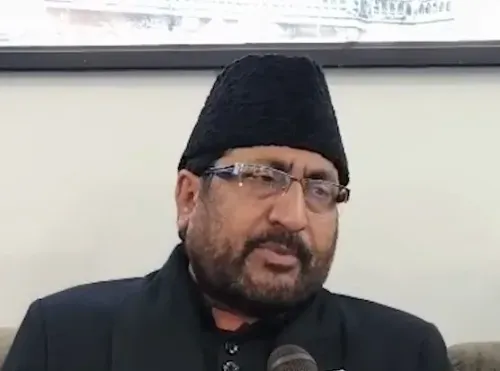
A notable Indian Islamic scholar has broken from predictable outrage — endorsing Italy's right to ban burqas in schools as a matter of sovereign law, while also turning his fire on the All India Muslim Personal Law Board, accusing it of inciting Muslims for political ends. Both positions, rare in their candour, set Mufti Wajahat Qasmi apart from mainstream religious commentary.
Key Takeaways
Mufti Wajahat Qasmi said on 21 September 2026 that Italy's proposed ban on burqas and niqabs in schools should be respected as a legitimate exercise of national law-making.
Italian PM Giorgia Meloni announced the proposals at a Brothers of Italy (FdI) youth wing event, also including a cap on foreign students per class and mandatory Italian-language lessons for parents.
Qasmi criticised the All India Muslim Personal Law Board (AIMPLB) , accusing it of 'continuously inciting Muslims' on issues from triple talaq to the Waqf Bill.
He called the AIMPLB's planned protest at Jantar Mantar 'condemnable' after the event was postponed, and alleged some board members had provoked Muslims against the Prime Minister.
Italy's proposed measures are framed as integration reforms; immigration remains a key issue ahead of Italy's next general election.
Islamic scholar Mufti Wajahat Qasmi on 21 September 2026 weighed in on Italy's proposed ban on burqas and niqabs in schools, saying that nations have the right to enact laws suited to their domestic circumstances and that such laws deserve respect. His remarks came from New Delhi in response to a proposal tabled by Italian Prime Minister Giorgia Meloni.
What Qasmi Said
'If every country takes certain measures for its security, protection or to put things in order, then we should respect that country's laws. Obviously, if Italy has made such a law, it would have been made keeping the situation in its country in mind, so we will respect it,' Qasmi said.
His comments were notably calibrated — focusing on the principle of sovereign law-making rather than endorsing or opposing the substance of the Italian proposal. He acknowledged that such measures are typically shaped by a country's internal context.
Italy's Proposed Education Reforms
Prime Minister Meloni unveiled the proposed changes on Sunday while addressing a gathering of the youth wing of her nationalist-conservative Brothers of Italy (FdI) party. The package includes a ban on burqas and niqabs in schools, a cap on the number of foreign students permitted per class, and mandatory Italian-language lessons for parents of foreign students deemed to have 'serious difficulties integrating into the school system.'
The Italian government has framed the measures as integration-focused reforms aimed at strengthening the functioning of the country's education system. Immigration and cultural integration are expected to remain central themes in Italian political debate ahead of the next general election.
Qasmi's Criticism of All India Muslim Personal Law Board
Separately, Qasmi sharply criticised the All India Muslim Personal Law Board (AIMPLB), reacting to the postponement of its planned protest at Jantar Mantar in New Delhi.
'The Personal Law Board is not an organisation that should be given permission to carry out such activities. From triple talaq to the Waqf Bill, the Muslim Personal Law Board has continuously incited Muslims,' he said. Qasmi alleged that certain members of the board had 'continuously provoked Muslims against the Prime Minister,' calling such politics a form of 'hatred' that is 'not appropriate.'
'I believe this is politics that spreads hatred and is not appropriate. Therefore, I do not think they should be given permission anywhere. Despite this, they held a press conference and tried to heat up the atmosphere, which is condemnable,' he added.
Broader Context
The statements by Qasmi come at a time when debates over religious dress codes in public institutions are intensifying across Europe, with France and Belgium having imposed similar restrictions earlier. Italy's move, if enacted, would add to a growing list of European nations that have legislated on Islamic face coverings in specific public settings. Domestically, Qasmi's critique of the AIMPLB reflects a continuing fault line within Muslim community leadership over the board's political positioning on issues such as the Waqf Amendment Bill and personal law reform.
Point of View
His deference to sovereign law-making cuts against the reflexive solidarity that often dominates Muslim religious commentary on European dress-code bans — and signals a strand of Indian Islamic thought willing to compartmentalise theology from geopolitics. His attack on the AIMPLB is sharper still: it names a fault line that mainstream coverage routinely softens, specifically that the board's political interventions on triple talaq, Waqf, and street protests may be widening community grievances rather than resolving them. Whether Qasmi's voice gains traction, or is drowned out by institutional responses from the board, will be a useful indicator of where intra-community debate on political representation is heading.
NationPress
21 Sept 2026
Frequently Asked Questions
What is Italy's proposed burqa ban in schools?
Italian Prime Minister Giorgia Meloni has proposed banning burqas and niqabs in schools as part of a broader education reform package. The proposals, announced at a Brothers of Italy party event, also include a cap on foreign students per class and mandatory Italian-language lessons for parents of foreign students with integration difficulties.
What did Mufti Wajahat Qasmi say about Italy's proposed school ban?
Qasmi said countries should be free to enact laws suited to their domestic circumstances and that such laws deserve respect. He stated that if Italy has introduced such a law, it would have been shaped by the country's own situation, and therefore should be respected.
Why did Qasmi criticise the All India Muslim Personal Law Board?
Qasmi alleged that the AIMPLB had continuously incited Muslims on issues such as triple talaq and the Waqf Bill, and that some of its members had provoked Muslims against the Prime Minister. He called the organisation's planned protest at Jantar Mantar 'condemnable' and said it should not be given permission to hold such activities.
How does Italy's proposed ban compare to similar laws in other European countries?
Italy's proposal would follow similar restrictions already in place in France and Belgium, which have imposed bans on full-face coverings in various public settings. If enacted, Italy would join a growing list of European nations to legislate on Islamic face coverings in specific public spaces.
What is the All India Muslim Personal Law Board?
The All India Muslim Personal Law Board (AIMPLB) is an organisation that advocates for the preservation of Muslim personal law in India. It has been a prominent voice on issues such as triple talaq and the Waqf Amendment Bill, though critics including Qasmi argue its political activism has been divisive rather than constructive.