Impact of West Asia Conflict on India's Handicrafts and Mango Exports
Synopsis
As tensions rise in West Asia, India's exports, particularly in handicrafts and mangoes, face significant challenges. Exporters report halted sales and increased costs, prompting calls for government support to alleviate financial strain.
Key Takeaways
West Asia conflict severely impacts India's exports .
Major disruptions in handicrafts and mango shipments .
Exporters facing liquidity stress and delayed payments.
Government urged for credit facility extensions .
Air freight costs for mangoes have nearly doubled.
New Delhi, March 28 (NationPress) The persistent unrest in West Asia is beginning to take a toll on India's exports, particularly in the areas of handicrafts and mango shipments, as reported by industry experts.
Exporters indicate that a significant portion of India's trade—around 50-60% in various sectors—is reliant on Middle Eastern markets, where demand typically surges during the Ramzan period.
The President of the Kashmir Chamber of Commerce and Industry (KCCI), Javid Tenga, informed IANS that the conflict in West Asia has drastically hindered business operations this season.
"Sales generally escalate during Ramzan, but this year the ongoing strife has caused trade to come to a standstill, delivering a severe blow to exporters," he stated.
Tenga further noted that considerable volumes of export consignments are currently stuck in India due to these disruptions, while payments for already dispatched shipments are also facing delays.
He highlighted that exporters are experiencing strain as their pre-shipment and post-shipment banking limits are nearly depleted.
Given the current predicament, exporters are requesting at least a six-month extension in credit facilities from the government to alleviate liquidity pressures.
The handicrafts sector is among the most affected, with market closures and restricted movement in West Asia leading to a near-complete halt in sales.
"Exports of handicrafts have been impacted almost entirely, significantly affecting the livelihoods of many individuals connected to the sector," Tenga remarked.
Exporters have raised their concerns with the government, and the Director General of Foreign Trade (DGFT), Lav Aggarwal, has acknowledged the issue, assuring that measures are being taken to resolve their challenges.
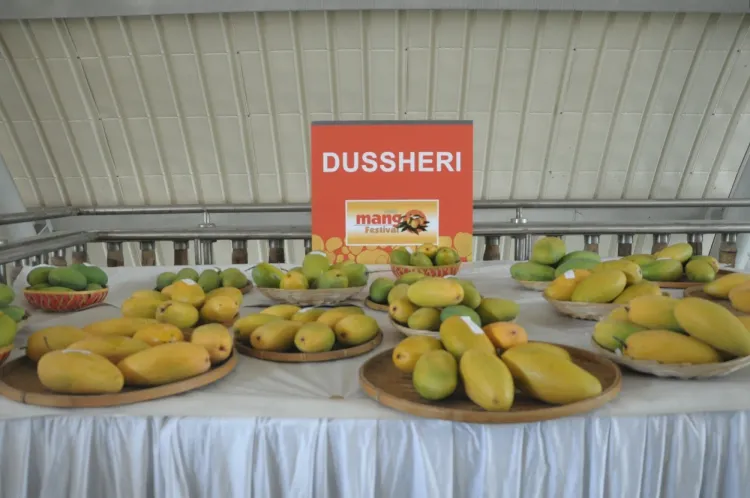
In addition, Prakash J. Khakhar, Chairman of Kay Bee Exports, noted that the crisis has also affected mango exports, with shipments now heavily reliant on air cargo due to interruptions in sea routes.
He mentioned that air freight costs have nearly doubled from approximately Rs 300 per kg to Rs 600-650 per kg, greatly increasing the burden on exporters.
"Limited airline operations have disrupted connectivity, restricting exports to select locations such as London, Singapore, Dubai, Hong Kong, and Goa," Khakhar added.
He also indicated that rising costs and fewer options are resulting in losses.
Furthermore, exporters have urged the Union government to consider temporary air freight subsidies to mitigate increasing logistics costs, claiming that airlines are charging inflated rates amid limited competition under the open sky policy.
Mango prices have also experienced sharp fluctuations, with early-season rates reaching Rs 1,500-1,800 per unit before gradually declining.
Industry stakeholders also mentioned that prices are likely to further stabilize as domestic market arrivals increase.
Point of View
Particularly handicrafts and mangoes, which are experiencing unprecedented disruptions. The government must respond promptly to mitigate the financial stress on exporters and protect livelihoods.
NationPress
22 Sept 2026
Frequently Asked Questions
How is the West Asia conflict affecting Indian exports?
The conflict has caused significant disruptions in exports, particularly in handicrafts and mango shipments, leading to halted sales and delayed payments.
What percentage of India's trade is linked to Middle Eastern markets?
Nearly 50-60% of India's trade in some sectors is connected to Middle Eastern markets, where demand peaks during Ramzan.
What measures are exporters seeking from the government?
Exporters are requesting at least a six-month extension in credit facilities to ease liquidity pressures caused by the disruptions.
How have mango export costs changed due to the conflict?
Air freight costs for mango shipments have nearly doubled, significantly increasing the financial burden on exporters.
What is the current state of the handicrafts sector?
The handicrafts sector has been severely affected, with market closures and restricted movement leading to a near-complete halt in sales.