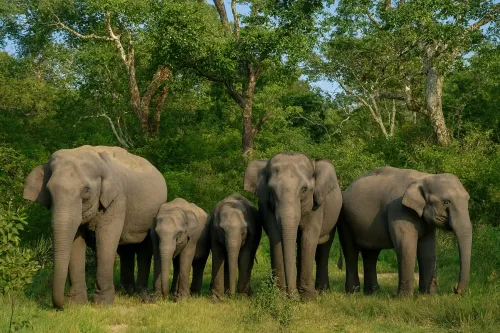
WII report flags elephant habitat crisis on World Elephant Day 2025
Synopsis
India's first DNA-based elephant census puts the wild population at 22,514 — but the WII's landmark report reveals a species under siege. From fireballs hurled at calves in the Western Ghats to railway deaths in the Northeast, the threats are escalating faster than the corridors meant to contain them. The government's 33 reserves and 150 corridors are a foundation, but the report makes clear they are not yet enough.
Key Takeaways
The Wildlife Institute of India (WII) estimated India's wild elephant population at 22,514 through the country's first-ever DNA-based synchronous census (SAIEE) .
The actual count could range between 18,255 and 26,645 animals, according to the report.
Habitat fragmentation in the Western Ghats , East Central , and Northeast landscapes is a primary threat, driven by mining, plantations, and infrastructure.
Electrocution and railway collisions account for a significant share of annual elephant fatalities; attacks on elephants — including calves — with weapons and firecrackers have also been documented.
India has 33 Elephant Reserves across 14 states and 150 scientifically validated corridors , as cited by Union Forest Minister Bhupender Yadav .
Nearly 60% of the world's wild Asian elephants live in India, according to Union MoS Kirti Vardhan Singh .
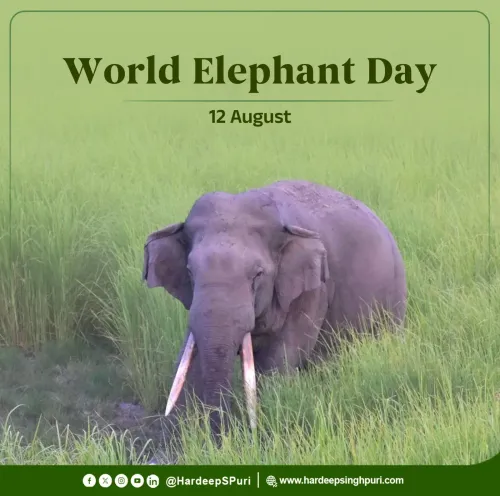
The Wildlife Institute of India (WII) has sounded an urgent alarm over the survival of India's wild elephants, releasing a landmark report titled 'Status of Elephants in India' that documents deepening habitat fragmentation, escalating human-elephant conflict, and rising fatalities from electrocution and railway collisions. The findings were underscored on World Elephant Day, 12 August, even as Union ministers reaffirmed the government's conservation commitments.
India's Elephant Count: First DNA-Based Census
The WII, with support from the Union Ministry of Environment, Forest and Climate Change (MoEFCC), conducted the country's first-ever DNA-Based Synchronous All India Population Estimation of Elephants (SAIEE). The exercise estimated India's wild elephant population at approximately 22,514, with the actual count potentially ranging between 18,255 and 26,645 animals. The methodology marks a significant upgrade from earlier visual-count techniques, lending greater scientific credibility to the figures.
Habitat Fragmentation: A Threat Across All Landscapes
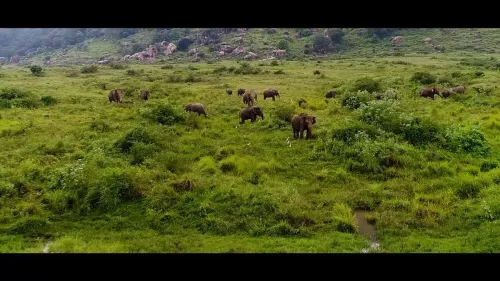
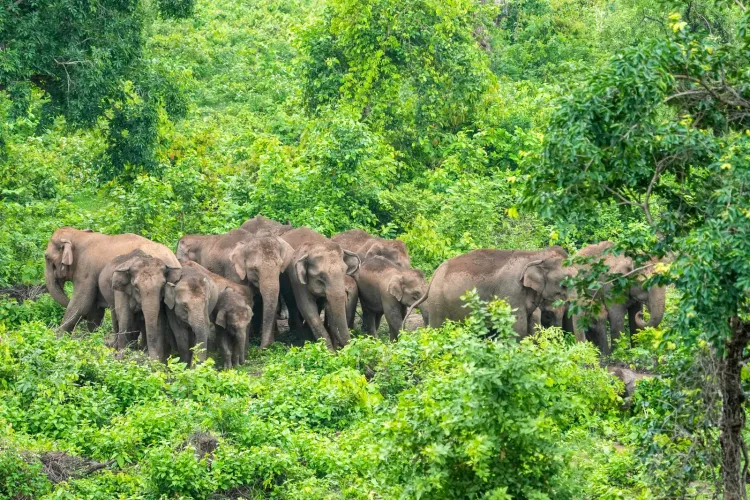
The report paints a troubling picture across India's three major elephant landscapes. In the Western Ghats, the once-contiguous elephant population is rapidly fragmenting due to expanding commercial plantations — particularly coffee and tea — invasive plant species, farmland fencing, human encroachment, and accelerating developmental projects. According to the WII, this fragmentation 'jeopardises habitat contiguity,' making safe movement corridors between sub-populations increasingly critical.
In the East Central landscape, unmitigated mining and linear infrastructure construction are degrading habitats, pushing long-ranging elephants into historically occupied but currently unsettled areas. This has intensified conflict with communities that, according to the report, lack 'cultural coexistence experience' with elephants — a volatile combination for both people and wildlife.
The Northeast landscape, which holds India's second-largest elephant population, faces compounded pressures from historical resource exploitation dating to the colonial era, ongoing habitat fragmentation, and the spread of tea plantations and mines. The WII has stressed the need for corridor connectivity across habitat patches and stronger law enforcement monitoring for the species' long-term survival in the region.
Key Threats: Electrocution, Railways, and Poaching
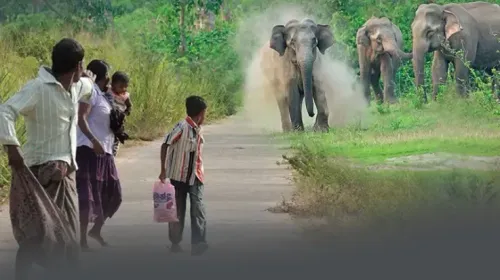
Beyond habitat loss, the WII has flagged electrocution and railway collisions as causing a significant number of elephant fatalities annually. Over the past year, disturbing images and videos have emerged of humans attacking elephants — including calves — with sharp weapons, firecrackers, and reportedly even fireballs. The report calls for 'mitigation measures for linear infrastructure as well as power lines' and stronger enforcement against poaching as essential components of any sustainable conservation strategy.
What the Government Said
Union Forest Minister Bhupender Yadav used the occasion to reaffirm India's conservation commitments. In a post on X, Yadav noted that India currently maintains 33 Elephant Reserves across 14 states and 150 scientifically validated elephant corridors. He said advanced population monitoring and stronger human-elephant conflict mitigation measures are actively strengthening conservation outcomes. 'When we secure the future of elephants, we secure our forests, biodiversity and ecological heritage,' Yadav said.
Union Minister of State for Environment Kirti Vardhan Singh added that nearly 60 per cent of the world's wild Asian elephants live in India, describing them as 'a living symbol of the country's ecological heritage.' Singh highlighted the role of elephants as ecosystem engineers — dispersing seeds across vast distances and helping maintain ecological balance with every step.
The Path Forward
The WII has outlined a multi-pronged conservation roadmap: strengthening wildlife corridors, restoring degraded habitats, improving protection strategies, and critically reviewing developmental projects that encroach on elephant ranges. The report also calls for uniform compensation mechanisms across all elephant-presence areas and community sensitisation campaigns — both in established elephant zones and newly colonised areas — arguing that local community support is indispensable for the long-term survival of the Asiatic elephant in India. With human-elephant interface expanding and habitat shrinking, the institute warns that future strategies must not 'exacerbate existing threats.'
Point of View
150 corridors, advanced monitoring. The WII's own report tells a more complicated story: corridors that are fragmenting, not consolidating; conflict zones expanding into areas with no coexistence culture; and fatality causes like electrocution and railway collisions that are entirely preventable with political will. The 22,514 figure from the DNA census is a genuine methodological advance, but a number without a trajectory is just a snapshot. What the report demands — and what the ministerial statements did not address — is a binding framework for measuring whether India's elephant population is stable, growing, or in decline. Conservation credibility requires that accountability, not just commitment.
NationPress
26 Sept 2026
Frequently Asked Questions
How many wild elephants are there in India according to the latest estimate?
The Wildlife Institute of India's first DNA-based synchronous census estimated India's wild elephant population at approximately 22,514, with the actual count potentially ranging between 18,255 and 26,645 animals. This is the most scientifically rigorous population estimate India has conducted for the species.
What is the 'Status of Elephants in India' report by WII?
It is a landmark report released by the Wildlife Institute of India, supported by the Union Ministry of Environment, Forest and Climate Change, based on the first-ever DNA-Based Synchronous All India Population Estimation of Elephants (SAIEE). The report documents population figures, habitat threats, and conservation recommendations across India's major elephant landscapes.
What are the biggest threats to elephants in India?
The WII report identifies habitat fragmentation from mining, commercial plantations, and infrastructure construction as the primary threat, alongside electrocution, railway collisions, poaching, and direct human attacks. Expanding human-elephant conflict — especially in areas without coexistence experience — is also flagged as a critical risk.
How many elephant reserves and corridors does India have?
India currently has 33 Elephant Reserves spread across 14 states and 150 scientifically validated elephant corridors, as cited by Union Forest Minister Bhupender Yadav on World Elephant Day, 12 August.
What share of the world's wild Asian elephants live in India?
Nearly 60 per cent of the world's wild Asian elephants live in India, according to Union Minister of State for Environment Kirti Vardhan Singh. This makes India the single most important range country for the species' global survival.