Parliament Winter Session likely in first week of December, women's quota Bill key agenda
Synopsis
India's Parliament Winter Session is set for the first week of December — but the real story is the procedural chess being played around it. The government is keeping the unprorogued Monsoon Session alive as a two-day-notice shortcut to push the women's reservation-Delimitation Bill, a constitutional amendment that the NDA cannot pass alone and that the opposition is not yet ready to hand it.
Key Takeaways
The Winter Session of Parliament is likely to begin in the first week of December 2026 , according to reliable sources.
The government may alternatively extend or reconvene the unprorogued Monsoon Session (adjourned sine die on 13 August 2026 ), which requires only two days' notice versus 14 days for a fresh session.
The constitutional amendment Bill linking women's reservation (33%) to Delimitation is the top legislative priority and needs 361 votes — the NDA's ~320 members fall short of this threshold.
Home Minister Amit Shah has argued that Delimitation will raise Southern states' Lok Sabha seats from 129 to 195 under a model that expands total seats from 543 to 816 .
The CEC Gyanesh Kumar controversy over the Special Intensive Revision (SIR) of electoral rolls is expected to trigger opposition disruptions, with Congress , Left parties , and TMC demanding his removal.
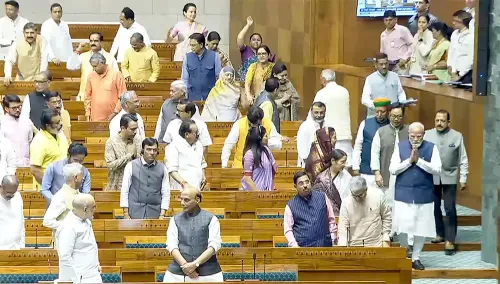
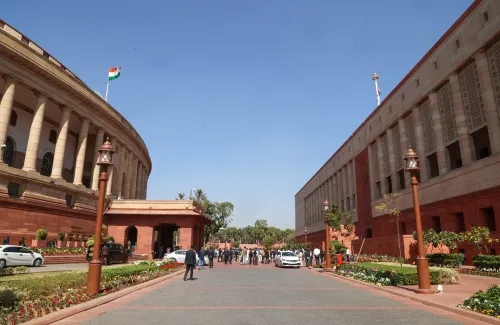
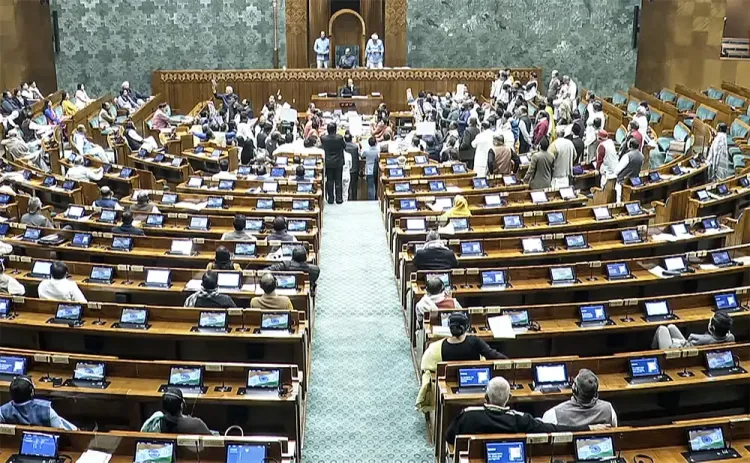
The Winter Session of Parliament is likely to commence in the first week of December 2026, according to reliable sources, though the Union government is also weighing the option of extending or reconvening the unprorogued Monsoon Session in lieu of calling a fresh session. The constitutional amendment Bill linking women's reservation to Delimitation is expected to be the centrepiece of the upcoming legislative calendar.
The Women's Reservation-Delimitation Bill
The proposed constitutional amendment seeks to expand the strength of the Lok Sabha to create additional seats that would accommodate a 33 per cent reservation for women. Passing the Bill requires a two-thirds majority of members present and voting — amounting to 361 votes out of the current total strength of 540 sitting MPs.
Since the ruling National Democratic Alliance (NDA) commands approximately 320 members, the government will need to secure support from at least some opposition parties to reach the required threshold. The arithmetic makes cross-party negotiations unavoidable.
Why the Monsoon Session Option Remains on the Table
The Monsoon Session was adjourned sine die on 13 August 2026 but was left unprorogued, keeping the session technically alive for more than 90 days. This procedural status gives the government flexibility: reconvening an existing session requires a minimum notice of only two days, whereas convening a fresh Winter Session demands at least 14 days' notice. That gap makes the extended-session route an attractive short-notice option if the government decides to move quickly on the constitutional amendment.
What Home Minister Amit Shah Said on Delimitation
Union Home Minister Amit Shah has sought to allay concerns about Delimitation's impact on Southern states, stating that the exercise will not harm them but will, in fact, benefit them. Under the proposed 50 per cent increase model, the current 543 Lok Sabha seats would rise to 816, with the existing 129 seats held by Southern states climbing to 195. Shah noted that the Southern states' share of total House seats would remain broadly stable at around 24 per cent — an argument the government is deploying to build bipartisan support for the two-thirds majority it needs.
Opposition Flashpoints: CEC Row and Session Disruptions
Senior leaders across the aisle anticipate a stormy session, with the Chief Election Commissioner (CEC) Gyanesh Kumar controversy threatening to overshadow legislative business. The Indian National Congress (Congress), Left parties, and the All India Trinamool Congress (TMC) led by Mamata Banerjee are aggressively demanding the CEC's removal over the manner in which the Special Intensive Revision (SIR) of electoral rolls has been conducted.
The triple pressure — a contentious constitutional amendment, a politically charged delimitation debate, and the CEC row — sets the stage for significant disruptions in both Houses. Notably, managing opposition dissent while chasing a two-thirds majority on the women's reservation Bill will be one of the most delicate legislative balancing acts the government has attempted this term.
What to Watch
The government's final decision on whether to call a fresh Winter Session or reconvene the Monsoon Session is expected imminently, given the minimum notice requirements. Floor managers on both sides will be gauging regional party positions — particularly those of parties from the South — on the Delimitation Bill before the session gets under way.
Point of View
The floor managers will need Southern regional parties on board — the very constituencies that Home Minister Shah is now publicly reassuring on seat share. The CEC row adds another layer of risk; an opposition that is already in an aggressive posture on electoral integrity has little incentive to give the government a clean run on what could be framed as a vote-bank redistribution exercise. The session, however it is convened, will be one of the most consequential — and contentious — of this Parliament.
NationPress
15 Nov 2026
Frequently Asked Questions
When is the Parliament Winter Session 2026 likely to begin?
The Winter Session of Parliament is likely to begin in the first week of December 2026, according to reliable sources. The government is also weighing the option of reconvening the unprorogued Monsoon Session on shorter notice as an alternative route.
What is the main Bill expected during the Winter Session?
The centrepiece is a constitutional amendment Bill that links women's 33 per cent reservation in the Lok Sabha to the Delimitation exercise. The Bill proposes expanding Lok Sabha seats from 543 to 816 to accommodate the reservation without reducing existing representation.
Why does the government need opposition support for the women's reservation Bill?
Passing a constitutional amendment requires a two-thirds majority of members present and voting, translating to 361 votes out of a current strength of 540 MPs. The ruling NDA has approximately 320 members, leaving it roughly 40 votes short of the required threshold.
What is the CEC controversy that could disrupt the session?
Congress, Left parties, and TMC are demanding the removal of Chief Election Commissioner Gyanesh Kumar over the conduct of the Special Intensive Revision (SIR) of electoral rolls. Senior leaders anticipate this will cause significant disruptions to parliamentary proceedings.
Why was the Monsoon Session left unprorogued, and what does that allow?
The Monsoon Session was adjourned sine die on 13 August 2026 but not formally prorogued, leaving it technically active for more than 90 days. This means the government can reconvene that session with just two days' notice, compared to the 14 days required to convene a brand new session — a significant procedural advantage if urgent legislation needs to be tabled quickly.