CM Sai Announces Tribal Cultural Funds at Janjatiya Gaurav Diwas
Synopsis
Chief Minister Vishnu Dev Sai announced up to ₹25 lakh per village under Akhara Vikas Yojana and Devgudi Vikas Yojana for tribal cultural infrastructure, and raised the Bastar Manjhi-Chalki honorarium to ₹5,000, speaking at Janjatiya Gaurav Diwas in Dharamjaigarh, Raigarh on 15 November 2026.
Key Takeaways
Akhara Vikas Yojana and Devgudi Vikas Yojana each provide up to ₹25 lakh per village in tribal areas of Chhattisgarh for social and cultural development.
Funds under the Akhara scheme cover seating, drinking water , and lighting infrastructure at traditional community gathering spaces.
The honorarium for Manjhi-Chalki community leaders in Bastar has been raised to ₹5,000 per month , formally recognising their traditional governance role.
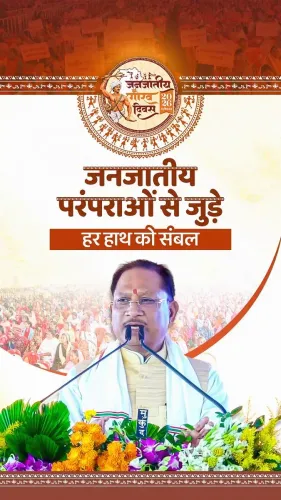
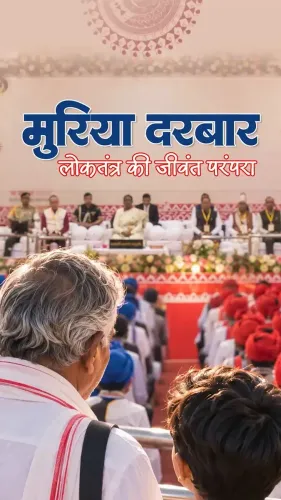
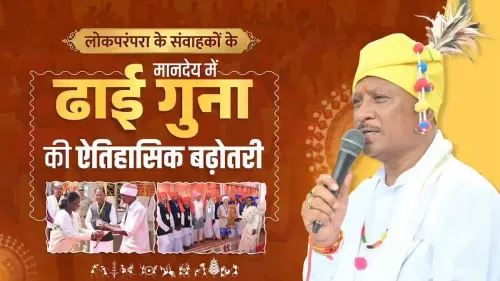
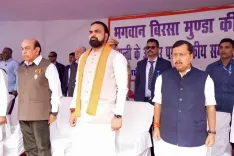
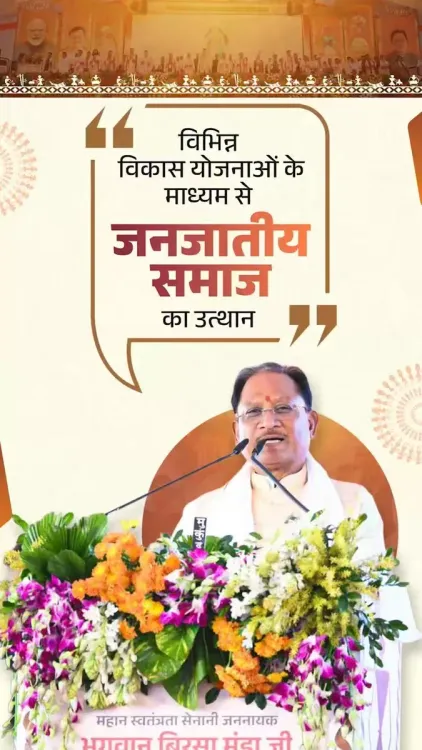
The announcements were made by CM Vishnu Dev Sai at Dussehra Maidan, Dharamjaigarh, Raigarh during the Janjatiya Gaurav Diwas celebrations on 15 November 2026 .
Janjatiya Gaurav Diwas is observed on 15 November to mark the birth anniversary of tribal icon Birsa Munda .
Chhattisgarh's tribal communities constitute roughly a third of the state's population , spanning 32 scheduled tribes .
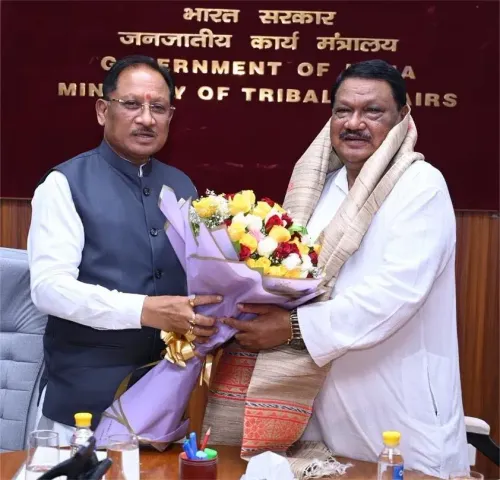
On Janjatiya Gaurav Diwas — the national day marking Birsa Munda's birth anniversary — Chhattisgarh Chief Minister Vishnu Dev Sai stood at Dussehra Maidan, Dharamjaigarh, Raigarh, and laid out a concrete package for tribal cultural life: up to ₹25 lakh per village under two dedicated state schemes, and a pay hike for traditional community leaders in Bastar.
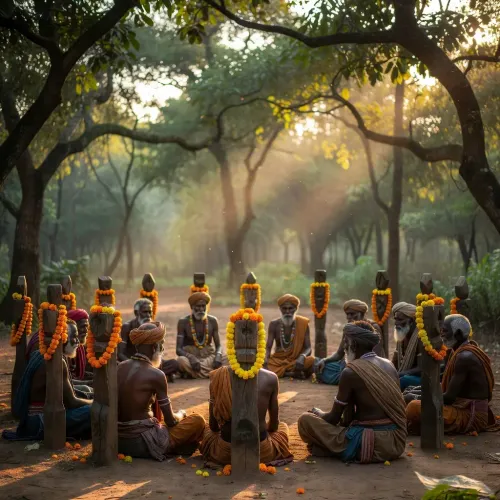
Speaking at the Janjatiya Gaurav Diwas Samaroh on 15 November 2026, CM Sai announced that the Akhara Vikas Yojana and the Devgudi Vikas Yojana are channelling up to ₹25 lakh each into tribal villages to support social and cultural activity. The funds cover physical infrastructure at the Akhara — the traditional community gathering space — including seating, drinking water, and lighting so that cultural programmes can be held with dignity year-round.
What the Two Yojanas Actually Build
The Akhara Vikas Yojana targets the communal courtyard at the heart of tribal village life, the space where dances, rituals, and community decisions have taken place for generations. The Devgudi Vikas Yojana focuses on sacred groves and culturally significant sites that anchor a village's spiritual identity. Together, the schemes are designed not just to preserve heritage but to make these spaces functional and accessible — a distinction that separates infrastructure spending from mere symbolism.
Bastar's Manjhi-Chalki Leaders Get a Pay Rise
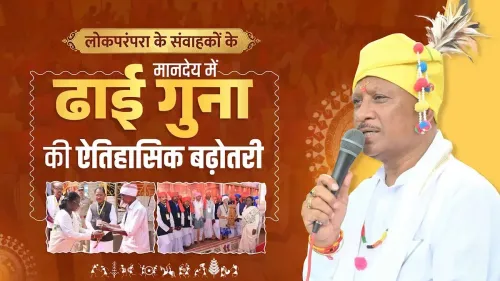
In a separate but connected move, the honorarium for community heads linked to the Manjhi-Chalki system in Bastar has been raised to ₹5,000 per month. The Manjhi-Chalki is the traditional village governance structure that has held social order in Bastar's tribal belt for centuries — its leaders mediate disputes, oversee customs, and anchor local identity. A formal honorarium upgrade signals official recognition of their role and gives state backing to an institution that often operates in the gaps between formal administration and tribal custom.
The Bigger Picture on 15 November
Janjatiya Gaurav Diwas, observed nationally on 15 November, was instituted to honour the legacy of Birsa Munda, the tribal freedom fighter from Jharkhand whose movement against colonial land dispossession still resonates across central India's tribal belt. For the Vishnu Dev Sai government — itself led by a Chief Minister from a Scheduled Tribe background — the day carries particular symbolic weight, and announcements made on it are calibrated to reinforce the administration's tribal-welfare credentials.
Chhattisgarh is home to 32 scheduled tribes, making up roughly a third of its population, and successive governments have layered tribal-specific schemes atop central frameworks. The current administration's focus on cultural infrastructure marks a tonal shift from purely economic interventions — the argument being that sustainable development in these communities must move alongside, not ahead of, cultural identity.
Whether the fund disbursements under both yojanas reach villages on schedule, and whether the Manjhi-Chalki honorarium hike translates into stronger ground-level governance in Bastar, will be the real test of these commitments — and those answers will come from the villages, not the stage.
Point of View
Whose BJP administration has sought to consolidate tribal support in a state where Scheduled Tribes form a decisive electoral bloc, formalising and funding the Akhara and Devgudi spaces is both a welfare act and a cultural legitimacy signal. The Manjhi-Chalki honorarium hike is the more structurally interesting move: it embeds the state into a centuries-old informal governance layer in Bastar, an area where the relationship between administration and tribal custom has long been contested. The real policy test will be whether disbursement mechanisms are strong enough to reach remote villages, or whether these schemes remain well-announced but unevenly delivered.
NationPress
15 Nov 2026
Frequently Asked Questions
What is the Akhara Vikas Yojana in Chhattisgarh?
The Akhara Vikas Yojana is a Chhattisgarh state scheme that provides up to ₹25 lakh to tribal villages for developing the Akhara — the traditional communal gathering space — with infrastructure such as seating, drinking water, and lighting to support cultural programmes.
What is the Devgudi Vikas Yojana?
The Devgudi Vikas Yojana is a Chhattisgarh state initiative that provides up to ₹25 lakh per village to develop sacred groves and culturally significant tribal sites, preserving spiritual and cultural heritage in tribal areas.
What is the Manjhi-Chalki system in Bastar?
The Manjhi-Chalki system is a traditional village governance and social structure used by tribes in the Bastar region of Chhattisgarh. Community leaders under this system mediate disputes and oversee tribal customs; their honorarium has now been raised to ₹5,000 per month.
Why is Janjatiya Gaurav Diwas celebrated on 15 November?
Janjatiya Gaurav Diwas is observed on 15 November to mark the birth anniversary of Birsa Munda, the celebrated tribal freedom fighter from Jharkhand who led a movement against colonial land dispossession in the late 19th century.
Who is Chhattisgarh Chief Minister Vishnu Dev Sai?
Vishnu Dev Sai is the Chief Minister of Chhattisgarh, in office since December 2023, leading a BJP government. He is himself from a Scheduled Tribe community, and his administration has focused significantly on tribal welfare and cultural development programmes.