Bhupender Yadav Highlights Hewal River Revival via Mann Ki Baat
Synopsis
Union Environment Minister Bhupender Yadav highlighted the community-driven revival of the Hewal River on X, tying the story to Mann Ki Baat. The post underscores India's strategy of amplifying grassroots conservation successes to inspire replication across river basins nationwide.
Key Takeaways
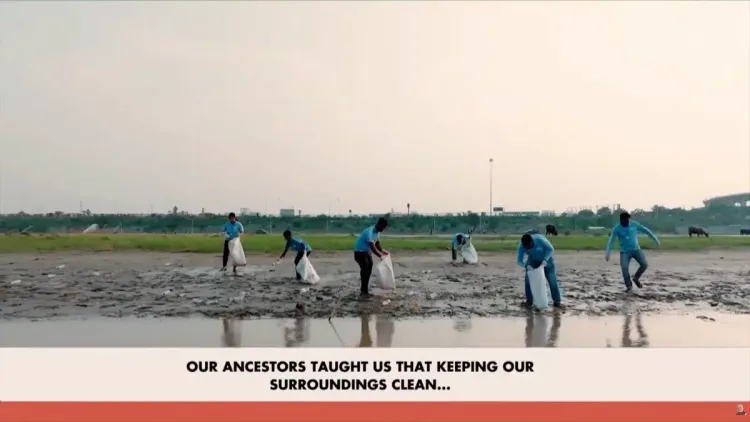
Union Environment Minister Bhupender Yadav shared a video on 25 October 2026 spotlighting the rejuvenation of the Hewal River .
The revival was credited to collective community efforts — local residents and farmers working together, not a top-down scheme alone.
The story was amplified through Mann Ki Baat , Prime Minister Modi's monthly radio programme, which has since 2014 regularly featured grassroots environmental wins.
India's water conservation strategy increasingly pairs central government schemes with community-ownership models at the river-basin level.
Yadav's post frames the Hewal story as a replicable blueprint for other distressed rivers across India.
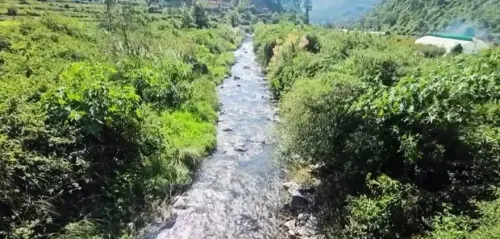
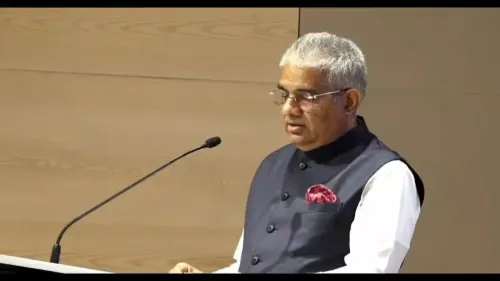
A river once fading into neglect has found new life — and Union Environment Minister Bhupender Yadav wants the country to know exactly how it happened. On Sunday, 25 October 2026, Yadav shared a video on X spotlighting the remarkable rejuvenation of the Hewal River, crediting collective community effort as the engine behind the turnaround, and anchoring the story to Prime Minister Narendra Modi's monthly radio address, Mann Ki Baat.
Posting in Hindi, Yadav asked pointedly: 'सामुहिक प्रयासों से कैसे मिला हेवल नदी को नया जीवनदान' — 'How did collective efforts give the Hewal River a new lease of life?' The question frames not just a local environmental win, but a replicable blueprint.
The Hewal River's story: from decline to revival
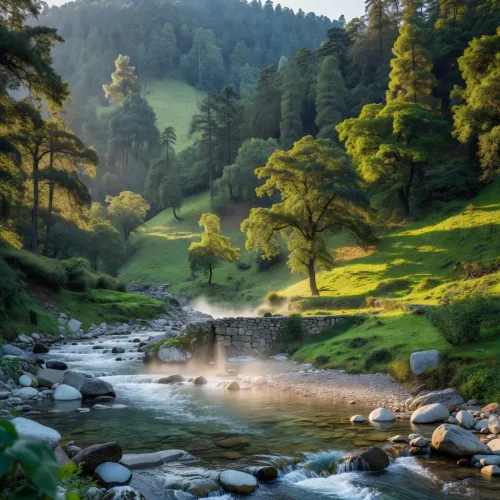
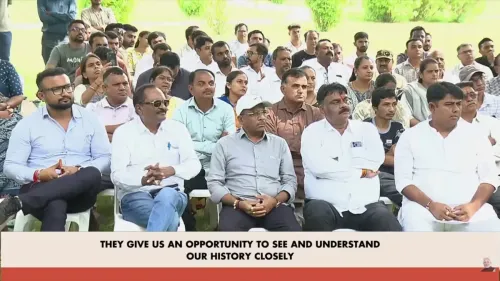
The Hewal River, like hundreds of smaller Indian waterways, had been under pressure from encroachment, siltation, and reduced community stewardship. What changed its trajectory was not a single government scheme but a ground-up mobilisation — local communities, farmers dependent on the river basin, and civic groups working in concert to restore flow, reduce pollution, and bring back the riparian ecosystem. Such community-led models have quietly become one of India's more credible tools for water conservation, operating at a scale and intimacy that large infrastructure projects cannot always match.Why Mann Ki Baat matters as an amplifier
Since its launch in 2014, Mann Ki Baat has served as Prime Minister Modi's platform to surface exactly these kinds of grassroots successes — stories that might otherwise remain invisible beyond their home district. By design, the programme functions as a national bulletin board for civic initiative, turning a local river revival into a model other communities across India can study and adapt. Yadav's amplification of the Hewal story on X extends that reach further, placing it in front of a policy-aware digital audience.Community action as India's quiet conservation engine
India's broader push on river health has combined central schemes for water conservation and pollution abatement with an equally deliberate effort to spotlight citizen-led successes. The logic is straightforward: a government can build check dams, but sustained river health requires the villages along the bank to own the outcome. The Hewal revival, as presented by the Minister, is evidence that this ownership model can work — and the implicit message is a call to replicate it wherever a river is in distress. The Hewal River's revival is proof that the most durable conservation wins are written not in policy documents alone, but in the hands of the communities who live beside the water.Point of View
It positions the Centre as an enabler rather than a top-down administrator — a framing that is politically useful ahead of any water-related policy debate. The Hewal River's revival, if independently verified, also strengthens India's case in international climate dialogues that local ecological restoration is scaling. Watch for whether this model is formally codified into a central scheme or remains a soft-power narrative tool.
NationPress
25 Oct 2026
Frequently Asked Questions
What is the Hewal River and where is it located?
The Hewal River is an Indian river that has been referenced for its community-driven revival effort. Specific details about its precise location and current water quality metrics have not been independently verified.
What did Bhupender Yadav post about the Hewal River?
On 25 October 2026, Union Environment Minister Bhupender Yadav shared a video on X asking how collective community efforts gave the Hewal River a new lease of life, linking the story to Prime Minister Modi's Mann Ki Baat programme.
What is Mann Ki Baat and why does it feature environmental stories?
Mann Ki Baat is Prime Minister Narendra Modi's monthly radio address, running since 2014, which regularly highlights grassroots public initiatives — including community-led environmental and conservation successes — to inspire replication across the country.
How do community efforts help in river rejuvenation in India?
Community-led river rejuvenation involves local residents and farmers taking ownership of reducing pollution, controlling encroachment, and managing riparian land. This ground-up model complements large government infrastructure schemes and is seen as essential for sustaining long-term river health.
What is India's broader strategy for river conservation?
India combines central schemes for water conservation and pollution abatement with deliberate efforts to amplify citizen-led success stories. The goal is to build a culture of community ownership along river basins so that ecological restoration becomes self-sustaining.