Yadav sets sights on 50 Indian firms in Fortune 500 within a decade
Synopsis
On Independence Day 2026, Union Minister Bhupender Yadav called for 50 Indian companies to join the Fortune 500 within a decade — a bold national-day aspiration that echoes India's post-1991 growth arc and the Viksit Bharat 2047 vision, without announcing a formal new scheme.
Key Takeaways
Union Environment Minister Bhupender Yadav posted an Independence Day goal of placing 50 Indian companies in the Fortune 500 within the next ten years .
The statement was made on 15 August 2026 and tagged #IndiaIndependenceDay .
India's corporate rise in global rankings traces back to 1991 liberalisation and the 2014 Make in India initiative.
No formal government scheme or budget allocation was announced alongside the goal.
The aspiration fits a pattern of national-day economic vision-setting by successive Indian administrations.
Follow-up in Union Budgets or NITI Aayog reports would signal whether the target becomes formal policy.
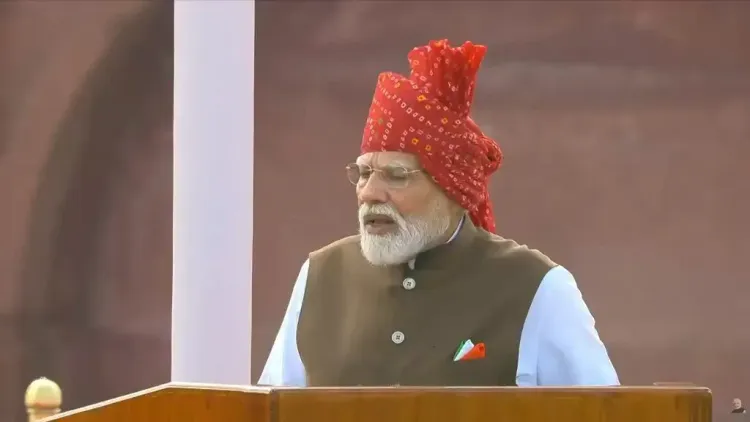
On Independence Day, 15 August 2026, Union Environment Minister Bhupender Yadav set out a striking economic ambition for the nation: see 50 Indian companies enter the Fortune 500 within the next ten years.
Posting on X with the hashtag #IndiaIndependenceDay, Yadav framed the aspiration in a single, pointed line — 'the goal of including 50 Indian companies in the Fortune 500 in the coming decade.' No new scheme or formal government target was announced; the statement reads as a national-day vision, the kind senior leaders have long used to anchor Independence Day messaging around economic ambition.
Where India stands in the Fortune 500 today
India's journey into global revenue rankings has been gradual. The 1991 liberalisation opened the economy to competition and private capital, and the Make in India push launched in 2014 accelerated manufacturing investment and ease-of-doing-business reforms. Today, a handful of Indian conglomerates — in energy, telecoms, and retail — appear in the Fortune Global 500. Reaching 50 entries would represent a structural leap, not an incremental step.The gap between aspiration and architecture
Such national-day declarations carry real political weight even when they stop short of formal policy. They signal the direction a ruling party wants the economy to travel, and they set a benchmark the public and markets can hold governments to. Successive administrations have done exactly this — from atmanirbhar Bharat (self-reliant India) to Viksit Bharat 2047. Yadav's formulation fits that tradition: a horizon goal, calibrated to a decade, designed to stretch corporate and policy ambition alike. Whether the number finds its way into a Union Budget speech, a NITI Aayog blueprint, or an Ease of Doing Business target will determine whether this remains a stirring Independence Day line or the seed of a measurable national programme.Point of View
Round-number target designed to be memorable and aspirational without committing to a specific policy instrument. It slots neatly into the BJP's Viksit Bharat 2047 narrative, where economic scale — measured in global rankings — becomes a proxy for national power. The real test is whether the number migrates from a social-media post into a Budget speech or a NITI Aayog deliverable. Until then, it functions as political signalling to investors and the Indian corporate class that the growth agenda remains the party's north star.
NationPress
15 Aug 2026
Frequently Asked Questions
How many Indian companies are currently in the Fortune 500?
A small number of Indian firms — primarily in energy, retail, and telecoms — currently feature in the Fortune Global 500. The research does not confirm a precise current count, but reaching 50 would mark a dramatic expansion from today's standing.
What did Bhupender Yadav say on Independence Day 2026?
Yadav posted on X that the goal for the coming decade is to have 50 Indian companies included in the Fortune 500, framing it as a national economic ambition on 15 August 2026.
Is the 50 Fortune 500 companies target an official government scheme?
No formal government scheme or official policy target for precisely 50 Fortune 500 companies within a decade has been announced. The statement reflects a national-day aspiration by the minister.
How has India's corporate presence in global rankings grown?
India's rise in global revenue rankings has been gradual since the 1991 economic liberalisation and gained pace after the 2014 Make in India initiative boosted manufacturing and investment.
What would it take for India to reach 50 Fortune 500 companies?
Analysts would look for sustained GDP growth, large-scale manufacturing expansion, deeper capital markets, and continued ease-of-doing-business reforms — with formal targets likely needing to appear in Union Budgets or NITI Aayog plans to carry policy weight.