Yamuna Water Project provisions finalised at Delhi meet with Rajasthan, Haryana CMs
Synopsis
A high-level Delhi meeting on 23 June finalised the key MoA provisions for the Yamuna Water Project, with Rajasthan, Haryana, and the Centre aligned on a pipeline-based delivery model. Crucially, long-standing disputes among six states over the Kishau Dam Project have reportedly been resolved — clearing the path for a formal MoA signing that has been years in the making.
Key Takeaways
Rajasthan CM Bhajanlal Sharma , Haryana CM Nayab Singh Saini , and Union Jal Shakti Minister C.R.
Patil met in New Delhi on 23 June to advance the Yamuna Water Project .
Key provisions of the Memorandum of Agreement (MoA) for the project were finalised at the meeting.
The project will use a pipeline network instead of conventional canals to reduce water loss and widen distribution.
Disputes among the six states linked to the Kishau Dam Project have been resolved; the MoA is expected to be signed soon.
The project is expected to benefit Rajasthan (especially the Shekhawati region ), Haryana , and Delhi , improving water access for lakhs of people .
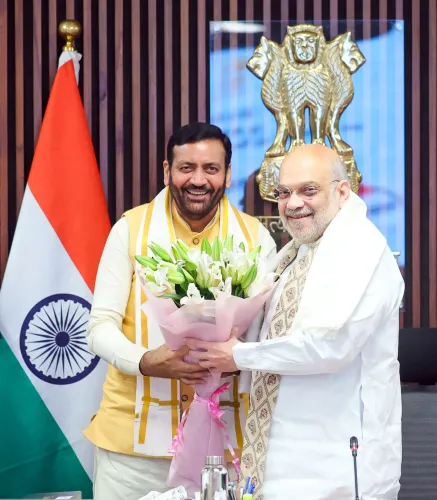
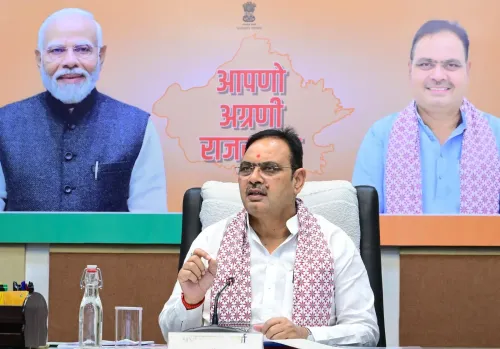
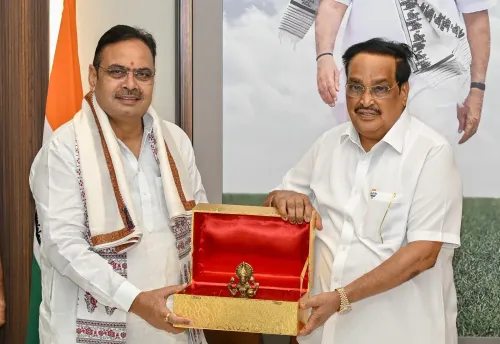
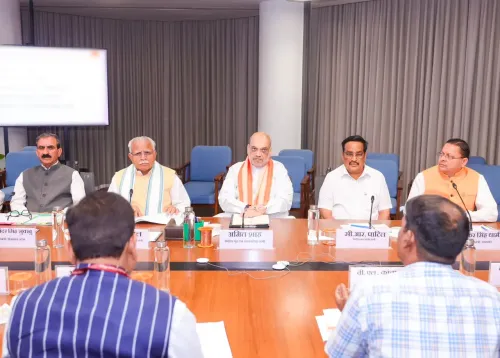
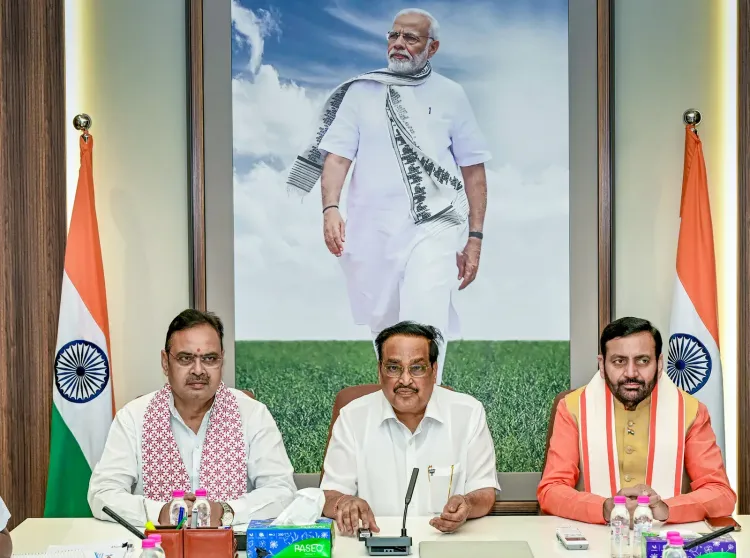
Rajasthan Chief Minister Bhajanlal Sharma joined Union Minister for Jal Shakti C.R. Patil and Haryana Chief Minister Nayab Singh Saini in New Delhi on Tuesday, 23 June for a high-level meeting on the Yamuna Water Project, where the key provisions of the Memorandum of Agreement (MoA) were finalised. The meeting also took up matters related to the Kishau Dam Project, with officials from the Union government, Rajasthan's Water Resources Department, and the Haryana government in attendance.
Key Developments from the Meeting
Discussions covered multiple dimensions of the project, including inter-state coordination, funding frameworks, and the technical design of water delivery. Notably, the project proposes transporting water through a pipeline network rather than conventional canals — an approach that officials say will reduce water loss and expand distribution reach.
Union Minister C.R. Patil confirmed that issues involving the six states associated with the Kishau Dam Project have been resolved, and the MoA for that project is expected to be signed shortly. He added that the Yamuna Water Project is being pursued with a long-term, sustainable approach under the broader goal of strengthening inter-state water resource management.
What Rajasthan Stands to Gain
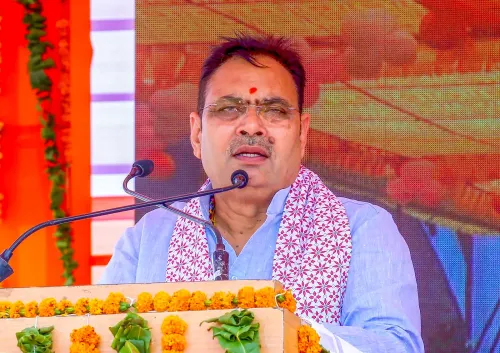
Chief Minister Bhajanlal Sharma said the project holds particular significance for the Shekhawati region of Rajasthan, an area historically underserved by surface water infrastructure. He stated that successful implementation would improve the quality of life of lakhs of people and contribute to the region's socio-economic development.
Sharma said Rajasthan would receive its due share of Yamuna water under the project, which would benefit farmers, industries, and the general public, while strengthening water management across the state. He added that the state government is committed to ground-level implementation at the earliest, in coordination with the Centre and Haryana.
Haryana's Role and the Broader Beneficiary Map
Haryana Chief Minister Nayab Singh Saini said state governments are working with commitment to ensure water access for every citizen. He specifically noted that the Renuka, Lakhwar, and Kishau projects would collectively benefit the people of Haryana, Rajasthan, and Delhi.
Discussions also covered rainwater conservation measures and the logistics of transporting water to Rajasthan — signalling that the project's scope extends beyond the Yamuna river system alone.
Background and What Comes Next
The Kishau Dam Project is a long-pending multi-state initiative on the Tons river, a tributary of the Yamuna. Inter-state disagreements had stalled its progress for years; Tuesday's meeting marks a significant step toward formal agreement. The pipeline-based delivery model for the Yamuna Water Project, if executed as described, would represent a departure from India's conventional canal-centric water infrastructure.
The MoA for the Kishau Dam Project is expected to be signed in the near term, after which project timelines and financial commitments are likely to be made public.
Point of View
But the harder test lies ahead: translating inter-ministerial consensus into ground-level infrastructure. The Kishau Dam Project has been in the works for decades, and the claim that six-state disputes are now resolved deserves scrutiny — past announcements of similar breakthroughs have not always held. The pipeline-over-canal model is technically sound for water conservation, but its capital cost and maintenance demands in arid Rajasthan terrain are questions the government has not yet answered publicly. For the Shekhawati region, where groundwater depletion is acute, the stakes are not political — they are existential.
NationPress
22 Sept 2026
Frequently Asked Questions
What is the Yamuna Water Project and why does it matter for Rajasthan?
The Yamuna Water Project is an inter-state initiative to supply Rajasthan — particularly the water-scarce Shekhawati region — with its due share of Yamuna river water via a pipeline network. It matters because the region faces acute groundwater depletion, and the project is expected to benefit lakhs of farmers, industries, and residents.
What was decided at the 23 June meeting in New Delhi?
The key provisions of the Memorandum of Agreement (MoA) for the Yamuna Water Project were finalised. Officials also confirmed that disputes among the six states associated with the Kishau Dam Project have been resolved, and the MoA for that project is expected to be signed shortly.
What is the Kishau Dam Project?
The Kishau Dam Project is a long-pending multi-state hydroelectric and water storage initiative on the Tons river, a tributary of the Yamuna. It is expected to benefit Rajasthan, Haryana, Delhi, and other participating states by helping address future water challenges.
Why is the pipeline model significant for the Yamuna Water Project?
Unlike conventional canals, a pipeline network reduces water loss through evaporation and seepage, and can extend distribution to areas that canals cannot easily reach. Union Minister C.R. Patil described this as a long-term and sustainable approach to water delivery.
Which states and regions will benefit from these water projects?
Rajasthan (especially the Shekhawati region), Haryana, and Delhi are the primary beneficiaries. Haryana CM Nayab Singh Saini specifically noted that the Renuka, Lakhwar, and Kishau projects would benefit people across all three regions.