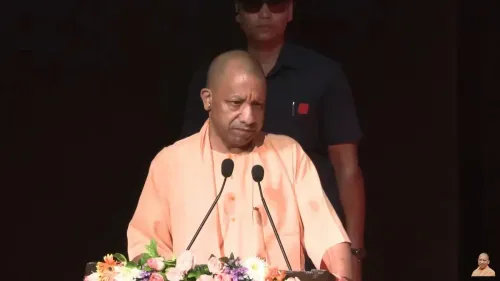
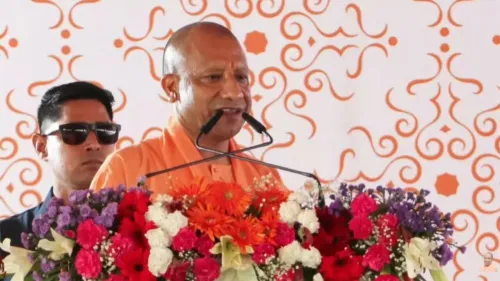
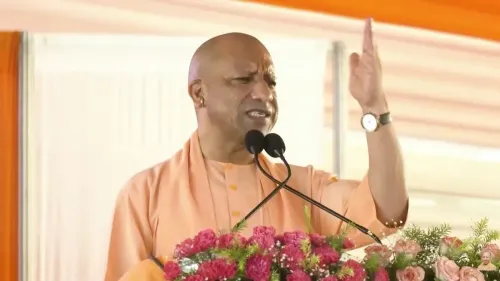
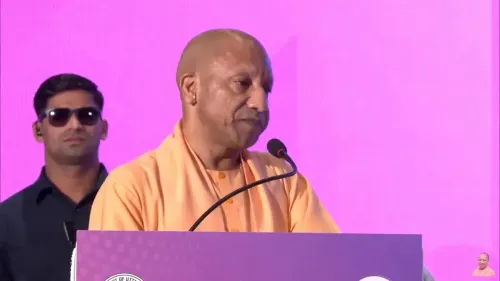
CM Yogi Credits Modi for Making Air Travel Accessible to All
Synopsis
UP CM Yogi Adityanath posted a sharp rhetorical question on October 2, 2026, asking why no PM from 1947 to 2014 promised air travel for the common man — and crediting Narendra Modi for turning that promise into reality.
Key Takeaways
CM Yogi Adityanath posted on October 2, 2026 praising PM Modi for democratising air travel in India.
He challenged all prime ministers from 1947 to 2014 for failing to make air travel accessible to ordinary citizens.
The post uses the imagery of 'hawai chappal' (rubber slippers) versus 'hawai jahaz' (aeroplane) — a signature BJP framing for aviation inclusivity.
The implicit policy reference is the UDAN regional connectivity scheme launched under the Modi government.
The post was shared on Gandhi Jayanti , adding symbolic resonance to the theme of governance for the poor.
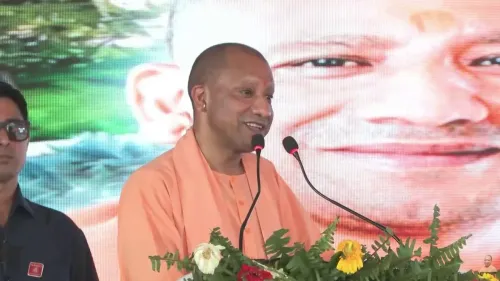
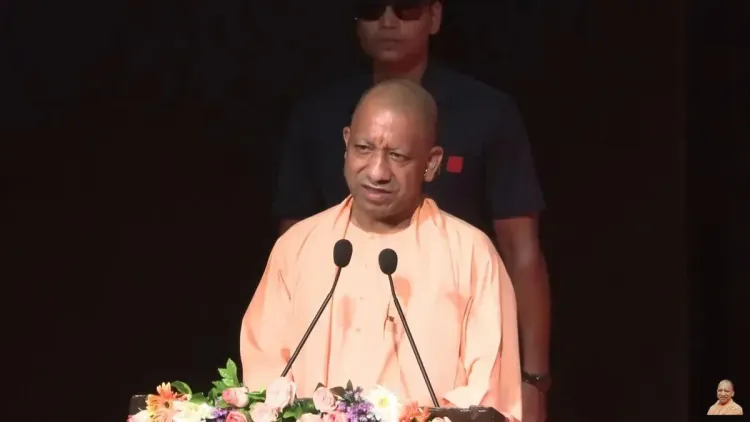
A pointed question aimed at seven decades of Indian governance — and a sharp answer. Uttar Pradesh Chief Minister Yogi Adityanath on Friday, October 2, 2026, challenged the political establishment with a rhetorical salvo: why did no prime minister between 1947 and 2014 dare to claim that a man wearing rubber slippers could one day board an aeroplane?
In his post, CM Yogi wrote: 'वर्ष 1947 से 2014 तक कोई प्रधानमंत्री दावा क्यों नहीं कर पाया कि हवाई चप्पल पहनने वाला भी हवाई जहाज की यात्रा कर सकता है' — 'From 1947 to 2014, why could no prime minister claim that even a person wearing rubber slippers could travel by air?' His answer was equally direct: Prime Minister Narendra Modi did not just say it — he delivered it.
The 'Hawai Chappal to Hawai Jahaz' Argument
The phrase 'hawai chappal se hawai jahaz' — rubber slippers to aeroplane — has become one of the BJP's most recognisable images for democratising aviation. It frames affordable air travel not as a luxury statistic but as a lived reality for India's lower-middle class. CM Yogi's post carries that framing forward, pointing to the gap between promise and performance across India's post-independence governments before 2014.
The implicit reference is to the UDAN (Ude Desh Ka Aam Nagarik) regional connectivity scheme, launched under the Modi government, which subsidised ticket prices on underserved routes to bring air travel within reach of ordinary passengers. The scheme's branding itself echoes the very imagery Yogi invokes.
A Governance Contrast Drawn Over 67 Years
By anchoring his critique at 1947 — Independence itself — Yogi is not merely targeting any single opposition party. He is drawing a sweeping contrast between India's entire post-colonial political history and the current administration, positioning 2014 as a clean break. The post arrives on October 2, Gandhi Jayanti, a date that adds symbolic weight to any invocation of India's founding promise to its poorest citizens.
The rhetoric is calibrated: it asks a question rather than makes an accusation, letting the implied answer do the work. 'He didn't just speak — he showed it by doing,' Yogi wrote of Modi, a formulation that frames governance as proof over pledge.
Point of View
It argues historical legitimacy, collapsing 67 years of rival rule into a single unanswered question. By placing the rhetorical bar at 1947, he makes every pre-2014 government, Congress and coalition alike, co-defendants. The Gandhi Jayanti timing is unlikely to be accidental: invoking the founding father's date to argue the founding promise was only now kept is a potent symbolic move. It signals that ahead of future electoral cycles, the party intends to keep aviation accessibility — a tangible, middle-income aspiration — as a centrepiece proof-point of the Modi decade.
NationPress
2 Oct 2026
Frequently Asked Questions
What did CM Yogi Adityanath say about air travel in India?
CM Yogi asked why no prime minister between 1947 and 2014 promised that even a person wearing rubber slippers could travel by aeroplane, and credited PM Modi for making that a reality.
What is the 'hawai chappal se hawai jahaz' slogan?
It is a BJP phrase meaning 'from rubber slippers to aeroplane,' used to describe how the UDAN scheme made air travel affordable for lower-income Indians under PM Modi.
What is the UDAN scheme Yogi Adityanath referred to?
UDAN — Ude Desh Ka Aam Nagarik — is a regional aviation connectivity scheme launched by the Modi government that subsidised fares on underserved routes to bring air travel within reach of ordinary passengers.
Why did Yogi Adityanath post about aviation on October 2?
October 2 is Gandhi Jayanti, and the post's theme — delivering on the founding promise to India's poorest — carries added symbolic weight on a day associated with Mahatma Gandhi.
Who is Yogi Adityanath?
Yogi Adityanath is the Chief Minister of Uttar Pradesh, a senior BJP leader, and the head of the Gorakhnath Math in Gorakhpur.