CM Yogi Hikes Gram Prahari Pay by ₹2,000 After 75-Year Stagnation
Synopsis
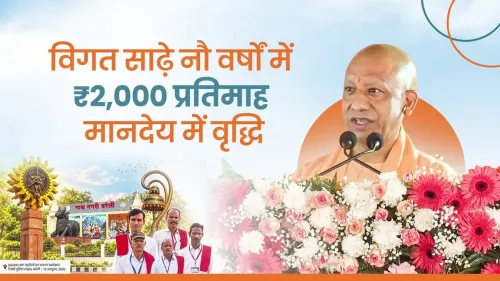
The Chief Minister's Office of Uttar Pradesh has quoted CM Yogi Adityanath saying the state raised Gram Prahari monthly honorarium by ₹2,000 in nine-and-a-half years — more than the total increase seen in the 75 years prior, when pay had only reached ₹1,500 per month.
Key Takeaways
Gram Praharis are village-level security guards deployed across rural Uttar Pradesh to support local law and order.
In 75 years post-independence, their monthly honorarium had only reached ₹1,500 .
The UP government under CM Yogi Adityanath has added ₹2,000 per month to that figure over the past nine and a half years since March 2017 .
The announcement is part of a broader pattern of the state government revising honorariums for village-level workers including anganwadi helpers and chowkidars.
The exact current all-in monthly honorarium figure and year-wise breakdown of the ₹2,000 increase were not specified in the post.
Uttar Pradesh has over 97,000 revenue villages , making the aggregate fiscal impact of even modest per-person revisions significant.
For 75 years, the men who stood watch over India's villages at night — Gram Praharis, Uttar Pradesh's rural security guards — earned a monthly honorarium that barely crossed ₹1,500. In nine and a half years, the Chief Minister's Office of Uttar Pradesh says that number has moved by ₹2,000 a month. On Tuesday, 13 October 2026, the office posted a direct quote from Chief Minister Yogi Adityanath marking that shift.
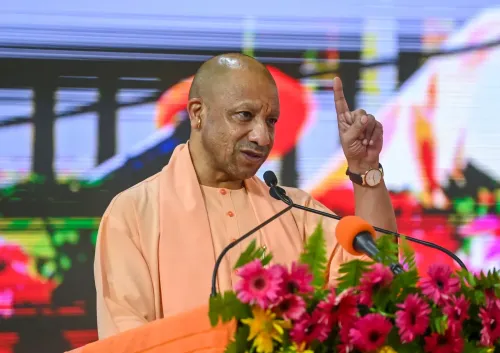
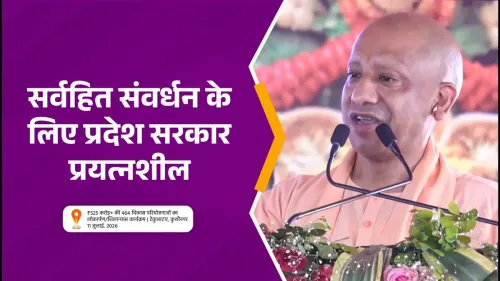
The post, in the Chief Minister's own words, states: '75 varshon mein Gram Prahariyon ka mandey matra ₹1,500 pratimah tak pahunch paya tha. Vigat sadhe nau varshon mein humne ismein ₹2,000 pratimah ki vriddhi ki hai.' — 'In 75 years, the monthly honorarium of Gram Praharis had reached only ₹1,500. In the past nine and a half years, we have increased it by ₹2,000 per month.'
Who Are Gram Praharis and Why Their Pay Froze for Decades
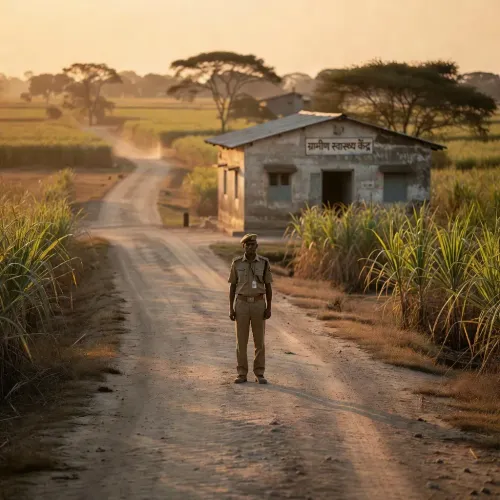
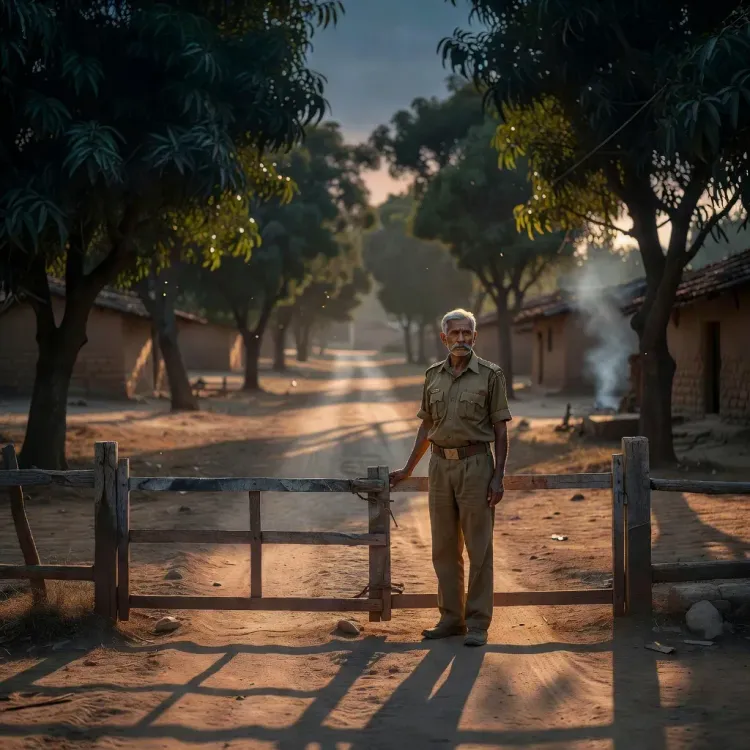
Gram Praharis are village-level guards deployed across rural Uttar Pradesh to support local law and order and assist police in areas where the nearest station may be miles away. They occupy the most visible, yet most underpaid, rung of the state's grassroots security architecture. Their honorarium structure traces back to colonial-era chowkidar arrangements that survived largely unchanged through the first seven decades of independence — a classic case of a system that worked on institutional inertia rather than any deliberate pay policy.
The stagnation is stark in the numbers: seven and a half decades to reach ₹1,500 a month. That is roughly ₹20 a year of effective average increase across the entire post-independence period — less than the price of a cup of tea per day.
The ₹2,000 Correction Since 2017
Since Chief Minister Yogi Adityanath took office in March 2017, the state government has periodically revised honorariums for village-level workers including Gram Praharis, anganwadi helpers, and chowkidars. The ₹2,000 per month increase flagged in Tuesday's post is presented as a cumulative correction across those nine and a half years — a deliberate reframing of pay revision as rectification of a colonial-era injustice rather than routine budgetary adjustment.
The government has consistently positioned such revisions as evidence of governance reaching the last mile — the argument being that welfare reform is incomplete if it stops at headline schemes and ignores the salary slip of the man at the village gate.
What the Numbers Still Leave Open
The announcement does not specify the precise year-by-year breakdown of when the ₹2,000 was added, nor does it confirm the current all-in monthly figure Gram Praharis now receive. Whether the revised rate is accompanied by additional benefits — accident insurance, training allowances, or regularisation pathways — also remains unspecified in the post. State budget documents and home department orders would carry the granular detail.
What the numbers do establish is a political optic the government clearly intends to reinforce: that the gap between a pre-2017 baseline and the present is measurable, named, and attributable. In a state with over 97,000 revenue villages, even a ₹2,000 monthly raise for each Gram Prahari represents a significant aggregate outlay — and a constituency of grateful faces at every panchayat meeting.
The man at the village gate has waited long enough. Whether the revised pay now makes the posting genuinely viable — or whether it remains a stepping-stone honorarium in need of further revision — is the question the next budget cycle will have to answer.
Point of View
Morally weighted correction to colonial-era neglect. By anchoring the claim to '75 years of stagnation,' the narrative sidesteps scrutiny of whether ₹2,000 is adequate in absolute terms and instead benchmarks success against a deliberately low baseline. For a government approaching another electoral cycle in India's most populous state, this kind of last-mile welfare optic — tangible, named, and directed at a dispersed rural constituency — carries real grassroots currency. The unanswered question is whether the revision is large enough to make Gram Prahari postings genuinely attractive, or whether it merely prolongs an underpaid system with fresh political packaging.
NationPress
13 Oct 2026
Frequently Asked Questions
What is a Gram Prahari in Uttar Pradesh?
A Gram Prahari is a village-level security guard deployed across rural Uttar Pradesh to support local law and order and assist police in remote areas. They are among the most grassroots workers in the state's security architecture.
How much is the Gram Prahari honorarium after the Yogi government's hike?
The post states that the honorarium had reached ₹1,500 per month over 75 years and that the current government added ₹2,000 per month in nine and a half years. The exact current total monthly figure was not specified in the official post.
When did the UP government start revising Gram Prahari pay?
Revisions began after Chief Minister Yogi Adityanath took office in March 2017. The government says a cumulative increase of ₹2,000 per month has been made over the nine-and-a-half years since then.
Why was Gram Prahari pay so low for so long?
The honorarium structure for village guards traces back to colonial-era chowkidar arrangements that survived largely unchanged through the first seven decades of independence, resulting in a very slow rate of increase over 75 years.
How many villages does this Gram Prahari pay hike affect in Uttar Pradesh?
Uttar Pradesh has over 97,000 revenue villages, meaning even a modest per-person revision has a significant aggregate fiscal and social impact across the state's rural population.