CM Yogi Launches Joint Kharif Productivity Meet in Gorakhpur
Synopsis
Chief Minister Yogi Adityanath inaugurated the Joint Divisional Kharif Productivity Conference-2026 for Gorakhpur, Basti and Azamgarh divisions at Gorakhpur, where tractor keys, certificates and cheques were handed to beneficiaries of multiple state schemes ahead of the 2026 kharif sowing season in eastern Uttar Pradesh.
Key Takeaways
CM Yogi Adityanath launched the Joint Divisional Kharif Productivity Conference-2026 in Gorakhpur .
The conference covers Gorakhpur , Basti and Azamgarh divisions of eastern Uttar Pradesh.
Beneficiaries received tractor keys , certificates and cheques under various schemes.
The event aligns with UP's seasonal review of kharif targets, inputs and credit flow.
Farm mechanisation push targets smallholder farmers in Purvanchal .
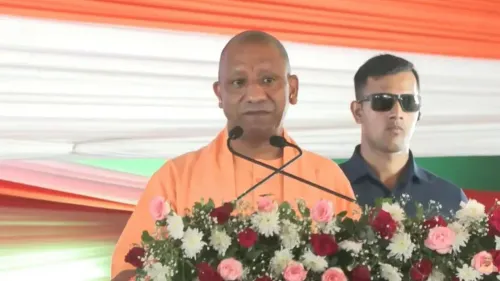
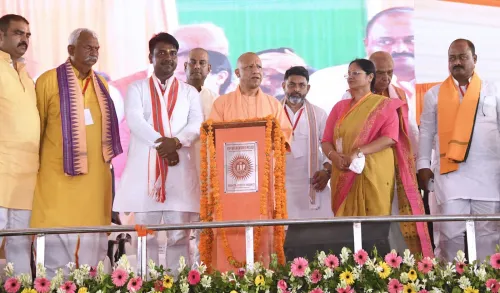
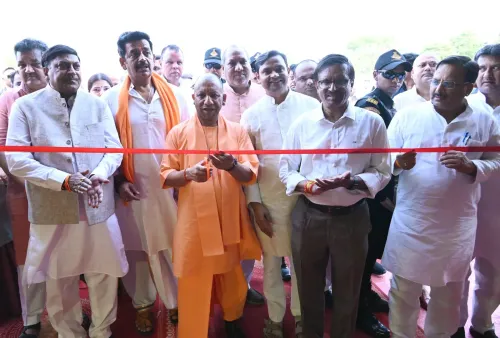
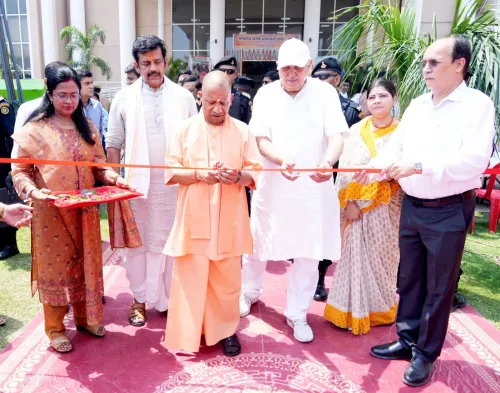
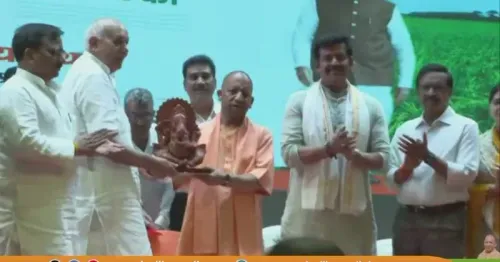
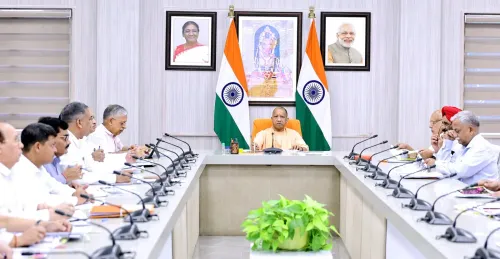
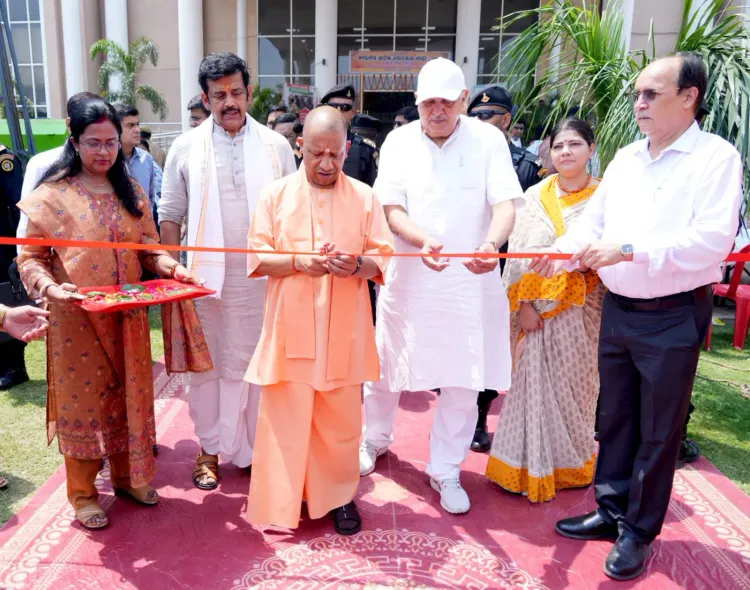
The Chief Minister's Office of Uttar Pradesh announced on Wednesday that Chief Minister Yogi Adityanath attended the inaugural event of the Joint Divisional Kharif Productivity Conference-2026 for the Gorakhpur, Basti and Azamgarh divisions, held in district Gorakhpur. At the programme, beneficiaries of various government schemes were handed tractor keys, certificates and cheques.
In its post, the CMO stated that the Chief Minister 'participated in the programme organised in district Gorakhpur on the occasion of the launch of the Joint Divisional Kharif Productivity Conference-2026 of Gorakhpur, Basti and Azamgarh divisions,' adding that 'ट्रैक्टर की चाबी, प्रमाण-पत्र एवं चेक' (tractor keys, certificates and cheques) were distributed to beneficiaries of multiple schemes.
Context
The event brings together three eastern Uttar Pradesh divisions that together cover a sweep of Purvanchal districts heavily dependent on paddy, maize, pulses and sugarcane during the kharif season. Holding a joint conference in Gorakhpur — the Chief Minister's home district and political base — signals the administration's continued emphasis on the region ahead of the monsoon sowing window.
Kharif productivity meets are typically used by the state agriculture department to brief field officers on sowing targets, fertiliser and seed availability, credit flow and crop insurance enrolment. The handing over of tractor keys at the launch indicates a parallel push on farm mechanisation alongside the agronomic review.
Policy backdrop
Since 2017, the Uttar Pradesh government has institutionalised divisional-level kharif and rabi conferences ahead of every cropping season. The format pairs a technical review with direct distribution of scheme benefits, allowing the political leadership to interface with farmers while officials track input supply and disbursement.
The state has steadily layered central programmes such as PM-Kisan, the Pradhan Mantri Fasal Bima Yojana and the Sub-Mission on Agricultural Mechanisation with its own subsidies on tractors, power tillers and custom hiring centres. Eastern districts, where average landholding is small and mechanisation penetration is lower than in western Uttar Pradesh, have been a particular focus of these distribution drives.
Stakeholders and impact
The primary beneficiaries named at such events are smallholder and marginal farmers from the three divisions, along with self-help groups and cooperatives that access subsidised machinery. Tractor keys distributed at the dais usually correspond to subsidy-backed purchases sanctioned in preceding weeks under farm mechanisation schemes.
For district administrations in Gorakhpur, Basti, Sant Kabir Nagar, Siddharthnagar, Maharajganj, Deoria, Kushinagar, Azamgarh, Mau and Ballia, the conference also functions as a performance review on the previous season's targets — area covered, productivity gains and Minimum Support Price procurement.
Field-level extension officers, Krishi Vigyan Kendra scientists and input dealers form the supporting ecosystem at these meets, with the CM's presence intended to reinforce political ownership of agricultural delivery.
What's next
Attention will now shift to the state agriculture department's rollout of sowing advisories for the 2026 kharif season and the pace at which sanctioned subsidies translate into machinery deliveries on the ground. Monsoon performance over June and July will shape how productivity targets set in Gorakhpur hold up across the three divisions.
Subsequent divisional conferences in other parts of the state are expected to follow the same template, with the eastern UP launch setting the tone for the season's agricultural agenda.
Point of View
A region historically lagging western UP on mechanisation. The decision to lead with tractor keys signals continued bets on capital subsidies as a productivity lever, even as monsoon performance will ultimately decide the season's outcome. Watch for follow-on conferences in other divisions and the agriculture department's sowing dashboards.
NationPress
22 Oct 2026
Frequently Asked Questions
What is the Joint Kharif Productivity Conference 2026?
It is a state government event reviewing kharif season targets and distributing scheme benefits, launched for the Gorakhpur, Basti and Azamgarh divisions of Uttar Pradesh at Gorakhpur.
Where did CM Yogi Adityanath attend the kharif conference?
He attended the launch programme in district Gorakhpur, his home constituency in eastern Uttar Pradesh.
What was distributed to beneficiaries at the Gorakhpur event?
Tractor keys, certificates and cheques under various state schemes were handed to beneficiaries during the launch.
Which divisions are covered by the joint kharif conference?
The Gorakhpur, Basti and Azamgarh administrative divisions of eastern Uttar Pradesh are covered by this joint conference.
Why does UP hold divisional kharif conferences?
They are used to coordinate sowing targets, input supply, credit and farm mechanisation across districts ahead of the monsoon cropping season.