Can India Expand Its Global Influence with Effective AI Policies?
Synopsis
Vinod Khosla highlights how AI could significantly elevate India's global influence, suggesting that with swift policy action, the technology could democratize access to services. He envisions a future where AI transforms education and healthcare, urging collaboration between India and the U.S. for a stronger AI ecosystem. Discover the implications for the economy and global geopolitics.
Key Takeaways
AI can democratize access to essential services, significantly impacting education and healthcare.
Swift policy action is crucial for maximizing AI's potential in India.
India's digital infrastructure is a strong foundation for AI development.
AI may disrupt traditional employment sectors, necessitating adaptation and transformation.
Strategic collaboration with the U.S. is essential for AI advancement.
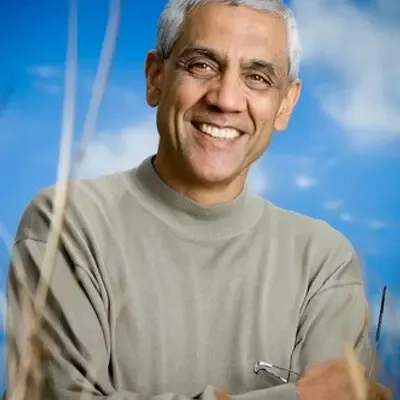
Washington, Dec 6 (NationPress) Artificial Intelligence (AI) has the potential to be “the great equalizer” for India, significantly enhancing the country’s global stature. However, this opportunity hinges on swift action from policymakers to leverage AI’s capabilities, according to tech investor Vinod Khosla.
Khosla, who delivered the keynote address at the AI Impact Summit pre-conference hosted by the Indian Consulate in San Francisco this week, described AI as “the largest opportunity I could have ever imagined, even 10 or 15 years ago.”
He forecasted that “within the next 15 years, almost all expertise on the planet will be free,” including in sectors such as healthcare, law, science, and education.
According to him, “there is very little AI won’t be able to do that humans can do.”
He further remarked that labor would become “almost free,” presenting both immense possibilities and significant disruption.
Khosla believes that this technology will uniquely benefit India by removing conventional barriers to access. “All you need is voice in your language,” he stated.
He emphasized that individuals don’t require advanced skills to utilize AI, making it particularly transformative for those who have historically been marginalized.
“It bodes really well for the people who don’t have an education, and that’s where it can have the most impact,”
he added.
Khosla cautioned that traditional economic metrics would fail to capture the forthcoming changes, arguing that “GDP will not be a good measure because many services we consider part of GDP will be free.”
He envisioned a “hugely deflationary economy” where “$10,000 will buy more than $30,000, $40,000, or $50,000 buys today.”
He asserted that India could quickly provide high-quality services to every household, predicting that “almost certainly every kid in India before 2030 can have very affordable free personal tutors.”
Khosla also speculated on the availability of “doctors 24/7 in your home… at 10 p.m… at 3 a.m.” and argued for near-free legal services, highlighting the profound implications for healthcare.
“Almost certainly… the right systems can provide much better care than human doctors,”
he stated.
“Even if I have access to the best doctors, it’s still, AI is the best doctor.” Khosla pointed to India’s digital infrastructure — Aadhaar, UPI, DigiLocker, and India Stack — as crucial advantages.
“India’s already done the hard work,”
he remarked, calling these frameworks the foundation for AI-driven essential services. However, he also delivered a stark warning: “Short term, almost certainly the entire BPO business and the IT services business in India will go away,” presenting a “massive problem for the economy unless it’s turned into an export of transformation services.”
The geopolitical ramifications are equally noteworthy. Khosla suggested that with the right capabilities, “Ukraine could easily beat Russia in the current war,” and “Taiwan will be able to defend itself against China if it has access to the best AI.”
He predicted a “really abundant economy globally” by 2050, anticipating significant advancements in areas like energy — particularly fusion — and transportation. Yet, he stressed that technology alone would not ensure this future.
“What it mostly needs is good policy,” he stated. “The technology development will happen… This won’t happen. It’ll be made to happen, especially in a country like India.”
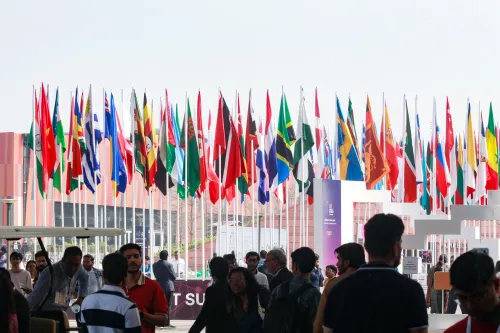
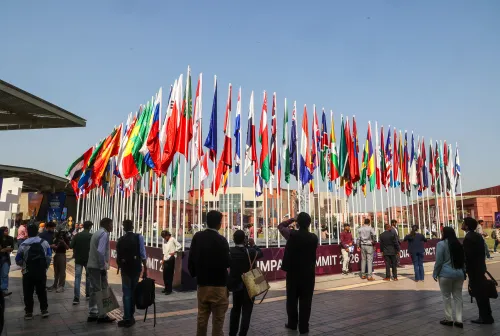
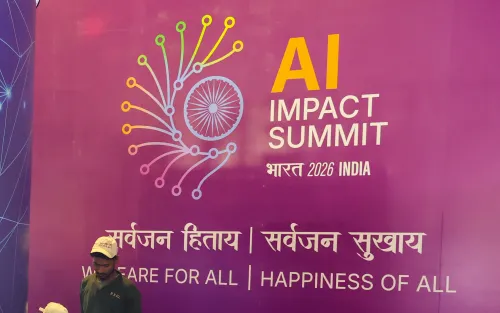
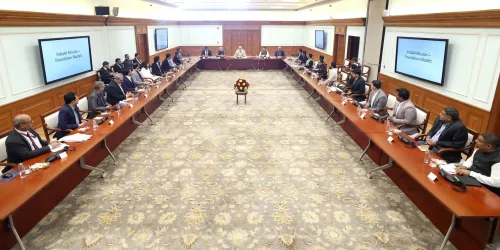
Khosla’s insights set the stage for a day filled with high-level discussions among Indian officials, U.S. tech leaders, global investors, and researchers gearing up for the AI Impact Summit 2026, which Prime Minister Narendra Modi is set to inaugurate in New Delhi next February.
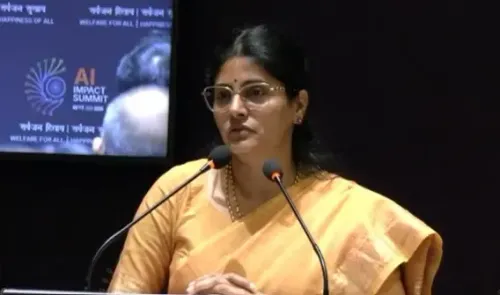
Consul General K. Srikar Reddy, who opened the event, characterized AI as a domain where India seeks to “reshape our economies and societies” and urged for closer collaboration between Silicon Valley and India’s rapidly growing innovation ecosystem.
“I encourage all participants to engage openly, collaborate meaningfully, and think boldly about how we can collectively shape an AI future that is innovative, responsible, inclusive, and sustainable,” he stated.
India’s Deputy Chief of Mission in Washington, Ambassador Namgya Khampa, framed AI cooperation with the U.S. as both strategic and essential.
“Our bilateral relationship today with the United States is broad-based, resilient, and anchored in strategic trust,”
she remarked.
“It is this strong, trusted, and future-oriented partnership that will provide the foundation for deeper cooperation in AI,”
Khampa added.
India chooses a future where AI empowers people, protects our planet, and accelerates inclusive progress, drawing on the country’s strengths in talent, digital public infrastructure, and population-scale datasets.
“In other words, we see India–U.S. collaboration in AI as not only desirable, but essential — as not only commercial, but strategic.”
Point of View
It's imperative to recognize the transformative potential of AI as articulated by Khosla. His insights not only highlight the opportunities for India but also the responsibilities of policymakers. The future of AI in India can indeed become a catalyst for inclusive growth, provided there is strategic collaboration at all levels.
NationPress
20 Sept 2026
Frequently Asked Questions
What is the main message of Vinod Khosla regarding AI in India?
Vinod Khosla emphasizes that AI has the potential to be 'the great equalizer' for India, significantly enhancing the country's global influence if policymakers act swiftly to harness its capabilities.
How does Khosla envision the future of services due to AI?
Khosla predicts that within the next 15 years, a vast amount of expertise will be freely accessible, transforming fields like healthcare, law, and education.
What are the implications of AI for employment in India?
Khosla warns that many traditional employment sectors, such as BPO and IT services, may face significant disruption, potentially leading to job losses unless these sectors adapt.
What role does Khosla believe policy will play in AI's development?
He argues that good policy is crucial for harnessing AI's potential, suggesting that technology development will occur, but strategic frameworks must be established to ensure inclusive progress.
What does Khosla say about the digital infrastructure in India?
Khosla highlights the importance of India's existing digital frameworks like Aadhaar and UPI as foundational elements that can support AI-enabled essential services.