Alibaba's Elements Claw AI agent discovers 4 new superconductors
Synopsis
Alibaba's Damo Academy says its Elements Claw AI agent — trained on 125 million molecular structures — screened 2.4 million crystal candidates in 28 hours and unearthed four previously unknown superconductors, all confirmed in the lab, in what the company calls an industry first.
Key Takeaways
Alibaba Group Holding 's Damo Academy unveiled Elements Claw , described as the industry's first AI agent for superconducting material discovery.
The system identified four previously unknown superconducting compounds, all of which were subsequently verified through laboratory experiments.
Elements Claw screened 2.4 million stable crystal structures in 28 hours of GPU computing time, powered by a one-billion-parameter model trained on 125 million molecular and crystal structures.
The project was developed in collaboration with Renmin University of China and the University of Chinese Academy of Sciences .
The SuperCon database — the field's primary reference — contains only around 2,000 known superconductors accumulated over decades, underscoring how difficult new discoveries have historically been.
Superconductors have transformative applications in power grids , quantum computing , and high-speed maglev trains .
Alibaba Group Holding's research arm Damo Academy has unveiled Elements Claw, what it describes as the industry's first AI agent purpose-built for discovering superconducting materials — and the system has already identified four previously unknown compounds, all subsequently verified through laboratory experiments.
What Elements Claw does
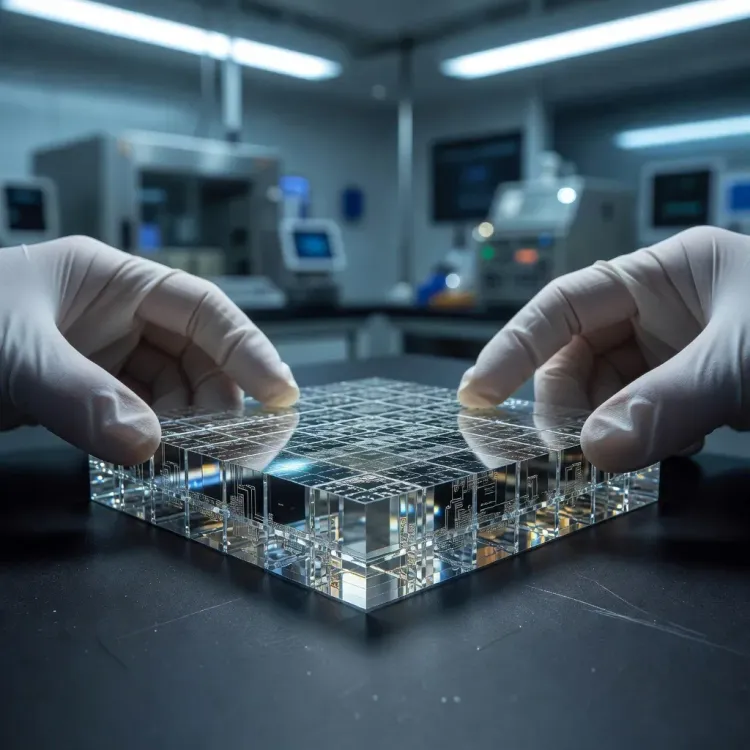
Elements Claw was designed to short-circuit the historically slow, trial-and-error process of superconductor discovery by scanning scientific literature and screening millions of crystal structures to propose candidate materials for lab validation, according to Damo Academy. The system screened 2.4 million stable crystal structures in just 28 hours of graphics processor computing time — a throughput that would take human researchers years to replicate manually.
The agent is powered by a specialised, one-billion-parameter foundation model trained on 125 million molecular and crystal structures. It was developed in collaboration with Renmin University of China and the University of Chinese Academy of Sciences.
Why superconductors matter
Superconducting materials conduct electricity without resistance and expel magnetic fields when cooled to sufficiently low temperatures — properties with transformative potential for power grids, quantum computing, and high-speed maglev trains. Despite decades of research, scientists still lack a complete theoretical framework to predict superconductivity, which is why the widely used SuperCon database contains only around 2,000 known superconducting materials accumulated over many decades.
The competitive backdrop
The announcement places Alibaba in direct competition with Western AI labs racing to apply large models to materials science. Google DeepMind's AlphaFold series redefined protein-structure prediction, while Microsoft has invested heavily in AI-driven scientific discovery platforms. Elements Claw represents China's most prominent public claim to a comparable breakthrough in an adjacent domain — one with significant industrial and national-security implications.
What's next
The laboratory verification of all four AI-proposed compounds is a critical milestone: it moves Elements Claw from a theoretical tool to one with a demonstrated discovery record. Whether Damo Academy will open-source the model, publish peer-reviewed findings, or commercialise the platform through Alibaba's cloud division remains to be seen. Analysts and materials scientists will be watching closely to assess whether the four newly found superconductors exhibit properties — such as higher critical temperatures — that make them practically useful, which would be the true test of the technology's impact.
Point of View
Not just a benchmark claim — it puts Alibaba's Damo Academy in a credible position alongside Google DeepMind and Microsoft in the race to make AI a genuine instrument of scientific discovery. What mainstream coverage tends to underplay is the geopolitical dimension: superconductors underpin quantum computing hardware and next-generation power infrastructure, both arenas where the US and China are in direct strategic competition. The choice to co-develop Elements Claw with state-affiliated universities — Renmin University and the University of Chinese Academy of Sciences — suggests this is as much a national capability project as a commercial one. The real question is whether the four discovered compounds offer any practical advantage in critical temperature or manufacturability; if they do, the implications for the chip-war and energy-transition narratives could be substantial.
NationPress
2 Oct 2026
Frequently Asked Questions
What is Alibaba's Elements Claw AI agent?
Elements Claw is an AI agent developed by Alibaba's Damo Academy that autonomously scans scientific literature and screens millions of crystal structures to identify candidate superconducting materials. It is powered by a one-billion-parameter model trained on 125 million molecular and crystal structures, and was built in collaboration with Renmin University of China and the University of Chinese Academy of Sciences.
How many superconductors did Elements Claw discover?
Elements Claw identified four previously unknown superconducting compounds. Critically, all four were subsequently verified through laboratory experiments, moving the findings beyond computational prediction into empirical confirmation.
Why is discovering new superconductors so difficult?
Scientists still lack a complete theoretical framework to predict superconductivity, making discovery historically dependent on slow, trial-and-error experimentation. The widely used SuperCon database contains only around 2,000 known superconducting materials accumulated over decades of global research.
How does Elements Claw compare to Google DeepMind's AlphaFold?
Both systems apply large AI models to accelerate scientific discovery — AlphaFold targets protein-structure prediction, while Elements Claw targets superconducting materials. Alibaba's announcement is China's most prominent public claim to a comparable breakthrough in materials science, placing it in direct competition with Western AI labs including Google DeepMind and Microsoft.
What are the practical applications of new superconducting materials?
Superconductors — materials that conduct electricity without resistance at low temperatures — have transformative potential in power grids, quantum computing hardware, and high-speed maglev trains. Discoveries with higher critical temperatures or easier manufacturability could have significant industrial and national-security implications.