Apple and Huawei foldables launch as smartphone market faces 17% drop

Synopsis
Apple's first foldable iPhone, debuting September 9 under new CEO John Ternus, is projected to capture 40% of the global foldable market by 2027 — blindsiding Huawei and Samsung just as the broader smartphone sector faces a 17% annual decline.
Key Takeaways
Apple is expected to unveil its first foldable iPhone at its September 9, 2026 event, marking the keynote debut of new CEO John Ternus .
Huawei will launch the Mate XT 2 trifold smartphone on September 7, 2026 , two days before Apple 's event.
The global smartphone market is bracing for an estimated 17 per cent contraction in 2026 , driven by soaring component and memory costs.
IDC Senior Research Director Nabila Popal projects Apple will ship more than 17 million foldable iPhones by 2027 .
Apple is forecast to capture approximately 40 per cent of the global foldable smartphone market within two years of launch, challenging Huawei and Samsung .
Apple and Huawei Technologies are set to unveil competing foldable smartphones within days of each other in early September 2026, arriving at a critical moment for a global smartphone market projected to contract by an estimated 17 per cent this year amid soaring component costs and a persistent memory supply crunch.
Apple's September 9 event sets the stage
Apple's annual product showcase, scheduled for September 9, is widely expected to feature the company's first-ever foldable iPhone as its headline announcement. The event will also mark the keynote debut of incoming Chief Executive Officer John Ternus, making it one of the most closely watched tech events of the decade. Standard model refreshes are also anticipated alongside the foldable reveal.
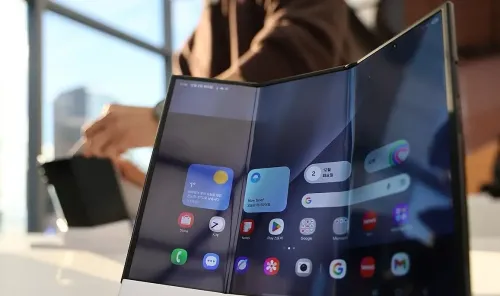
The launch comes just two days after Shenzhen-based Huawei is scheduled to unveil the Mate XT 2, an upgrade to its flagship trifold device and a direct successor to one of the most talked-about handsets in recent memory. The near-simultaneous launches are expected to generate significant competitive pressure across the premium segment.
Why it matters: A lifeline for a struggling sector
Industry analysts view the twin launches as a potential catalyst for a smartphone market that has struggled under the weight of elevated component prices and weakened consumer demand. The foldable category itself had been losing momentum before Apple's anticipated entry, according to analysts.
Nabila Popal, Senior Research Director at research firm IDC, said on Wednesday: 'Apple's entry into the foldable market has done more than reignite growth in a category that was losing momentum. It has fundamentally altered the market's trajectory.' Popal projected that Apple would ship more than 17 million foldable iPhones by 2027, capturing approximately 40 per cent of the global foldable market.
The competitive backdrop: Huawei and Samsung under pressure
Apple's foldable push is set to challenge the dominance that Huawei and Samsung have built in the premium foldable segment over several years. Popal noted that Apple is 'positioned to challenge Huawei and Samsung for leadership in markets where they have long dominated — an extraordinary outcome for a product expected to be less than two years into its life cycle.'
For Huawei, the Mate XT 2 represents a bid to consolidate its trifold technology lead before Apple's entry reshapes buyer expectations. Samsung, which has dominated global foldable shipments for years, faces a simultaneous squeeze from both rivals at a time when overall market volumes are under pressure.
What's next: Memory costs and market recovery
Beyond the headline launches, the broader industry is contending with a memory component crunch that has pushed device prices higher and compressed margins across the supply chain. How aggressively Apple and Huawei price their foldables against this cost backdrop will be a key indicator of their respective strategies for capturing share in a shrinking total market.
With IDC's Popal forecasting Apple alone commanding 40 per cent of global foldable shipments by 2027, the segment's consolidation around a handful of players appears all but inevitable — and the weeks following the September launches will offer the first real signal of whether consumer demand can absorb premium foldable pricing in a down cycle.
Point of View
Meaning the component squeeze that is shrinking the overall market disproportionately squeezes foldable margins, potentially forcing one or both players into uncomfortable pricing concessions. IDC's projection of Apple commanding 40 per cent of foldable shipments by 2027 also implies a dramatic share loss for Samsung, whose Galaxy Z series has anchored the category for years — a disruption the market has not yet fully priced in. Investors and supply-chain watchers should focus less on launch-day hype and more on Q4 sell-through data, which will reveal whether consumers in a contracting market are willing to pay foldable premiums amid persistent macro headwinds.
NationPress
15 Oct 2026
Frequently Asked Questions
When is Apple launching its foldable iPhone?
Apple is expected to unveil its first foldable iPhone at its annual product event on September 9, 2026 . The launch will also serve as the keynote debut of new CEO John Ternus .
What is the Huawei Mate XT 2?
The Huawei Mate XT 2 is an upgraded trifold smartphone set to be unveiled on September 7, 2026 , succeeding Huawei 's earlier flagship trifold device. It is positioned as Huawei 's answer to growing competition in the premium foldable segment.
Why is the smartphone market declining in 2026?
The global smartphone market is facing an estimated 17 per cent decline in 2026 , driven primarily by soaring component costs — including a significant memory supply crunch — alongside weakened consumer demand. The foldable segment had also been losing momentum before Apple 's anticipated entry, according to IDC .
How much of the foldable market will Apple capture?
IDC Senior Research Director Nabila Popal projects Apple will ship more than 17 million foldable iPhones by 2027 , representing approximately 40 per cent of the global foldable market. Popal described this as 'an extraordinary outcome for a product expected to be less than two years into its life cycle.'
How does Apple's foldable affect Samsung and Huawei?
Apple 's entry is expected to directly challenge Huawei and Samsung , which have long dominated the premium foldable segment. According to IDC 's Nabila Popal , Apple is 'positioned to challenge Huawei and Samsung for leadership in markets where they have long dominated.'