Argentina raptor fossil reveals prehistoric link to China's velociraptors
Synopsis
A fish-eating raptor fossil found in Argentine Patagonia shares the same signature curved claw as Chinese velociraptors — 19,000 km apart — suggesting a common ancestor from when the continents were one landmass, overturning assumptions about how far these predators roamed.
Key Takeaways
A new dromaeosaurid species, Kank australis , was discovered in the Maastrichtian Chorrillo Formation , Santa Cruz province , Argentina .
The species shares a distinctive curved sickle claw with velociraptors found in China , roughly 19,000 km (11,800 miles) away.
Both lineages trace to a common ancestor from the era of a single supercontinent, according to the study published in the Journal of Vertebrate Paleontology in late June 2026 .
Lead author Matias Motta of the Bernardino Rivadavia Natural Sciences Museum (MACN) has led fieldwork at the site since 2018 .
The research involves collaboration with Japan’s National Museum of Nature and Science .
The find prompts scientists to reconsider how widely dromaeosaurid dinosaurs dispersed during the Late Cretaceous period (143–66 million years ago) .
A newly identified dinosaur species unearthed in southern Argentine Patagonia shares a distinctive curved claw with velociraptors discovered in China — separated by roughly 19,000 kilometres (11,800 miles) — pointing to a deep evolutionary kinship that is reshaping scientific understanding of how widely these ancient predators once ranged. The discovery was published in the Journal of Vertebrate Paleontology in late June 2026.
The find and what makes it unusual
The new raptor species, recovered from the Maastrichtian Chorrillo Formation in Santa Cruz province, belongs to the family Dromaeosauridae — the same group that includes the iconic Velociraptor of Asia. Despite occupying opposite ends of the planet and living vastly different lifestyles, the two lineages preserved near-identical anatomical structures, particularly the signature sickle-shaped claw that defines the family.
Matias Motta, a postdoctoral researcher at the Bernardino Rivadavia Natural Sciences Museum (MACN) and lead author of the study, described the preservation as striking. “What is remarkable is the preservation of certain anatomical structures in animals with very different lifestyles,” he said.
How the fossil was found
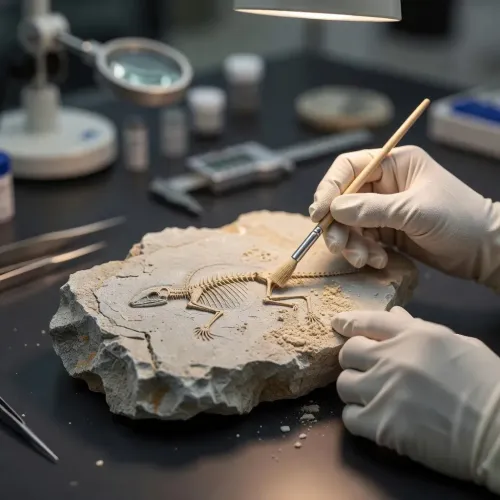
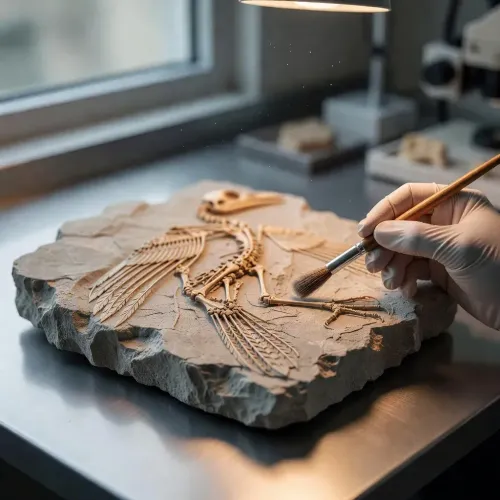
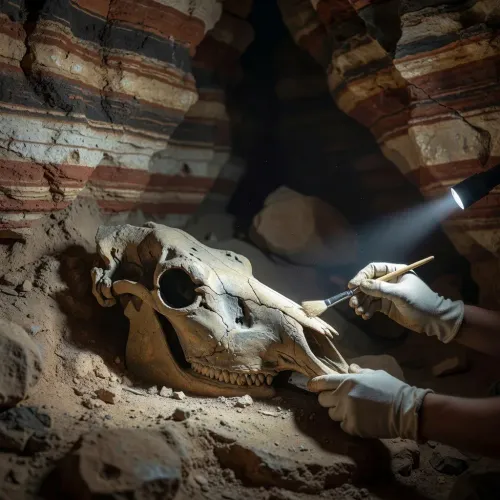
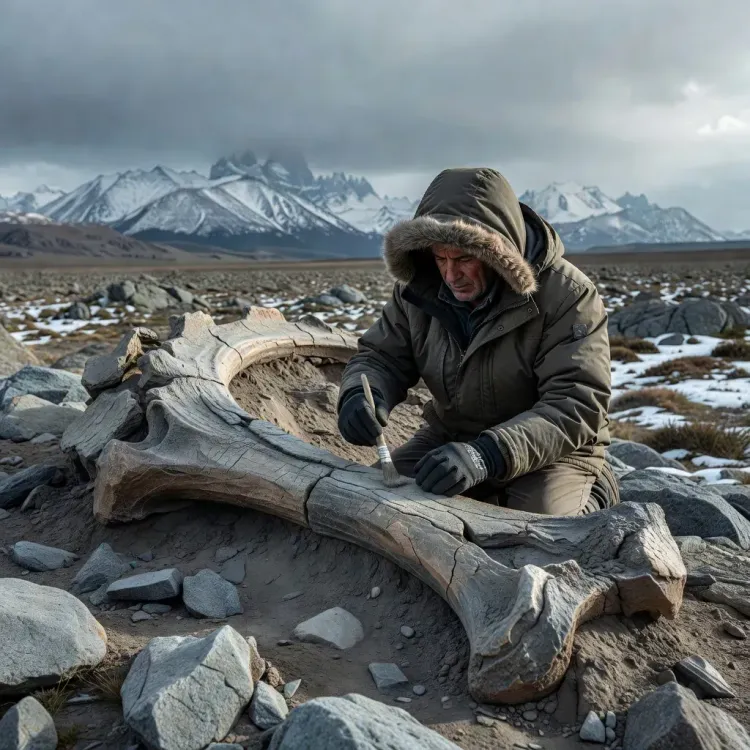
A palaeontology team has been working the Patagonian site since 2018, investigating what the far south looked like during the Late Cretaceous period, spanning 143 million to 66 million years ago. One of the key fossils was recovered just before a snowstorm shut down the excavation for several days. “At first, we were not sure what it was because the fossil was embedded in the rock. Then we realised that it was a raptor,” the research team noted.
Why it matters: continental drift and shared ancestry
The Argentine and Chinese raptors trace back to a common ancestor from an era when today’s continents were fused into a single landmass. The discovery suggests that dromaeosaurid dinosaurs spread across vast geographic ranges before tectonic forces separated the continents, and that certain survival-critical anatomical traits were conserved across tens of millions of years of independent evolution.
The specimen is also being studied in collaboration with Japan’s National Museum of Nature and Science, broadening the international scope of the research.
What’s next
Scientists say the find, catalogued as Kank australis, prompts a reassessment of dromaeosaurid dispersal routes and the ecological conditions of Late Cretaceous South America. Further excavations at the Santa Cruz site are expected to yield additional specimens that could refine the species’ phylogenetic placement and feeding behaviour, given its apparent fish-eating adaptations.
Point of View
Meaning each Patagonian find disproportionately reshapes evolutionary trees. The Argentina-China anatomical convergence here is not convergent evolution but shared inheritance, which is a subtler and more consequential distinction: it implies active dispersal corridors existed across Gondwana before fragmentation, corridors that palaeontologists are only beginning to map. Mainstream coverage tends to lead with the ‘velociraptors were everywhere’ hook, but the deeper story is methodological — the team’s multi-year, snowstorm-interrupted fieldwork in remote Patagonia underscores how resource-constrained the science of southern dinosaur diversity actually is. Expect the site to become a reference point in debates over dromaeosaurid phylogeny for years.
NationPress
25 Sept 2026
Frequently Asked Questions
What is Kank australis and where was it found?
Kank australis is a newly identified raptor species belonging to the family Dromaeosauridae , discovered in the Maastrichtian Chorrillo Formation in Santa Cruz province , southern Argentine Patagonia . The species is notable for its curved sickle claw and apparent fish-eating adaptations.
Why is the Argentina raptor connected to Chinese velociraptors?
Both the Argentine raptor and Chinese velociraptors are members of the Dromaeosauridae family and share a distinctive curved claw, indicating they descended from a common ancestor that lived when today’s continents formed a single landmass. The two groups are separated by roughly 19,000 km today, making the anatomical similarity a product of shared inheritance rather than independent evolution.
When was the study published and who led the research?
The study was published in late June 2026 in the Journal of Vertebrate Paleontology . It was led by Matias Motta , a postdoctoral researcher at the Bernardino Rivadavia Natural Sciences Museum (MACN) in Argentina , with fieldwork ongoing since 2018 .
What does this discovery mean for our understanding of dinosaur evolution?
The find suggests dromaeosaurid dinosaurs spread across vast geographic ranges before continental drift separated the landmasses, and that key anatomical features were preserved across tens of millions of years of independent evolution. Scientists say it prompts a reassessment of dispersal routes during the Late Cretaceous period (143–66 million years ago) .
Which institutions are involved in the research?
The primary institution is the Bernardino Rivadavia Natural Sciences Museum (MACN) in Argentina . The research also involves collaboration with Japan’s National Museum of Nature and Science , giving the project an international scope.