240-million-year-old fossil holds oldest reptile stomach ever found
Synopsis
A 240-million-year-old fossil from Yunnan, China has yielded the oldest known preserved stomach, liver, and intestinal tissue in any reptile — and suggests archosaurs colonised the sea far earlier than scientists thought.
Key Takeaways
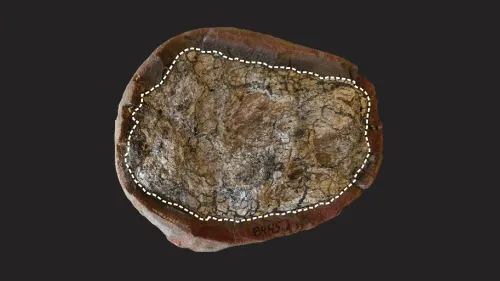
The fossil of Austronaga minuta , dated to approximately 240 million years ago in the Early Triassic period , contains the oldest known preserved stomach, liver, and intestinal soft tissue in reptiles.
The research was led by the Chinese Academy of Sciences (CAS) Institute of Vertebrate Palaeontology and Paleoanthropology and published in Science Advances on 30 July 2026 .
The specimen was recovered from Luoping County, Yunnan Province, China — a site known for its exceptional Early Triassic marine fossil beds.
The fossil is identified as the earliest known stem-archosaur with unambiguous aquatic adaptations, pushing back the timeline for marine colonisation by this group.
International collaborators included the University of Zurich , University of Hohenheim , and National Museums Scotland .
A Chinese-led research team has identified a 240-million-year-old fossil as the oldest known reptile specimen with preserved internal organs — including the stomach, liver, and intestinal soft tissue — marking a landmark discovery in vertebrate palaeontology. The fossil, belonging to the species Austronaga minuta from the Early Triassic period, was analysed by a team led by the Chinese Academy of Sciences (CAS) and published in the peer-reviewed journal Science Advances on Thursday, 30 July 2026.
What was found inside the fossil
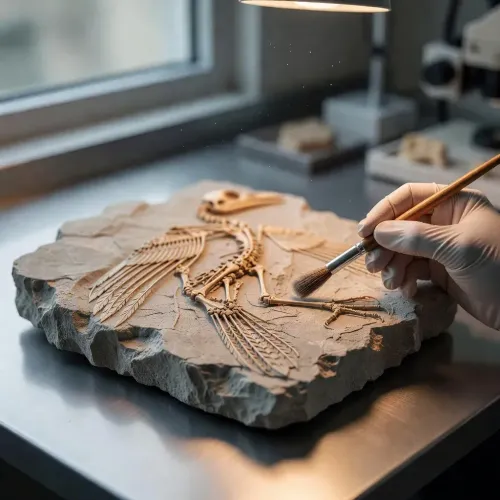
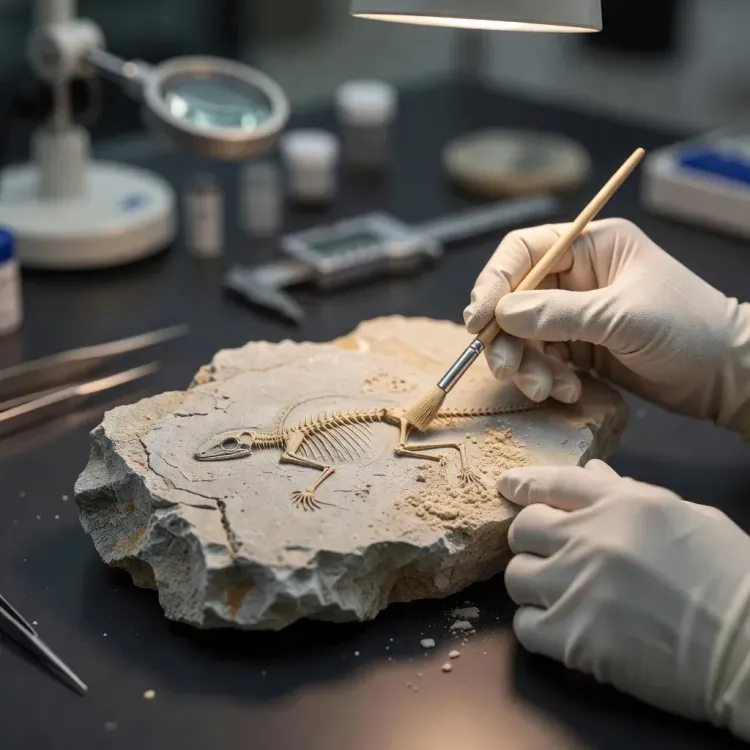
The complete skeleton of Austronaga minuta reveals highly specialised body features consistent with an aquatic lifestyle, making it the earliest known stem-archosaur to display unambiguous adaptations for life in water. According to the research paper, 'The fossil exhibits the oldest known stomach, liver and intestinal preservations in reptiles.' The level of soft-tissue preservation is described as exceptional for a specimen of this age.
Why it matters
Archosaurs are the evolutionary group that gave rise to birds, dinosaurs, crocodiles, and their extinct relatives — making this fossil a critical data point in understanding how life on Earth diversified after the end-Permian mass extinction. The discovery suggests the marine colonisation of archosaurs was both earlier and more extensive than previously believed. The research team noted the specimen offers a 'unique opportunity' to study how Triassic reptiles navigated the vital evolutionary transition from land to sea.
The research team and institutions
The study was led by the CAS Institute of Vertebrate Palaeontology and Paleoanthropology, with contributions from international collaborators including the University of Zurich, University of Hohenheim, and National Museums Scotland. The fossil was recovered from Luoping County in Yunnan Province, China, a region that has previously yielded significant Early Triassic marine fossil beds. The multinational authorship underscores the growing role of cross-border collaboration in palaeontological research.
Competitive backdrop in fossil science
China has become one of the world's most prolific sources of exceptionally preserved fossils, with sites in Yunnan Province and elsewhere consistently producing specimens that reshape evolutionary timelines. The Austronaga minuta discovery follows a broader pattern of CAS-led research redefining the Triassic fossil record, including earlier work on the long-necked marine reptile Dinocephalosaurus. Such finds reinforce China's central position in global palaeontology.
What's next
Researchers are expected to conduct further analysis of the preserved soft tissue to better understand the digestive physiology of early archosaurs and what the stomach contents may reveal about diet and food chains in Early Triassic marine ecosystems. The findings are likely to prompt a reassessment of existing timelines for archosaur diversification. Future excavations in Luoping County could yield additional specimens that corroborate or refine the current conclusions.
Point of View
With implications for how scientists model post-extinction ecosystem recovery after the end-Permian event. What mainstream coverage tends to underplay is the geopolitical dimension: Yunnan Province has functioned as a de facto global headquarters for Triassic soft-tissue research, and CAS-led teams have now produced a string of findings that systematically revise Western-authored evolutionary frameworks. The involvement of University of Zurich and National Museums Scotland signals that international institutions increasingly need Chinese fossil access to remain competitive in deep-time vertebrate research. The soft-tissue preservation angle also matters for methodology — if stomach contents can be analysed, this fossil could reveal trophic data that changes our understanding of Early Triassic food webs entirely.
NationPress
13 Sept 2026
Frequently Asked Questions
What is the Austronaga minuta fossil and why is it significant?
Austronaga minuta is a 240-million-year-old Early Triassic reptile whose fossil contains the oldest known preserved stomach, liver, and intestinal soft tissue ever found in a reptile. Its significance lies in both the exceptional organ preservation and its status as the earliest known stem-archosaur with confirmed aquatic adaptations.
Where was the Austronaga minuta fossil discovered?
The fossil was found in Luoping County, Yunnan Province, China , a region with a well-documented record of Early Triassic marine fossil beds. The site has previously yielded other important Triassic specimens.
Who conducted the research and where was it published?
The study was led by the Chinese Academy of Sciences (CAS) Institute of Vertebrate Palaeontology and Paleoanthropology , with international partners from the University of Zurich , University of Hohenheim , and National Museums Scotland . It was published in the peer-reviewed journal Science Advances on 30 July 2026 .
What does this fossil tell us about archosaur evolution?
The fossil indicates that archosaurs — the group that includes birds, dinosaurs, and crocodiles — transitioned to aquatic environments earlier and more extensively than scientists previously believed. It is the earliest stem-archosaur on record to display unambiguous physical adaptations for life in water.
What will researchers study next from this fossil?
Scientists plan to analyse the preserved soft tissue in greater detail, including potential stomach contents, to reconstruct the diet and food chains of Early Triassic marine ecosystems. Further excavations in Luoping County are also expected to search for additional specimens of Austronaga minuta .