CAIT national meet urges responsible protests to safeguard trader livelihoods
Synopsis
India's largest trader body, CAIT, gathered leaders from 26 states in New Delhi to send a clear message: protests are a constitutional right, but not at the cost of traders' livelihoods. With the Delhi market disruption worsening, CAIT president B.C. Bhartia invoked Mahatma Gandhi to draw the line between legitimate dissent and economic damage.
Key Takeaways
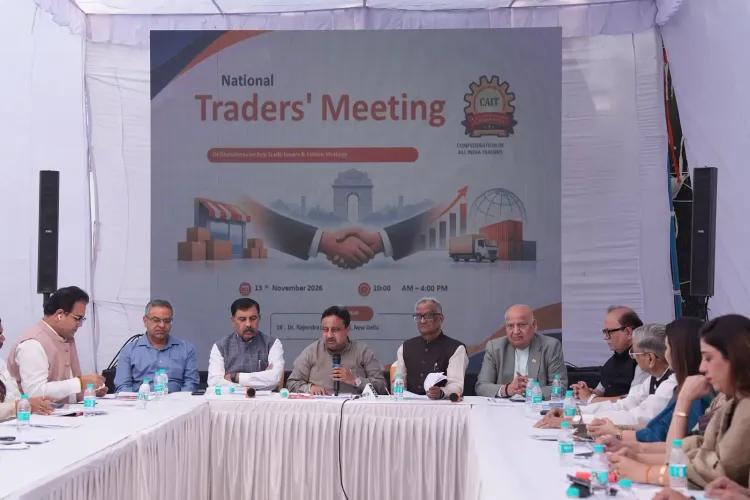
CAIT held its national trade meeting in New Delhi on 13 November 2026 , with leaders from 26 states in attendance.
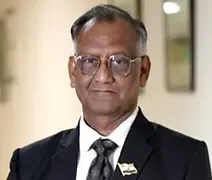
CAIT National President B.C.
Bhartia called for protests to be conducted responsibly, warning against disrupting the marketplace.
CAIT National Women President Sangeeta Patil flagged serious disruption to traders in protest-affected areas of Delhi.
Key agenda items included GST simplification , cyber security , food safety , and women's participation in trade .
CAIT resolutions are expected to be formalised into a memorandum to relevant authorities in coming weeks.
The Confederation of All India Traders (CAIT) convened its national trade meeting in New Delhi on Friday, 13 November 2026, drawing trade leaders from 26 states to deliberate on critical challenges confronting India's vast trading community. At the heart of the discussions was a pointed appeal: protests and demonstrations in the capital must not be allowed to cripple the livelihoods of ordinary traders and shopkeepers.
Key Issues on the Agenda
The day-long meeting addressed a broad spectrum of concerns including traders' rights, livelihood protection, cyber security, GST simplification, food safety standards, and the need to increase women's participation in business. The range of topics underscored the growing complexity of challenges facing India's trader community in an increasingly digital and regulated marketplace.
Protests in Delhi Disrupting Business
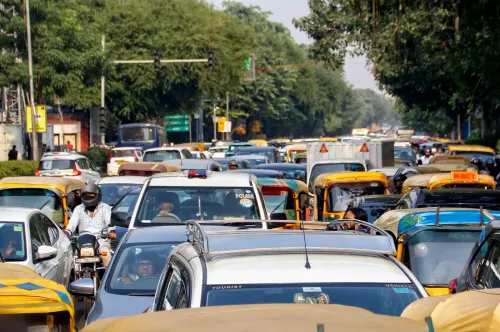
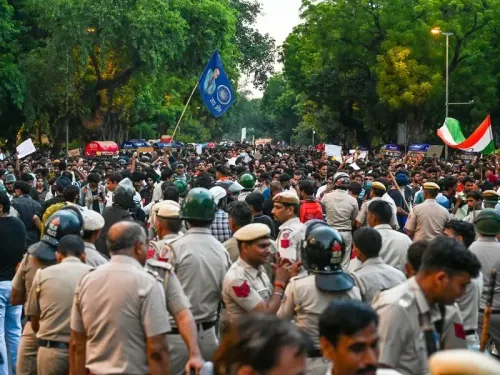
A significant portion of the discussions centred on the adverse effects of ongoing protests and demonstrations in Delhi on local commerce. Trade leaders acknowledged the constitutional right to protest while firmly asserting that such activities must not spill over into economic disruption for businesses and consumers alike.
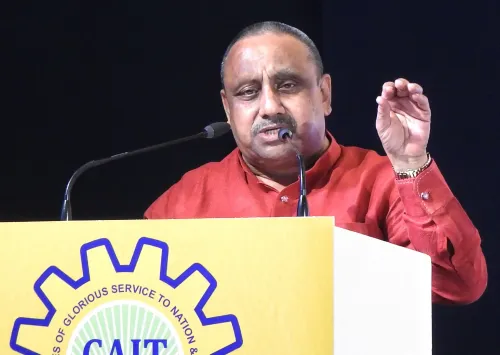
CAIT National President B.C. Bhartia drew a pointed historical parallel to make the case for responsible protest. 'First and foremost, our biggest objective is the nation's interest, traders' interest, and consumers' interest. We must raise issues against whoever is disrupting these interests. When Mahatma Gandhi went on strikes, he never protested against his own government; he protested against a foreign government. So, they shouldn't spoil the issue by associating this hunger strike with Mahatma Gandhi. Or, whenever a trader protests, they close their own shop; they don't ruin the market,' Bhartia said.
Bhartia's remarks signal CAIT's intent to position the trading community as a responsible stakeholder — one that expresses dissent without inflicting collateral damage on the marketplace. This comes amid a broader national conversation about the boundaries between democratic protest and economic disruption.
Women Traders Bear the Brunt
CAIT National Women President Sangeeta Patil highlighted the acute distress being experienced by traders in protest-affected zones. 'Traders are facing a lot of problems at various locations where they have their shops. Our effort is to ensure that protests and demonstrations are conducted in accordance with the rights guaranteed by the Constitution,' Patil said. Her comments drew attention to the often-overlooked impact on women entrepreneurs and small shopkeepers operating in high-footfall areas now rendered inaccessible by sustained demonstrations.
Representation and What Comes Next
CAIT National Vice President Amar Parwani confirmed that the meeting drew participation from trade leaders representing 26 states, lending the gathering considerable national weight. The broad representation reflects the scale of CAIT's reach and the cross-regional nature of the concerns being raised.
The meeting's resolutions are expected to be formalised into a memorandum to be submitted to relevant authorities. With the GST simplification agenda and digital security concerns also on the table, CAIT's engagement with both government and protest groups is likely to intensify in the weeks ahead.
Point of View
Not just legal rights. What the meeting underscores is a growing fracture between street-level political activism and the economic resilience of India's small trader class, a constituency that cuts across party lines. The GST simplification demand, quietly buried under the protest headline, deserves equal scrutiny — it has remained on CAIT's agenda for years with limited traction. If CAIT's national platform cannot accelerate GST relief for small traders, its political signalling on protests may matter more to optics than outcomes.
NationPress
14 Nov 2026
Frequently Asked Questions
What was discussed at the CAIT national trade meeting on 13 November 2026?
The Confederation of All India Traders (CAIT) met in New Delhi on 13 November 2026 to discuss traders' rights, livelihood protection, GST simplification, cyber security, food safety, and increasing women's participation in business. A major concern raised was the disruption caused to Delhi traders by ongoing protests and demonstrations.
What did CAIT president B.C. Bhartia say about protests affecting traders?
CAIT National President B.C. Bhartia called for protests to be conducted responsibly, drawing a parallel with Mahatma Gandhi's approach of protesting against a foreign government rather than one's own. He stressed that traders, when they protest, close their own shops rather than disrupting the broader marketplace.
How many states were represented at the CAIT meeting?
Trade leaders from 26 states participated in the CAIT national trade meeting held in New Delhi on 13 November 2026, according to CAIT National Vice President Amar Parwani.
What impact are Delhi protests having on traders?
CAIT National Women President Sangeeta Patil stated that traders operating in protest-affected locations are facing serious disruptions to their business operations. The organisation is pushing for demonstrations to be conducted within constitutional boundaries so as not to harm ordinary shopkeepers and small business owners.
What are CAIT's next steps after the national meeting?
The meeting's resolutions are expected to be formalised into a memorandum to be submitted to relevant authorities. CAIT is also expected to continue pressing for GST simplification and improved digital security measures for the trading community in the coming weeks.