China unveils 800-seat flying-wing jet in large aircraft push
Synopsis
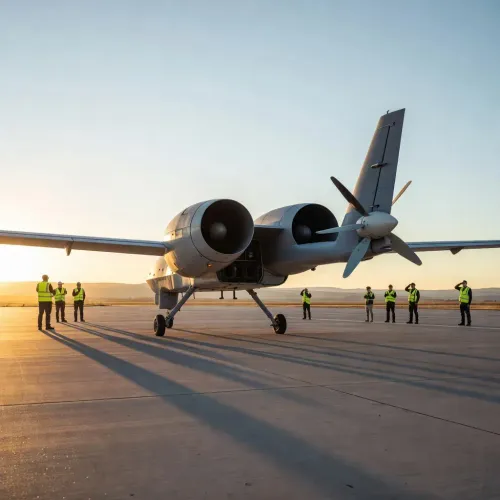
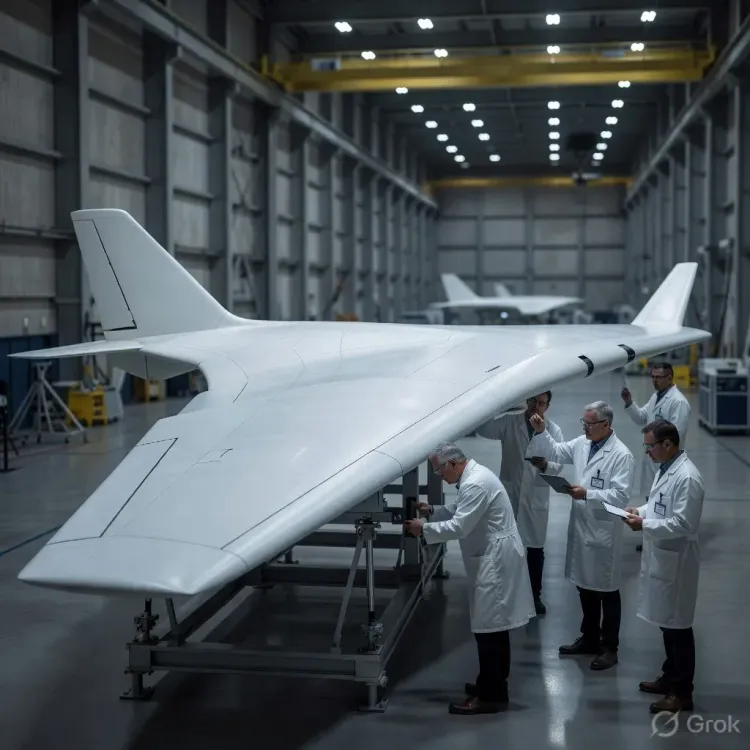
China's state aerodynamics institute has revealed an 800-passenger flying-wing jet concept that is 85 metres wide — dwarfing the Airbus A380 — in the most radical addition yet to the country's fast-expanding large aircraft programme.
Key Takeaways
CARDC unveiled an aerodynamic model for a flying-wing passenger aircraft on 17 August 2026 , capable of carrying more than 800 people .
The aircraft would be 85 metres wide and 43 metres long , with a wingspan 1.6 times that of the B-2 Spirit stealth bomber.
The design far exceeds the capacity of the Airbus A380 , which seats approximately 555 passengers and is currently the world's largest commercial jet.
CARDC has previously contributed to the C919 narrowbody airliner and the Y-20 military transport aircraft.
China is also developing the C929 widebody jet (first flight targeted around 2030 ) and the C949 supersonic airliner alongside this longer-horizon concept.
The flying-wing aircraft has no public name yet and is classified as an exploratory research project, not a committed production programme.
A Chinese research team has unveiled an aerodynamic model for a massive flying-wing passenger aircraft capable of carrying more than 800 people, marking a significant new addition to China's large aircraft programme. The concept was developed by the China Aerodynamics Research and Development Centre (CARDC), a national institute with deep roots in the country's aviation ambitions, and was made public on 17 August 2026.
A radical departure from conventional design
Unlike traditional aircraft — which feature a distinct fuselage, wings, and tail — the flying-wing configuration merges nearly all structural elements into a single broad lifting body. The proposed aircraft measures 85 metres (280 feet) wide and 43 metres long, with a wingspan roughly 1.6 times that of the B-2 Spirit stealth bomber, which also employs a flying-wing layout. For context, the Airbus A380, currently the world's largest commercial passenger jet, typically seats around 555 passengers — making the proposed Chinese design significantly more ambitious in capacity.
CARDC's role and aviation credentials
CARDC has previously contributed to landmark Chinese aviation projects, including the C919 narrowbody airliner and the Y-20 military transport plane. The flying-wing aircraft does not yet carry a public name and is described as a pioneering project exploring radical new configurations beyond what current commercial aviation offers. Its development signals that China's aerospace research institutions are looking well beyond near-term programmes.
Where it fits in China's broader aviation roadmap
China is simultaneously advancing several other major aircraft programmes. The C929, a 280-seat long-range widebody jet developed in partnership with Russia, is expected to make its first flight around 2030. The country is also developing the C949 supersonic airliner, a project that draws comparisons with NASA's X-59 supersonic technology demonstrator. The flying-wing concept sits at the more exploratory end of this pipeline, representing longer-horizon research rather than an imminent commercial product.
Why it matters
The flying-wing design offers theoretical aerodynamic efficiency advantages over tube-and-wing aircraft, potentially delivering lower fuel burn per passenger over long-haul routes — a critical metric as airlines face mounting pressure to reduce emissions. However, flying-wing passenger jets present significant engineering challenges, including cabin pressurisation across a non-cylindrical cross-section and passenger comfort in a wide, flat interior. No flying-wing commercial aircraft has entered service to date, making this an area where China would be competing on entirely new technological ground against Airbus, Boeing, and emerging players.
What's next
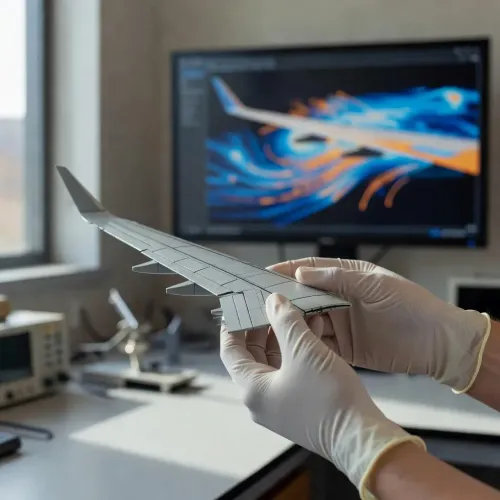
The aerodynamic model unveiled by CARDC represents an early-stage research milestone rather than a production commitment. The path from wind-tunnel model to certified commercial aircraft typically spans decades and requires breakthroughs in structural engineering, cabin design, and regulatory frameworks. Observers will be watching whether China's civil aviation authorities and state-backed manufacturers move to formalise the project as a funded programme alongside the C929 and C949 initiatives.
Point of View
In parallel with the C929 and C949, suggests a long-game approach to aviation self-sufficiency that goes well beyond simply catching up with Western narrowbody technology. What mainstream coverage often underplays is the dual-use dimension: flying-wing aerodynamics research feeds directly into military platforms, and CARDC's institutional role bridging civil and defence programmes makes this announcement strategically layered. The harder question — whether China can solve the cabin pressurisation and passenger-comfort engineering that has stymied flying-wing commercial aircraft globally — remains entirely open.
NationPress
17 Aug 2026
Frequently Asked Questions
What is China's flying-wing passenger aircraft concept?
China's flying-wing passenger aircraft is an aerodynamic concept unveiled by the China Aerodynamics Research and Development Centre (CARDC) that merges the fuselage, wings, and tail into a single broad lifting body. The proposed design is 85 metres wide and 43 metres long , with a capacity of more than 800 passengers .
How does the Chinese flying-wing jet compare to the Airbus A380?
The proposed Chinese flying-wing aircraft would carry more than 800 passengers , significantly exceeding the Airbus A380 's typical seating of around 555 passengers . The A380 is currently the world's largest commercial passenger jet, meaning the Chinese concept would represent a substantial leap in capacity if realised.
What other large aircraft is China developing?
China is simultaneously advancing the C929 , a 280-seat long-range widebody jet expected to make its first flight around 2030 , and the C949 supersonic airliner, which is compared to NASA's X-59 programme. The flying-wing concept is a longer-horizon exploratory project sitting alongside these nearer-term programmes.
Who developed the flying-wing passenger aircraft concept?
The concept was developed by the China Aerodynamics Research and Development Centre (CARDC) , a national research institute. CARDC has previously contributed to the C919 narrowbody airliner and the Y-20 military transport aircraft.
When will China's flying-wing passenger jet enter service?
There is no confirmed timeline for the flying-wing aircraft to enter service. The project is currently at the aerodynamic model stage — an early-phase research milestone — and has not yet received a public name or been confirmed as a funded production programme. The path from concept to certified commercial aircraft typically spans several decades.