China's TP200 drone flies 24 hours non-stop with full tonne payload
Synopsis
China's Yitong UAV System has flown the TP200, the country's first tonne-class civilian drone certified to airworthiness standards — capable of 24 hours of continuous flight and a 3,000 km range at full payload, a breakthrough that could reshape maritime patrol, disaster response, and island logistics.
Key Takeaways
The TP200 , developed by Yitong UAV System , completed its maiden flight on Sunday, 27 July 2026 .
It is China 's first tonne-class civilian UAV built to civil aviation airworthiness standards.
The drone can fly for 24 hours at maximum payload with a range of 3,000 km (1,860 miles) .
Service ceiling is approximately 7,600 metres (25,000 feet) ; maximum cruise speed is 200 km/h .
The TP200 can take off and land within 300 metres and operate from unpaved runways.
Intended applications include maritime patrol, island resupply, firefighting, land mapping, and ecological surveying.
China has completed the maiden flight of the TP200, the country's first tonne-class long-endurance civilian unmanned aerial vehicle (UAV) built to full airworthiness standards, marking a significant milestone in the nation's low-altitude economy push. Developed independently by Yitong UAV System, the aircraft completed its inaugural flight on Sunday, 27 July 2026, according to a Science and Technology Daily report published the following day.
What the TP200 can do
The TP200 is designed to remain airborne for 24 hours at maximum payload, covering a range of 3,000 km (1,860 miles). According to Yitong UAV System's official website, the aircraft has a service ceiling of approximately 7,600 metres (25,000 feet) and a maximum cruise speed of 200 km/h. It can take off and land within 300 metres and is capable of operating from unpaved runways, significantly expanding its deployment flexibility.
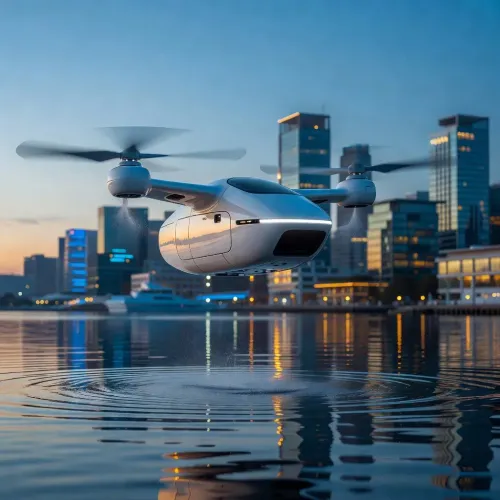
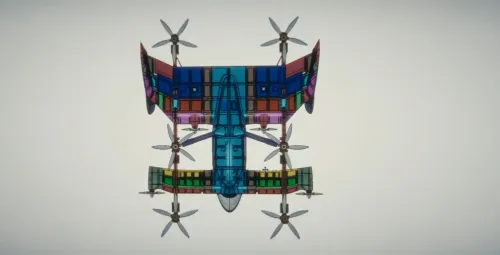
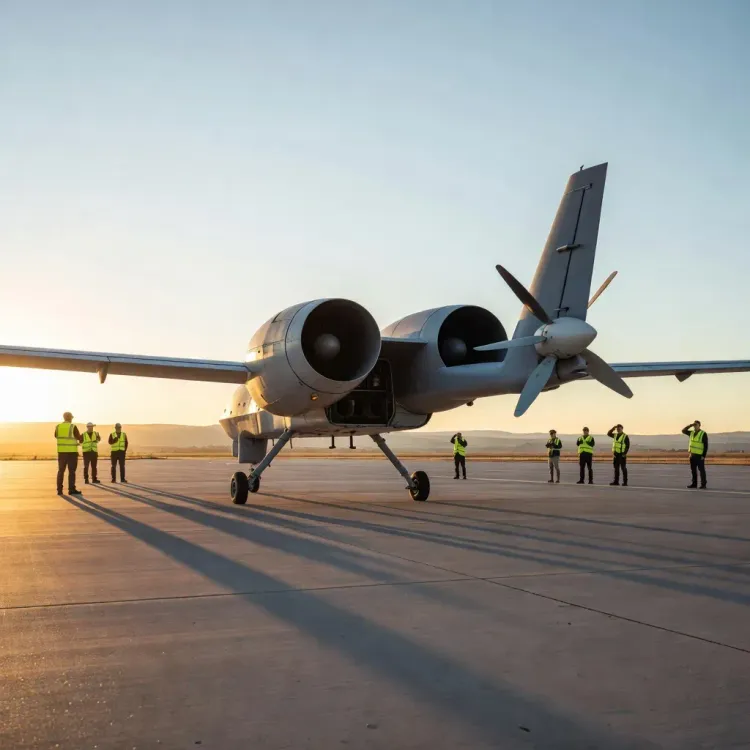
The fuel-powered aircraft features a distinctive twin-intake configuration — one intake positioned above and one below the rear fuselage — along with a tail propeller and twin connected vertical stabilisers. Its modular, reconfigurable design allows rapid role-switching between mission profiles without extensive ground preparation.
Why it matters
The TP200 is the first tonne-class civilian UAV in China to meet civil aviation airworthiness standards, a regulatory threshold that has historically limited large drones to military or experimental use. Clearing this bar opens the door to commercial licensing, insurance, and integration into national airspace management frameworks. For China's rapidly expanding low-altitude economy — a strategic priority backed by central government policy — this represents a critical infrastructure milestone.
The drone is targeted at a broad range of civil applications: maritime patrols, island resupply, coastline surveillance, search-and-rescue operations near shore, emergency supply delivery to remote mountains and islands, drought monitoring, forest and grassland firefighting, land mapping, and ecological surveying — all in any weather, the company said.
Competitive backdrop
The TP200 enters a field where China already fields large military-grade UAVs such as the Wing Loong-2 and Wing Loong-3, but civilian-certified equivalents have lagged. Globally, long-endurance civilian drones capable of tonne-class payloads remain rare, with most commercial platforms limited to sub-250 kg payload categories. The TP200's airworthiness certification path positions Yitong ahead of domestic rivals still operating under experimental permits.
The drone was also showcased in the context of the International Low-Altitude Economy Expo, signalling that Yitong is targeting both domestic government contracts and potential export markets.
What's next
With the maiden flight completed, Yitong UAV System is expected to proceed with extended flight-test campaigns to validate the 24-hour endurance claim across varied payload and weather conditions before pursuing full type certification. Watch for procurement announcements from Chinese maritime and forestry agencies, which would be the most immediate commercial beneficiaries of a certified platform at this capability level.
Point of View
And China has historically struggled to translate military drone capability into commercially licensed civilian platforms. Clearing that bar puts Yitong in a structurally different competitive position from peers still flying under experimental permits. This also fits a broader pattern — Beijing's low-altitude economy policy is less about consumer drones and more about building certified, large-platform infrastructure for state-adjacent use cases like maritime domain awareness and disaster logistics, areas where the line between civil and dual-use blurs considerably. Western regulators and defence analysts will be watching certification progress closely.
NationPress
28 Oct 2026
Frequently Asked Questions
What is the TP200 drone and who made it?
The TP200 is a tonne-class, long-endurance civilian unmanned aerial vehicle developed independently by Yitong UAV System , a Chinese aerospace company. It is the first drone of its size in China to be built to civil aviation airworthiness standards, enabling it to pursue commercial certification for a wide range of civilian missions.
How long can the TP200 drone fly without stopping?
The TP200 can fly for 24 hours continuously at its maximum payload, covering a range of 3,000 km (1,860 miles) . According to Yitong UAV System , it has a service ceiling of about 7,600 metres and a maximum cruise speed of 200 km/h .
What will the TP200 drone be used for?
The TP200 is designed for a broad range of civil applications including maritime patrol, coastline surveillance, island resupply, search-and-rescue, emergency supply delivery to remote areas, drought monitoring, forest and grassland firefighting, land mapping, and ecological surveys. Its modular design allows it to be reconfigured for different mission types.
Why is the TP200's airworthiness certification significant?
Airworthiness certification is the regulatory gateway that allows a drone to operate commercially within national airspace frameworks, access insurance, and fulfil government contracts. Being the first tonne-class civilian UAV in China to meet this standard gives Yitong UAV System a significant first-mover advantage over rivals still flying under experimental permits.
How does the TP200 compare to other large Chinese drones?
China already operates large military UAVs such as the Wing Loong-2 and Wing Loong-3 , but certified civilian equivalents at the tonne-class level have been absent until now. The TP200 fills that gap, targeting state-adjacent civilian use cases rather than direct military deployment, and positions Yitong as a frontrunner in China 's growing low-altitude economy sector.