China to raise Bayan Obo mine output 50% with $74M expansion
Synopsis
China's Baogang Group will invest over US$74 million to expand Bayan Obo — the world's largest rare earth deposit — by 50%, but the project targets iron ore, not rare earths, which remain capped by government quotas. The move underscores Beijing's deliberate separation of mining capacity from rare earth supply policy.
Key Takeaways
Baogang Group plans to invest over half a billion yuan (US$74 million) to expand Bayan Obo mine capacity in Inner Mongolia .
Annual output will rise 50 per cent , from 10 million to 15 million tonnes , at the world's largest rare earth deposit.
The expansion primarily targets iron ore production; rare earths will remain a by-product governed by existing government quotas.
Li Yang , top geologist at Peking University , confirmed: 'Rare earth production is subject to quotas, so there is no need to mine more ore.' Bayan Obo contains iron, rare earths, fluorite, niobium, scandium, and thorium — making quota policy the binding constraint on rare earth output, not geological availability.
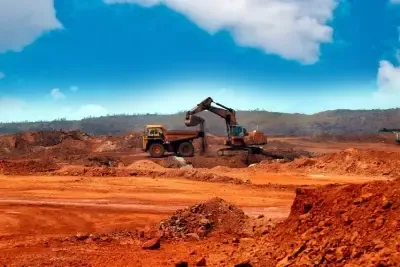
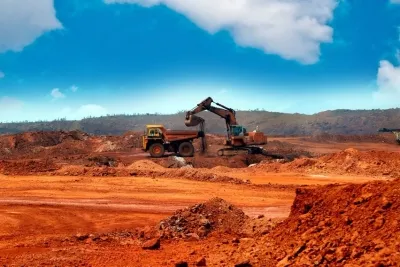
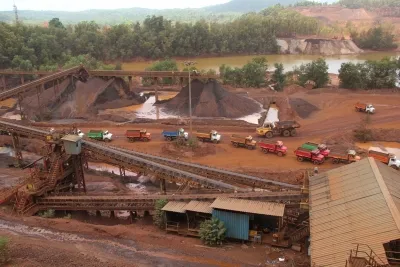
China is set to expand production capacity at Bayan Obo, the world's largest rare earth deposit located in Inner Mongolia, with an investment of over half a billion yuan (US$74 million). The expansion, led by mine operator Baogang Group, will lift annual output by 50 per cent — from 10 million to 15 million tonnes — making it one of the most significant capacity upgrades at the site in recent years.
What the expansion actually targets
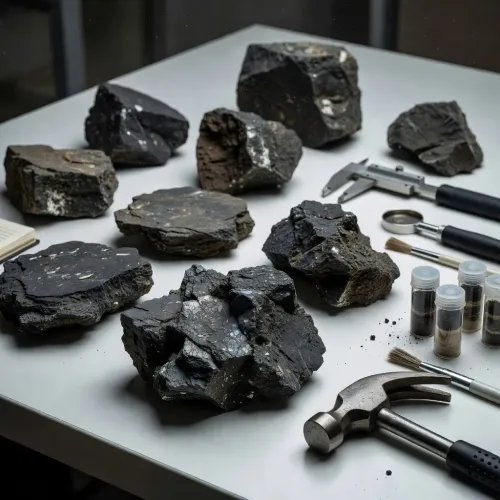
Bayan Obo is a complex polymetallic deposit containing iron ore, rare earths, fluorite, niobium, scandium, and thorium. According to Baogang Group, the project is primarily aimed at increasing iron ore output, with rare earths expected to emerge only as a by-product of the expanded mining operation — not as a deliberate production increase.
This distinction is critical: the expansion does not signal a loosening of China's tightly controlled rare earth production quotas, which govern how much of the strategically sensitive material can be extracted and processed annually.
Why rare earth output stays capped
Li Yang, a top geologist at Peking University, clarified the policy dynamic in an interview. 'Rare earth production is subject to quotas, so there is no need to mine more ore,' he said. The quota system means that even if more ore is extracted, rare earth output remains bounded by government-set ceilings.
This highlights a structural gap between Bayan Obo's enormous geological potential and actual rare earth production — a gap that policy, not geology, maintains.
Why it matters for global supply chains
Rare earths are essential inputs for electric vehicle motors, wind turbines, defence electronics, and advanced semiconductors. Australia, the United States, Europe, and Japan have all invested heavily in building alternative rare earth supply chains to reduce dependence on China, which controls the dominant share of global production and processing capacity.
The Bayan Obo expansion, focused on iron ore, is unlikely to immediately alter global rare earth supply balances — but it reinforces China's long-term grip over the deposit's full resource potential.
What's next
Market watchers will monitor whether Baogang Group's expanded operations lead to any incremental increase in rare earth by-product volumes, even within existing quota frameworks. Any future revision to China's rare earth production quotas — set periodically by the Ministry of Industry and Information Technology — would be the key trigger to watch. For now, the expansion is an iron ore story with rare earth implications held firmly in check by Beijing's resource policy.
Point of View
But its geopolitical subtext is unmistakable: China is deepening its operational control over the world's most resource-rich rare earth site without triggering alarm by raising rare earth quotas. This is a classic dual-use infrastructure move — expanding physical capacity while keeping the policy lever that controls strategic output firmly in Beijing's hands. What mainstream coverage misses is that quota policy, not mining capacity, is the chokepoint for global rare earth supply — and China just made that chokepoint more durable. Nations building alternative supply chains in Australia, the United States, and Europe should note that the geological gap they are racing to close just got wider.
NationPress
22 Sept 2026
Frequently Asked Questions
What is the Bayan Obo mine expansion plan?
Baogang Group plans to invest over US$74 million to expand the Bayan Obo mine in Inner Mongolia , raising annual output by 50 per cent from 10 million to 15 million tonnes . The expansion focuses on increasing iron ore production, with rare earths expected only as a by-product.
Will China produce more rare earths from Bayan Obo?
Not necessarily. China 's rare earth production is governed by government-set quotas, which remain unchanged by this expansion. As Li Yang of Peking University noted, 'Rare earth production is subject to quotas, so there is no need to mine more ore.'
Why does the Bayan Obo expansion matter for global supply chains?
Rare earths from Bayan Obo are critical inputs for EV motors, wind turbines, and defence electronics. Countries including the United States , Australia , Europe , and Japan are investing in alternative sources, but China 's expanded operational control over the site reinforces its long-term dominance over global rare earth supply.
What minerals does Bayan Obo contain?
Bayan Obo is a complex polymetallic deposit containing iron ore, rare earths, fluorite, niobium, scandium, and thorium. It is recognised as the world's largest rare earth deposit, though rare earth extraction is constrained by China 's national quota system.
Who operates the Bayan Obo mine?
Baogang Group operates the Bayan Obo mine in Inner Mongolia , China . The state-backed company announced the expansion investment of over half a billion yuan (US$74 million) to raise mining capacity at the strategically significant site.