Bayan Obo rare earth reserves may far exceed reported 100mn tonnes
Synopsis
A Peking University geologist's 2025 study reveals Bayan Obo formed across two geological eras — including a 430-million-year-old carbonatite phase — suggesting China's already dominant rare earth deposit may hold far more than its reported 100 million tonnes.
Key Takeaways
Bayan Obo in Inner Mongolia is the world's largest known rare earth deposit, with currently reported reserves of 100 million tonnes .
A 2025 study by Peking University geologist Yang Li , published in Science Advances , found the deposit formed through at least two carbonatite phases: one 1,300 million years ago and a second 430 million years ago .
The younger, 430-million-year-old carbonatite phase was identified as 'key to mineralisation', according to Yang Li .
Scientists now believe the officially reported reserve figure may underrepresent the deposit's full geological potential.
The findings could further strengthen China's dominant position in global rare earth supply, with implications for competitors including the United States , Japan , and Europe .
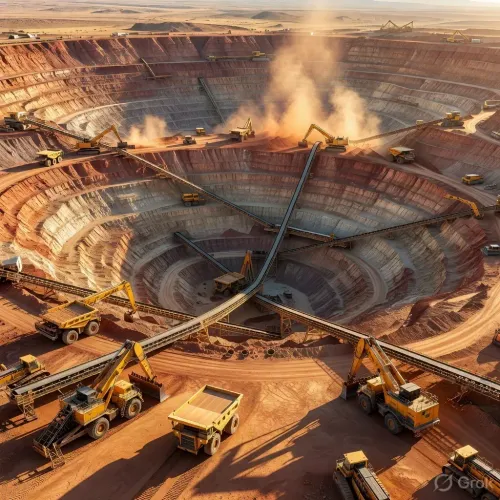
China's Bayan Obo mine in the Inner Mongolia autonomous region — already the world's largest known rare earth deposit — may hold significantly greater reserves than the currently reported 100 million tonnes, according to a leading geologist at Peking University. The finding, rooted in new geological evidence, could have sweeping implications for global rare earth supply chains, critical mineral policy, and industries from electric vehicles to aerospace materials.
A deposit shaped by two geological eras
A 2025 study led by Yang Li, a geologist at Peking University, revealed that Bayan Obo was not formed through a single geological event. Instead, it emerged through multiple stages of carbonatite activity — a process involving volcanoes that erupt cool, runny lava composed primarily of carbonate minerals.
'Our most important finding is that Bayan Obo not only contains 1,300 million-year-old igneous carbonatite but also 430 million-year-old carbonatite, and the second phase was key to mineralisation,' Yang said in the study, published in the journal Science Advances. This younger mineralisation event, the research suggests, played a vital role in concentrating rare earth elements at the site.
Why it matters
Bayan Obo has served as the backbone of China's rare earth industry for decades. According to Yang, 'Bayan Obo's rare earth resources have been the dominant source of global rare earth production since the 1990s.' If the deposit's true geological potential is larger than reported, it would further entrench China's already commanding position in the global rare earth supply chain.
Scientists now believe the currently reported reserve figure may not capture the full underground extent of the mineralisation. The multi-stage formation process means deeper or laterally adjacent zones could harbour additional concentrations not yet formally quantified.
The competitive backdrop
The findings arrive at a moment of intense global competition over critical minerals. The United States has been working to revive domestic production at sites such as the Mountain Pass mine in California, while Japan has been exploring deep-sea mining prospects near Minamitorishima Island. Europe, too, has accelerated its Critical Raw Materials Act to reduce dependence on Chinese supply.
Any upward revision to Bayan Obo's reserve estimates would reinforce China's leverage in ongoing geopolitical negotiations over rare earth export controls, which have already rattled global supply chains for electric vehicles, defence electronics, and aerospace materials.
What's next
The research, published in Science Advances, is expected to prompt further geological surveys and potentially a formal reassessment of Bayan Obo's classified reserve figures by Chinese authorities. Analysts and policymakers in competing nations will be watching closely for any official revision, which could shift the calculus of critical mineral diplomacy for years to come.
Point of View
Yet new geological evidence suggests the gap in natural endowment may be even wider than previously understood. What mainstream coverage often misses is that reserve figures are not purely geological — they are also political, and China has historically kept formal classifications conservative. A formal upward revision, if it comes, would not just be a scientific update; it would be a diplomatic signal. For industries like electric vehicles and defence electronics that are racing to secure non-Chinese supply, this research is a sobering reminder that geological reality may keep reasserting itself against policy ambition.
NationPress
27 Oct 2026
Frequently Asked Questions
What did the 2025 Bayan Obo study find?
The study, led by Yang Li of Peking University and published in Science Advances , found that Bayan Obo was formed through at least two distinct carbonatite events — one 1,300 million years ago and a second, mineralisation-critical phase 430 million years ago . This multi-stage origin suggests the deposit's true underground extent may be larger than the officially reported 100 million tonnes .
Why does Bayan Obo matter for global rare earth supply?
Bayan Obo has been the dominant source of global rare earth production since the 1990s , according to Yang Li . It underpins China's outsized role in supplying rare earths used in electric vehicles , defence systems, and aerospace materials worldwide.
How could larger Bayan Obo reserves affect geopolitics?
If reserves are formally revised upward, it would deepen China's leverage in critical mineral diplomacy at a time when the United States , Japan , and Europe are actively trying to reduce their dependence on Chinese rare earth supply through domestic projects and deep-sea mining initiatives.
What is carbonatite and why does it matter here?
Carbonatite is a type of volcanic rock formed when volcanoes erupt cool, runny lava composed mostly of carbonate minerals. It is closely associated with rare earth mineralisation, and the identification of a second, younger carbonatite phase at Bayan Obo is what led researchers to conclude the deposit may be larger than current estimates suggest.
What happens next following this research?
The study is expected to prompt further geological surveys of the Bayan Obo region and could lead to a formal reassessment of its classified reserve figures by Chinese authorities. Policymakers and industry analysts in competing nations will be closely monitoring any official revision.