China's glueball discovery hailed 'triumph' by global physicists
Synopsis
US and Israeli physicists have called a Chinese-led experiment a 'triumph' after it produced the strongest evidence yet for the glueball — a particle made purely of force. If confirmed, it would be the most consequential particle physics find since the Higgs boson.
Key Takeaways
Chinese-led researchers presented the strongest experimental evidence yet for the glueball , a particle composed entirely of gluons, in August 2026 .
Physicists in the United States and Israel publicly described the findings as a 'triumph' for the global physics community.
The glueball is a decades-old prediction of quantum chromodynamics (QCD) that had never been experimentally confirmed before this work.
A confirmed glueball would be the most significant particle physics discovery since the Higgs boson was identified at CERN in 2012 .
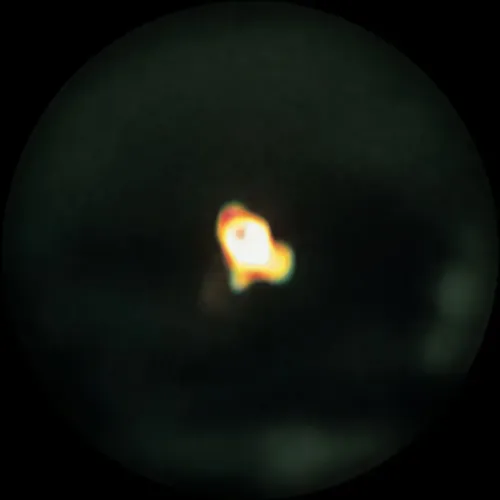
Separately, video footage of SpaceX rocket debris re-entry was captured and circulated, intensifying debate over commercial spaceflight debris accountability.
Independent replication at facilities such as CERN will be the critical next step before the discovery is formally accepted by the scientific community.
China's physics community scored a landmark moment in August 2026 as an international cohort of US and Israeli physicists declared a Chinese-led research team's findings a 'triumph' — presenting what scientists describe as the strongest evidence yet for the existence of the glueball, a theorised subatomic particle composed entirely of force-carrying particles known as gluons.
What is a glueball and why does it matter?
The glueball is one of the most elusive objects in particle physics — a hypothetical particle predicted by quantum chromodynamics (QCD), the theory governing the strong nuclear force. Unlike ordinary particles, a glueball would be made entirely of gluons, the carriers of the strong force, with no quarks involved. Its confirmed existence would validate a key prediction of the Standard Model of particle physics and open new avenues for understanding how matter holds together at the most fundamental level.The discovery and international reaction
Researchers presented compelling experimental evidence for the glueball's existence, prompting swift and emphatic endorsement from the broader scientific community. Physicists in the United States and Israel were among those who publicly characterised the findings as a 'triumph' for modern physics. The international validation underscores the growing weight of China's contributions to frontier science, particularly in high-energy and particle physics research.Why it matters
A confirmed glueball detection would rank among the most significant particle physics discoveries since the identification of the Higgs boson at CERN in 2012. The finding would not only close a decades-long gap in experimental physics but also cement China's position as a first-tier nation in fundamental scientific research — a strategic priority that Beijing has backed with sustained investment in large-scale research infrastructure.Broader science highlights: SpaceX debris on camera
Separately, video footage reportedly captured SpaceX rocket debris in the period under review, adding to ongoing scrutiny of reusable launch vehicle programmes and their re-entry profiles. The footage, circulated widely, reignited discussion around debris tracking and the responsibilities of commercial spaceflight operators as launch cadences accelerate globally.What's next
The glueball findings are expected to face rigorous peer scrutiny and independent replication attempts at facilities including CERN and other major collider laboratories. For China, the moment represents a reputational milestone in science diplomacy — one that arrives as Beijing continues to expand its particle physics infrastructure. The coming months will test whether the evidence holds under the full weight of international review.Point of View
AI, and space, fundamental physics remains one of the few arenas where cross-border peer validation still flows freely, and Beijing is leveraging that credibility deliberately. What mainstream coverage underplays is the infrastructure bet behind the result: China's sustained, decade-long investment in particle accelerators and detector technology is now producing frontier output that Western labs must take seriously. The glueball story is as much about the geopolitics of science funding as it is about quantum chromodynamics.
NationPress
26 Sept 2026
Frequently Asked Questions
What is a glueball and has it been discovered?
A glueball is a theorised subatomic particle made entirely of gluons — the carriers of the strong nuclear force — with no quarks. In August 2026 , a Chinese-led research team presented what scientists describe as the strongest experimental evidence yet for its existence, earning 'triumph' praise from US and Israeli physicists, though independent replication is still required for formal confirmation.
Why is the glueball discovery significant?
Confirming the glueball would validate a core prediction of quantum chromodynamics (QCD) , the theory of the strong nuclear force, and would rank as the most important particle physics discovery since the Higgs boson in 2012 . It would also deepen understanding of how matter is bound together at the most fundamental level.
Who carried out the glueball research?
The research was led by a Chinese team, with the findings subsequently endorsed by physicists in the United States and Israel , who described the work as a 'triumph.' The international reaction signals broad confidence in the methodology and evidence presented.
What happened with the SpaceX rocket debris footage?
Video footage reportedly captured SpaceX rocket debris during the same period, and the footage circulated widely online. The incident renewed scrutiny of debris tracking protocols and the obligations of commercial launch operators as global launch frequency continues to rise.
What happens next after the glueball evidence is published?
The findings will undergo rigorous peer review and independent replication attempts at major collider facilities, including CERN . Until replicated independently, the result remains strong but provisional — the standard process for any extraordinary claim in particle physics.