Chinese scientists crack Asian-African rice crossbreeding barrier
Synopsis
Scientists at Nanjing Agricultural University have identified three genes blocking Asian-African rice crossbreeding — a discovery published in Science on 28 August 2026 that could enable hybrids yielding more than 10% above current Asian varieties, with sweeping implications for global food security.
Key Takeaways
Three genes responsible for the reproductive barrier between Asian and African rice have been identified by a team led by Wan Jianmin at Nanjing Agricultural University .
The findings were published in the peer-reviewed journal Science on 28 August 2026 .
Successful Asian-African rice hybrids could yield more than 10 per cent above existing Asian hybrid rice varieties, according to one of the study's authors.
African rice and Asian rice are the only two of 24 Oryza genus species domesticated for human food production.
The research team also reportedly identified a potential pathway to circumvent the reproductive barrier, though commercial seed development would require further trials and regulatory review.
Chinese scientists at Nanjing Agricultural University have identified three genes responsible for the reproductive barrier that has long prevented successful crossbreeding between Asian and African rice — a breakthrough published in the peer-reviewed journal Science on 28 August 2026. The discovery could unlock a new generation of ultra-high-yielding hybrid rice varieties with the potential to reshape global food security.
The Genetic Barrier Explained
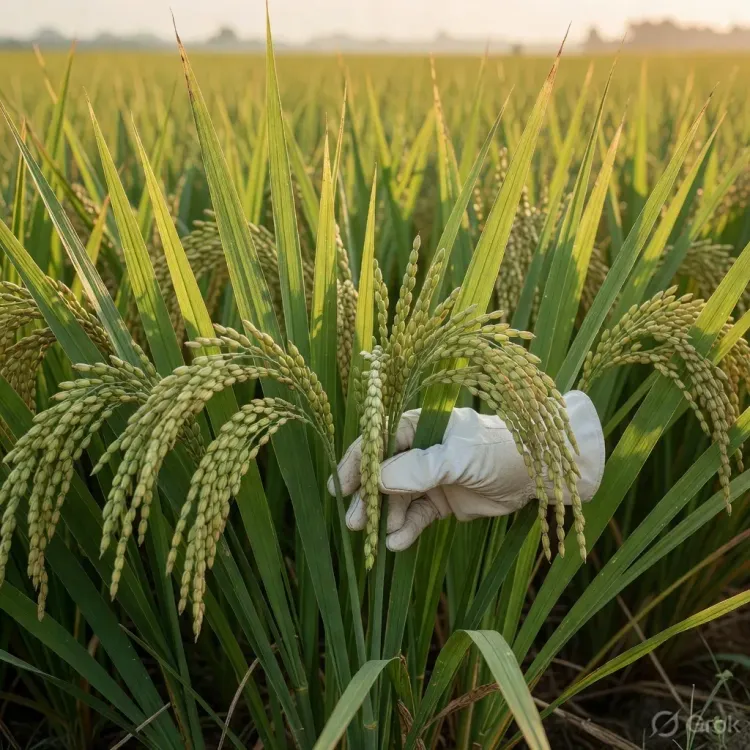
African rice (Oryza glaberrima) and Asian rice (Oryza sativa) are the only two of the 24 species in the Oryza genus that have been domesticated for human consumption. While each species carries distinct agronomic strengths — Asian rice is prized for its high yields and eating quality, while African rice is known for resilience — attempts to cross them have historically produced offspring with sterile pollen and suppressed yields. The research team, led by Wan Jianmin at Nanjing Agricultural University's State Key Laboratory for Crop Genetics and Germplasm Enhancement and Utilisation, has now pinpointed three specific genes that act as the molecular gatekeepers to this cross-species reproduction.Why It Matters
The implications for agricultural productivity are significant. According to one of the study's authors, Asian-African rice crosses 'could potentially increase yields by more than 10 per cent compared with existing Asian hybrid rice varieties.' The official China Science Daily quoted the research as providing 'an important theoretical foundation and valuable genetic resources for breaking the reproductive barrier between rice species and breeding new, ultra-high-yielding hybrid rice varieties.' A 10 per cent yield improvement at scale would represent a meaningful contribution to feeding a global population projected to exceed 10 billion by mid-century.The Competitive Backdrop
China has long positioned itself at the frontier of hybrid rice research, a legacy stretching back to the work of the late agronomist Yuan Longping. The current study extends that tradition into the domain of interspecies hybridisation. Separately, China has been developing so-called 'giant rice' varieties standing nearly 2 metres tall — reportedly approaching their first commercial harvest — underscoring a broader state-backed push to maximise cereal productivity. The new gene-identification work complements rather than competes with these parallel efforts.What's Next
Identifying the three barrier genes is a foundational step, not a finished product. Breeders will now need to develop techniques — likely involving gene editing or targeted marker-assisted selection — to circumvent or suppress these genes in hybrid programmes. The research team has reportedly also identified a possible pathway around the barrier, though specifics of that workaround were not detailed in the published findings. Field trials and regulatory review in multiple jurisdictions would follow before any commercial hybrid seed reaches farmers. The pace at which breeders can translate this genetic map into stable, commercially viable seed lines will determine whether this discovery reshapes rice agriculture within a decade or remains a long-term scientific milestone.Point of View
Shrinking arable land, and rising demand — making a credible path to a 10 per cent yield uplift in the world's most consumed grain genuinely consequential, not merely academic. What mainstream coverage tends to underplay is the geopolitical dimension: China's dominance in hybrid rice intellectual property, if extended to interspecies hybrids, could give Chinese seed companies significant leverage over food-insecure nations in Africa and South Asia that depend on rice imports. The gene-identification step is necessary but not sufficient — the harder race will be who converts this map into proprietary, commercially licensed seed lines first. Regulators in the European Union, India, and across sub-Saharan Africa will also need to weigh in on gene-edited hybrid approval timelines, which could prove the real bottleneck.
NationPress
2 Sept 2026
Frequently Asked Questions
What did Chinese scientists discover about Asian and African rice crossbreeding?
Scientists at Nanjing Agricultural University identified three genes that form a reproductive barrier preventing successful crossbreeding between Asian and African rice . The team, led by Wan Jianmin , also reportedly found a potential way to circumvent this barrier, opening the door to ultra-high-yielding hybrid varieties.
How much could Asian-African hybrid rice increase yields?
According to one of the study's authors, Asian-African rice crosses could potentially increase yields by more than 10 per cent compared with existing Asian hybrid rice varieties. This figure refers to potential gains under successful hybridisation, which still requires further breeding and field validation.
Where was the rice crossbreeding research published?
The research was published in the peer-reviewed journal Science on 28 August 2026 . It was conducted at Nanjing Agricultural University's State Key Laboratory for Crop Genetics and Germplasm Enhancement and Utilisation in China .
Why is it difficult to crossbreed African and Asian rice?
Crossing African rice ( Oryza glaberrima ) and Asian rice ( Oryza sativa ) typically produces offspring with sterile pollen and low yields. The newly identified three genes act as molecular barriers to reproduction between the two species, which have been evolving separately for thousands of years.
What are the food security implications of this rice research?
A verified 10 per cent yield improvement in rice — the world's most widely consumed staple — would have significant implications for global food security, particularly in Asia and Africa . However, translating the gene discovery into commercially available hybrid seed will require additional breeding programmes, field trials, and regulatory approvals across multiple countries.