ICAR develops 386 crop varieties in a year; 94% climate-resilient, says Chouhan
Synopsis
ICAR released 386 improved crop varieties in a single year — 94% of them climate-resilient — alongside India's first indigenous African Swine Fever vaccine and 72 new industry MoUs. With agricultural research alone generating an estimated ₹55,000 crore in value, the 98th Foundation Day signals a sharp pivot toward science-backed, market-linked farming for Viksit Bharat 2047.
Key Takeaways
ICAR developed 386 improved crop varieties across 44 crops in 2025-26; 94% are climate-resilient and 29 are biofortified.
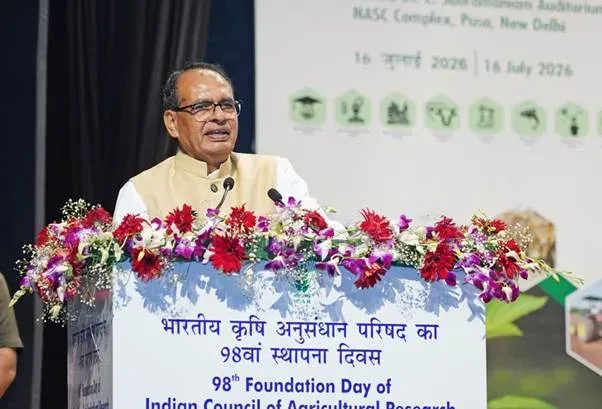
Union Minister Shivraj Singh Chouhan released 43 crop varieties , 17 technologies , and 14 publications at ICAR's 98th Foundation Day on 16 July .
New technologies include India's first indigenous African Swine Fever vaccine , a Digital Swine Disease Atlas , and an affordable cassava harvester for smallholders.
Agricultural research generated an estimated ₹55,000 crore in economic value; total sector gains reached nearly ₹1.70 lakh crore in 2025-26.
72 MoUs signed with 51 industry partners ; technologies reached over five crore farmers through media platforms.
150 daily-wage workers had their services regularised at the Foundation Day event.
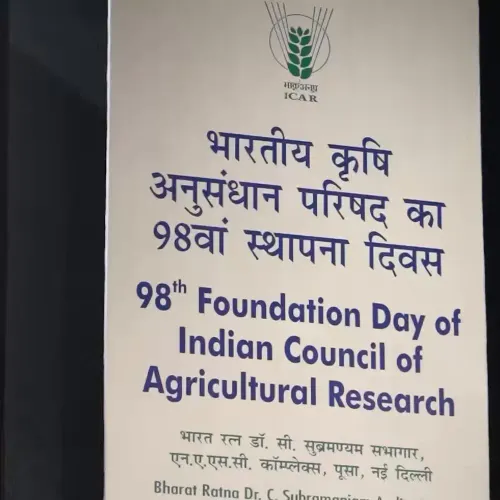
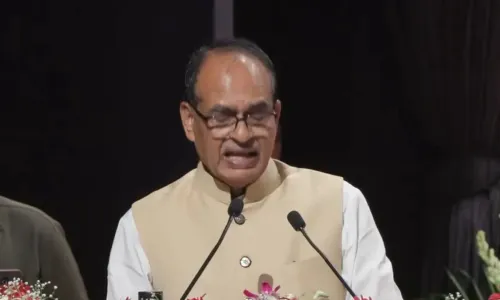
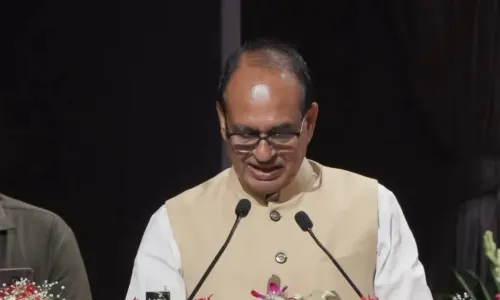
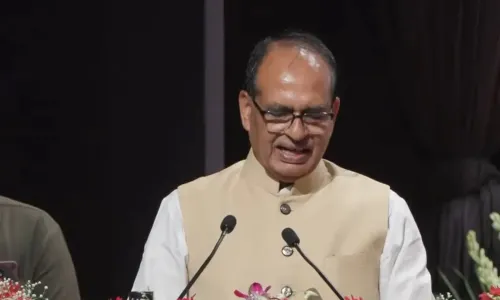
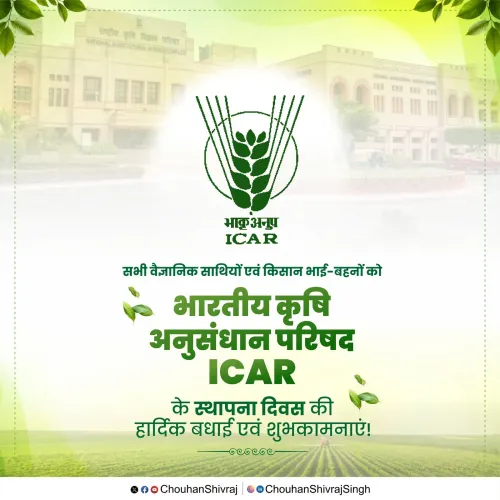
The Indian Council of Agricultural Research (ICAR) developed 386 improved crop varieties across 44 crops in the past year, of which 94 per cent are climate-resilient and 29 are biofortified, Union Agriculture and Farmers Welfare Minister Shivraj Singh Chouhan announced on Thursday, 16 July in New Delhi. The figures were disclosed at ICAR's 98th Foundation Day event, held under the theme Reflecting on 365 Days, Reimagining Agriculture for Viksit Bharat 2047.
What Was Released on Foundation Day
Minister Chouhan released 43 improved crop varieties, 17 advanced agricultural technologies, and 14 publications at the event. Among the new technologies were Basmati rice and climate-resilient rice varieties tolerant to saline and alkaline soils, an export-oriented mango production technology, and India's first indigenous African Swine Fever vaccine. Also unveiled were a Digital Swine Disease Atlas and an affordable cassava harvester designed for smallholder farmers.
In a notable administrative step, 150 temporary daily-wage workers received appointment letters regularising their services at the event.
Technology Reach and Industry Partnerships
72 Memoranda of Understanding (MoUs) were signed with 51 industry partners to accelerate commercialisation and last-mile delivery of ICAR-developed technologies. Separately, 18 international MoUs were signed to strengthen ICAR's global research collaborations. According to ICAR Director General M.L. Jat, scientific technologies reached nearly one crore farmers directly and more than five crore farmers through media and social media platforms during the year.
Economic Value of Agricultural Research
Jat, who also serves as Secretary of the Department of Agricultural Research and Education, stated that increased production across crops, horticulture, livestock, and fisheries generated an additional economic value of nearly ₹1.70 lakh crore during 2025-26. Of this, agricultural research alone contributed an estimated ₹55,000 crore, underscoring the returns on investment in agricultural science.
What the Ministers Said
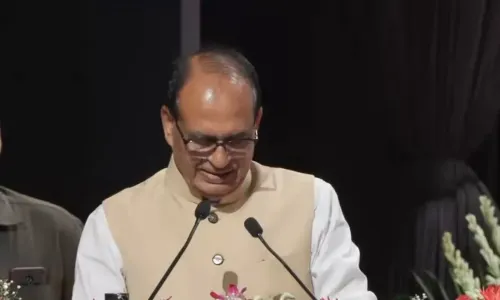
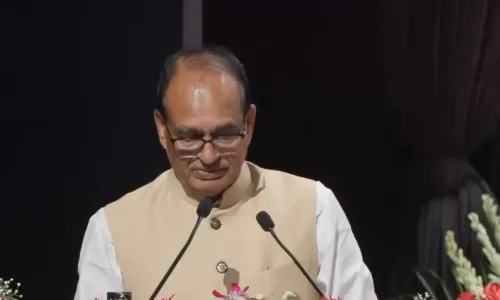
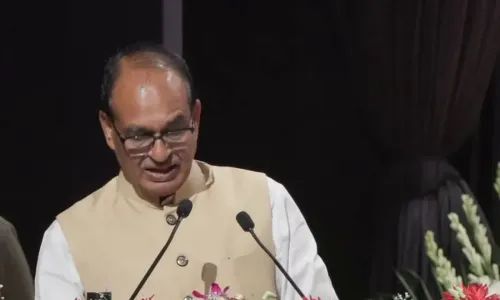
Chouhan described ICAR as the 'trailblazer of India's agricultural transformation', crediting the Council's scientific research and innovations for the country's record achievements in foodgrain, horticulture, milk, and fisheries production. He emphasised climate-resilient agriculture, self-reliance in pulses and oilseeds, quality agricultural education, and wider dissemination of innovations through the Krishi Vigyan Kendra (KVK) network.
Union Minister for Fisheries, Animal Husbandry and Dairying Rajiv Ranjan Singh called for expanding KVK outreach to ensure faster transfer of technologies from laboratories to farmers, livestock keepers, and fishers. He expressed confidence that a new MoU between the Department of Animal Husbandry and Dairying and ICAR would accelerate farmers' prosperity. Ministers of State Ram Nath Thakur and S.P. Singh Baghel were also present, along with Vice-Chancellors of agricultural universities, ICAR institute directors, scientists, and farmer organisation representatives.
Road Ahead for Indian Agriculture
Jat reaffirmed ICAR's commitment to science-driven, demand-led, and sustainable agricultural transformation aligned with the visions of Viksit Bharat and Atmanirbhar Bharat. With biofortified and climate-resilient varieties now forming the backbone of new releases, the Council is positioning itself as a central pillar of India's food security strategy as climate pressures intensify in the coming decades.
Point of View
But the harder question is adoption velocity — how many of these reach farmers' fields within two or three cropping seasons rather than languishing in institute trial plots. The ₹55,000 crore attributed to agricultural research is a model-derived estimate, not a field-verified figure, and such numbers have historically been contested. The 72 industry MoUs are a structural positive, but India's track record on public-private agri-tech transfer remains patchy. The real test of the Viksit Bharat 2047 framing will be whether the KVK network — chronically under-resourced — can actually bridge the lab-to-land gap at scale.
NationPress
15 Oct 2026
Frequently Asked Questions
How many crop varieties did ICAR develop in 2025-26?
ICAR developed 386 improved crop varieties across 44 crops during 2025-26, of which 94 per cent are climate-resilient and 29 are biofortified, according to figures presented at the Council's 98th Foundation Day on 16 July in New Delhi.
What new technologies did ICAR release on its 98th Foundation Day?
ICAR released 17 advanced agricultural technologies, including India's first indigenous African Swine Fever vaccine, a Digital Swine Disease Atlas, climate-resilient and Basmati rice varieties tolerant to saline and alkaline soils, an export-oriented mango production technology, and an affordable cassava harvester for smallholder farmers.
What is the economic contribution of ICAR's agricultural research in 2025-26?
According to ICAR Director General M.L. Jat, agricultural research contributed an estimated ₹55,000 crore in economic value during 2025-26. Increased production across crops, horticulture, livestock, and fisheries collectively generated an additional ₹1.70 lakh crore during the year.
How many farmers did ICAR's technologies reach in 2025-26?
ICAR's scientific technologies reached nearly one crore farmers directly and more than five crore farmers through media and social media platforms during the year, according to Director General M.L. Jat.
What industry partnerships did ICAR announce at its Foundation Day?
ICAR signed 72 MoUs with 51 industry partners to accelerate commercialisation and last-mile delivery of its technologies to farmers. An additional 18 international MoUs were also signed to strengthen global research collaborations.