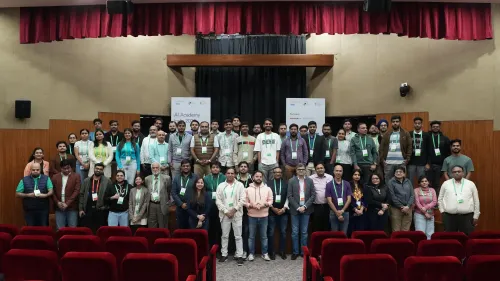
Has IIT Delhi Created an AI Lab Assistant that Conducts Experiments Independently?

Synopsis
IIT Delhi has unveiled AILA, an AI Lab Assistant that autonomously conducts and analyzes experiments, marking a significant leap in scientific research capabilities. This groundbreaking development streamlines research workflows and enhances efficiency, setting a new standard in laboratory practices.
Key Takeaways
AILA autonomously conducts experiments.
Reduces task time from a day to just 7-10 minutes .
Developed in collaboration with international partners .
Enhances research efficiency in laboratories.
Aligns with India’s AI for Science initiative.
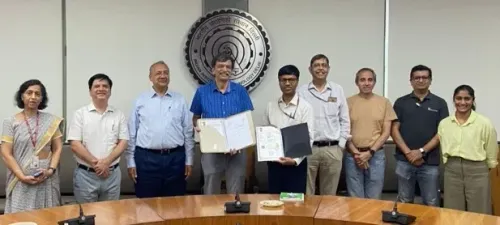
New Delhi, Dec 23 (NationPress) Researchers from the Indian Institute of Technology (IIT) Delhi introduced an Artificial Intelligence Lab Assistant (AILA) on Tuesday. This innovative AI agent is designed to autonomously create scientific experiments and evaluate outcomes without needing human input.
Developed in partnership with collaborators in Denmark and Germany, AILA can efficiently operate an Atomic Force Microscope, make instantaneous decisions, and independently analyze results, achieving tasks in just 7 to 10 minutes that previously took an entire day.
These enhancements have significantly accelerated experimental workflows and improved microscope performance, as stated by IIT Delhi.
Until now, AI tools like ChatGPT mainly functioned as digital aides for drafting documents, responding to inquiries, and analyzing data.
The Institute emphasized that AILA has expanded these functionalities by stepping into real laboratory settings and executing scientific experiments from inception to completion, akin to a human scientist.
“AILA assists me with my daily experimental responsibilities and drastically enhances my research efficiency. Tasks that once took a full day to fine-tune microscope settings for high-resolution, noise-free images can now be completed in just 7-10 minutes,” commented Indrajeet Mandal, a PhD student at the School of Interdisciplinary Research, IIT Delhi.
“Before, AI could merely help document scientific endeavors. Now, it can actively participate in scientific inquiry—designing experiments, running them on actual equipment, gathering data, and interpreting results,” noted Prof. N. M. Anoop Krishnan, from the Civil Engineering and Yardi School of AI at IIT Delhi.
“Operating an Atomic Force Microscope necessitates a profound comprehension of nanoscale physics, surface interactions, and real-time feedback control—expertise that typically requires years of training for researchers,” added Prof. Nitya Nand Gosvami from the Materials Science and Engineering department at IIT Delhi.
AILA's ability to autonomously execute these tasks marks a transformative shift in experimental science, Gosvami noted, highlighting that this breakthrough aligns with India’s ambitious AI for Science initiative.
Additionally, the government has recently launched substantial funding through the Anusandhan National Research Foundation (ANRF) to propel AI-driven research initiatives across the nation.
Point of View
The introduction of AILA by IIT Delhi is a significant advancement in the application of AI in scientific research. This innovative approach not only enhances the efficiency of research processes but also positions India as a leader in integrating technology with science. The support from the government through funding for AI-driven research further emphasizes the nation’s commitment to fostering innovation.
NationPress
1 Oct 2026
Frequently Asked Questions
How does AILA improve research efficiency?
AILA can perform tasks in 7 to 10 minutes that previously required an entire day, thus significantly speeding up experimental processes.
Which institutions collaborated on AILA's development?
AILA was developed in collaboration with partners from Denmark and Germany.
What kind of experiments can AILA conduct?
AILA can operate an Atomic Force Microscope and perform various scientific experiments, making real-time decisions and analyzing results autonomously.
How does AILA contribute to India's AI for Science initiative?
AILA represents a significant advancement in utilizing AI for scientific research, aligning with India's goal to integrate artificial intelligence into various fields.