India-Australia AI ties: why a dedicated pact could unlock Indo-Pacific edge

Synopsis
Australia is building data centres faster than it can fill them; India needs compute capacity it cannot build fast enough. A Lowy Institute analysis argues this is the foundation for a serious bilateral AI pact — one that the July 2026 Modi-Albanese summit gestured toward but did not yet deliver. A dedicated annual AI dialogue, starting with Indic-language benchmarks and ending with compute access deals, could change that.
Key Takeaways
The Lowy Institute argues that Australia's surplus data centre capacity and India's fast-growing AI demand create a natural bilateral opportunity.
Australia's National AI Plan (released December 2025 ) forecasts more than A$100 billion in data centre investment backed by renewable energy.
The Australia-India Partnership on Cyber, Critical Technologies and Supply Chains , launched at the July 2026 Modi-Albanese summit, covers AI within five broader pillars — but lacks a dedicated AI mechanism.
A week before the Melbourne summit, India and Japan issued a standalone AI joint statement covering data centres, compute, and semiconductors — a model the analysis says Australia should replicate.
The most immediately actionable proposal is joint development of multilingual AI benchmarks for Indic languages including Hindi , Tamil , and Bengali .
The Lowy Institute recommends an annual India-Australia AI dialogue with compute access as its long-term strategic goal.
India and Australia are sitting on a structural opportunity that neither country has yet fully formalised: Australia is building data centre capacity faster than its domestic demand can absorb, while India's AI sector is expanding at a pace that outstrips what local infrastructure can support. That complementarity, according to an analysis published by the Lowy Institute, makes a deeper bilateral AI partnership not just desirable but strategically logical.
The Infrastructure Gap That Creates an Opening
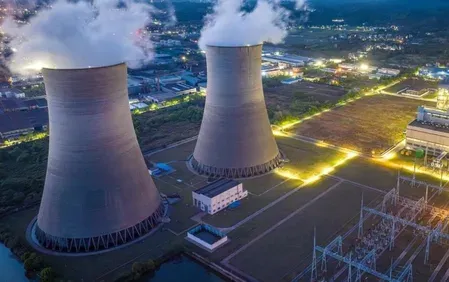
Australia's National AI Plan, released in December 2025, positions the country as the Indo-Pacific's home for trusted digital infrastructure. It points to more than A$100 billion in forecast data centre investment, underpinned by abundant renewable energy resources. Data centres currently draw roughly 2 per cent of Australia's national electricity supply — a figure that remains manageable compared to many peer economies.
Energy ministers in Australia have agreed that new data centres must fund additional renewable generation to cover their consumption. The Lowy Institute analysis notes that underwriting such new generation is financially viable only when backed by long-term contracted demand — demand that a substantial Indian commitment could supply. India, with its fast-accelerating AI adoption and constrained domestic compute capacity, represents precisely that kind of anchor customer.
What the Modi-Albanese Summit Set in Motion
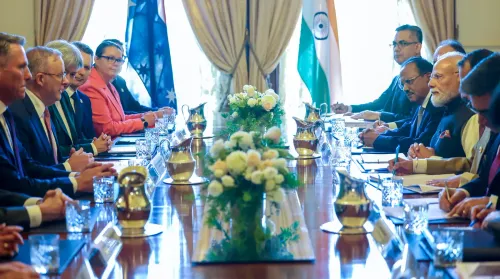
The meeting between Prime Minister Narendra Modi and Australian Prime Minister Anthony Albanese in July 2026 produced the Australia-India Partnership on Cyber, Critical Technologies and Supply Chains — a framework organised across five pillars and overseen at deputy national security adviser level. The partnership is a meaningful step, but the Lowy Institute analysis argues it does not go far enough on AI specifically.
Under the current structure, AI appears as just one of five technologies within those pillars. The article draws a pointed comparison: a week before Modi's Melbourne visit, India and Japan issued a dedicated joint statement covering AI, data centres, compute, and semiconductors. That model of a standalone AI commitment, the analysis suggests, is what an Australia-India agreement should emulate.
Australia as a More Reliable Partner Than the US
The Lowy Institute piece goes further, asserting that Australia presents a more dependable AI partnership option for India than the United States at this juncture. While the analysis does not elaborate at length on the reasons, the broader context — including policy unpredictability in Washington and tightening US export controls on advanced chips — lends weight to that framing. For India, diversifying its AI infrastructure dependencies aligns with its broader strategic posture of multi-alignment.
The Language Benchmark Proposal
Perhaps the most immediately actionable proposal in the Lowy Institute analysis involves multilingual AI benchmarking. AI models are currently evaluated overwhelmingly in English, meaning a model that performs well in English can fail significantly when applied to Hindi, Tamil, Bengali, or other Indic languages. India is well-placed to develop standardised test suites to address this gap.
Shared benchmarks for multilingual and Indic-language models would be technically achievable and useful to both governments, the article notes, and no commercial developer currently has sufficient financial incentive to fund such work independently. This makes it a natural candidate for public bilateral cooperation.
The Case for a Dedicated AI Dialogue
The Lowy Institute recommends carving out an annual India-Australia AI dialogue from the existing critical technology pillar and giving it independent standing. The proposed agenda would begin with the language benchmarks as a first deliverable, before progressing to the more complex negotiation over compute access — which the analysis describes as the framework's eventual strategic purpose.
As both countries navigate a rapidly shifting global AI landscape, the window to institutionalise this partnership on favourable terms may not remain open indefinitely. Whether Canberra and New Delhi move from framework to dedicated mechanism will be a test of whether the July 2026 summit produced durable architecture or diplomatic optics.
Point of View
But the gap between a five-pillar framework and a functioning AI partnership is where bilateral ambitions typically stall. The Japan comparison is instructive: a named, standalone AI commitment signals political priority in a way that a sub-pillar mention simply does not. More telling is the assertion that Australia is a more reliable AI partner for India than the US — a claim that reflects genuine anxiety in New Delhi about the durability of US tech commitments, but one that Canberra will need to back with concrete compute-access offers rather than framework language. The language benchmark proposal is the right starting point precisely because it costs little and delivers visible, measurable output. If the two governments cannot agree on that, the harder conversation about data centre contracts and chip supply chains will not happen either.
NationPress
25 Oct 2026
Frequently Asked Questions
Why do India and Australia need a stronger AI partnership?
India's AI sector is expanding faster than its domestic compute infrastructure can support, while Australia is building data centre capacity that exceeds its current demand. According to a Lowy Institute analysis, this complementarity creates a natural basis for a bilateral AI agreement that benefits both countries.
What did the Modi-Albanese summit in July 2026 produce on technology?
The July 2026 summit between Prime Minister Narendra Modi and Australian Prime Minister Anthony Albanese launched the Australia-India Partnership on Cyber, Critical Technologies and Supply Chains, structured across five pillars and overseen at deputy national security adviser level. The Lowy Institute analysis argues that AI needs a dedicated mechanism within or alongside this framework, similar to the standalone AI joint statement India issued with Japan around the same time.
What is Australia's National AI Plan and what does it promise?
Released in December 2025, Australia's National AI Plan positions the country as the Indo-Pacific's hub for trusted digital infrastructure. It cites more than A$100 billion in forecast data centre investment and commits that new data centres must fund additional renewable generation to cover their energy consumption.
What is the multilingual AI benchmark proposal and why does it matter?
The Lowy Institute analysis proposes that India and Australia jointly develop standardised test suites to evaluate AI model performance in Indic languages such as Hindi, Tamil, and Bengali. Current AI benchmarks are overwhelmingly English-centric, meaning models can perform well in English but fail in these languages. No commercial developer has strong incentive to fund such benchmarks, making it a natural candidate for public bilateral cooperation.
Why does the Lowy Institute consider Australia a more reliable AI partner for India than the US?
The analysis asserts that Australia offers India a more dependable AI partnership than the United States, though it does not elaborate extensively on the reasons. The broader context includes concerns about US policy unpredictability and tightening American export controls on advanced semiconductors, which have complicated India's efforts to diversify its AI infrastructure dependencies.