How Will India Utilize Real-Time Data Analytics to Enhance Disease Surveillance?
Synopsis
India's public health security is taking a leap forward as the NCDC announces plans to harness AI and real-time data analytics for enhanced disease surveillance. This innovative approach aims to predict outbreaks before they escalate, showcasing a shift toward a more proactive health management system.
Key Takeaways
India is utilizing AI and real-time analytics to enhance disease surveillance.
The NCDC aims to predict outbreaks before they escalate.
Collaboration with various ministries and institutions is key to success.
Health Sentinel technology serves as a digital watchdog for health threats.
MSUs are vital for real-time surveillance and rapid response.
New Delhi, Nov 28 (NationPress) In a significant step towards bolstering public health security, India is preparing to harness Artificial Intelligence (AI), real-time data analytics, and digital intelligence platforms to enhance disease surveillance, as indicated by officials from the National Centre for Disease Control (NCDC) on Friday.
This transformative approach aims to markedly improve the nation’s capacity to detect outbreaks before they escalate, facilitating faster decision-making, prompt responses, and proactive containment measures.
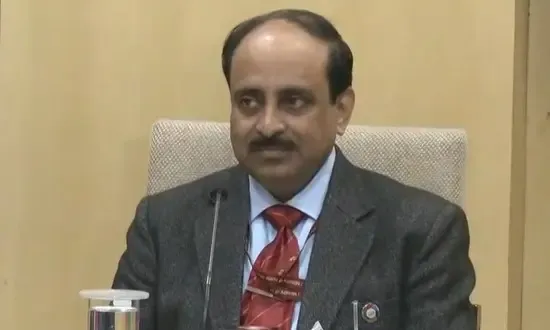
Dr. Ranjan Das, Director of NCDC, shared with IANS, “Our goal is to unify all existing disease reporting systems into a single surveillance framework under the integrated health information portal. We also aspire to transition from a detective system to a predictive one.”
He also highlighted the importance of collaborating with various ministries and institutions for effective disease surveillance.
“We will further leverage technology in partnership with several ministries and scientific institutions nationwide, including ISRO, the Institute of Science in Bangalore, and various IITs,” he added.
Dr. Das noted that this initiative builds on the success of AI-driven event surveillance systems already operational under the Integrated Health Information Platform (IHIP) of the IDSP.
The AI-enabled tool, the Media Scanning and Verification Cell (MSVC), processes millions of online news articles daily in 13 Indian languages, extracting structured health event data such as disease type, location, and scale.
Since 2022, the system has analyzed over 300 million news articles, flagging more than 95,000 unique health-related events — representing a 150% increase in detection capabilities over manual systems and a 98% reduction in the workload for surveillance teams.
This groundbreaking technology, termed Health Sentinel, serves as a “digital watchdog,” automatically identifying unusual surges in diseases like dengue, chikungunya, and other public health threats, which are subsequently verified by experts for accuracy.
“By shifting from reactive to anticipatory methods, the future of disease surveillance in India is now driven by data, intelligence, and predictive analytics,” remarked Dr. Das, alongside Dr. Himanshu Chauhan, Additional Director (Head of the Integrated Disease Surveillance Programme (IDSP)), in a media interaction.
“The transition to predictive surveillance will utilize these robust analytical tools to forecast disease trends and enable interventions even before the first case is identified, marking a significant advancement in India’s preparedness for pandemics,” the officials stated.
Additionally, this transition is bolstered by the newly established Metropolitan Surveillance Units (MSUs) under the PM-Ayushman Bharat Health Infrastructure Mission (PM-ABHIM), which has showcased exceptional real-time surveillance capabilities.
Officials cited a recent event where the MSU Nagpur promptly alerted the Central Surveillance Unit about suspected cases of paediatric Acute Encephalitis Syndrome (AES) in Chhindwara district, Madhya Pradesh. This facilitated swift coordination among stakeholders, leading to an immediate field response by the National Joint Outbreak Response Team (NJORT) in collaboration with ICMR, NIE, and CDSCO.
“This case exemplifies the growing capability of India’s surveillance ecosystem to swiftly identify unusual clinical patterns and initiate early intervention — even amidst complex urban health challenges. It also emphasizes the collaborative approach to surveillance that IDSP and NCDC have adopted and continue to strengthen,” the officials affirmed.
Point of View
The integration of advanced technologies like AI in public health surveillance reflects a commendable step towards proactive health management. The initiatives led by the NCDC position India at the forefront of modern health monitoring, ensuring preparedness against potential outbreaks while fostering collaboration across various sectors. This strategic approach is vital for enhancing national health security and safeguarding the community's well-being.
NationPress
21 Oct 2026
Frequently Asked Questions
What is the role of the National Centre for Disease Control (NCDC)?
The NCDC is responsible for coordinating disease surveillance and control efforts in India, ensuring timely detection and response to health threats.
How will AI improve disease surveillance in India?
AI will enhance disease surveillance by providing predictive analytics to identify potential outbreaks before they occur, allowing for faster interventions.
What are Metropolitan Surveillance Units (MSUs)?
MSUs are newly established units under the PM-Ayushman Bharat Health Infrastructure Mission that focus on real-time disease monitoring and response.
How does the Media Scanning and Verification Cell (MSVC) work?
The MSVC scans millions of news reports daily in multiple languages to extract and analyze health event data, significantly improving detection capabilities.
What is the significance of predictive surveillance?
Predictive surveillance allows health authorities to forecast disease trends and implement interventions proactively, enhancing overall public health preparedness.