Indian Government Eases Rice Export Inspection Rules to Europe
Synopsis
In a significant move, the Indian government has relaxed inspection rules for rice exports to various European nations, aiming to boost shipments amidst rising global demand. This six-month exemption from mandatory certificates highlights India's growing role in addressing international food needs.
Key Takeaways
The government has relaxed inspection norms for rice exports to several European countries.
This exemption will last for six months.
Exports reached $12.95 billion in 2024-25.
India is strengthening its role in global food security.
The FCI has signed a key agreement with the WFP for rice supply.
New Delhi, April 10 (NationPress) The government has permitted the export of basmati and non-basmati rice to select European nations without the essential inspection certificate for a duration of six months, as specified in an official announcement made on Friday.
The inspection certificate requirement, issued by the export inspection agency, will remain applicable solely to member states of the European Union, along with the United Kingdom, Iceland, Liechtenstein, Norway, and Switzerland. All other European nations are exempt from this obligation for the specified six-month timeframe, according to the notification.
This initiative aims to streamline rice exports in light of the increasing global demand for Indian rice.
Previously, the government reported that rice exports reached an impressive $12.95 billion in the fiscal year 2024-25, while exports of pulses and millets accounted for $855 million and $59.20 million, respectively.
These statistics underscore the escalating international demand for diverse and climate-resilient cereal crops, further cementing India’s pivotal role in global food and nutrition security.
Commerce and Industry Minister Piyush Goyal had remarked earlier that rice exports have surged by 62 percent from 2014 to 2025.
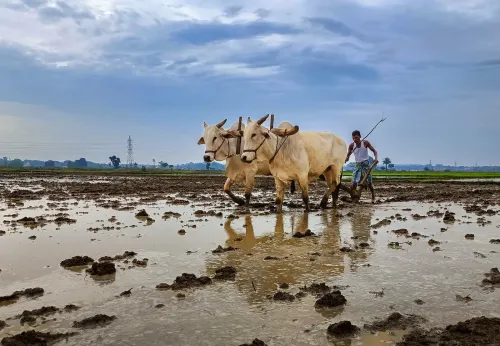
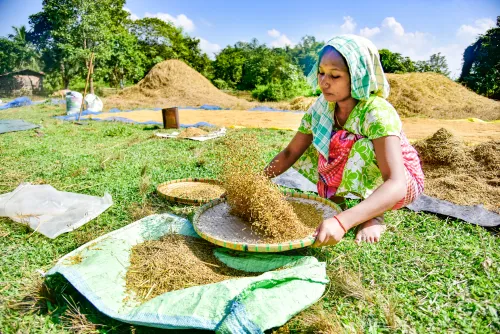
Rice cultivation in India is primarily concentrated in regions such as Uttar Pradesh, Telangana, and West Bengal. Meanwhile, Uttar Pradesh, Madhya Pradesh, and Punjab are notable for their wheat production.
Earlier this February, the Food Corporation of India (FCI) and the World Food Programme (WFP) entered into a Memorandum of Understanding (MoU) for the provision of rice to support global humanitarian operations aimed at alleviating hunger. Under this agreement, FCI will supply 200,000 metric tonnes of rice (up to 25 percent broken) to the WFP.
This agreement is set to last for five years from the signing date and may be extended upon mutual agreement. The pricing will be negotiated annually, with the initial price set at Rs 2,800 per quintal until March 31, 2026.
Point of View
India aims to meet the increasing international demand while supporting local farmers.
NationPress
24 Oct 2026
Frequently Asked Questions
What rice types are affected by the new export rules?
Both basmati and non-basmati rice are included in the new export rules allowing shipment without mandatory inspection certificates.
How long will the exemption from inspection certificates last?
The exemption will be in place for a period of six months.
Which countries still require inspection certificates?
The requirement will still apply to EU member states, the UK, Iceland, Liechtenstein, Norway, and Switzerland.
What is the expected impact on rice exports?
The move is expected to facilitate an increase in rice exports amidst rising global demand.
What recent agreements has India made regarding rice supply?
India has signed an MoU with the WFP to supply 200,000 metric tonnes of rice for humanitarian operations.