India energy supply secure despite West Asia tensions, crude stocks at 60 days
Synopsis
Despite US-Iran military strikes and a sharp slowdown in Strait of Hormuz shipping, India's 60-day crude buffer and pre-secured August supplies have kept immediate energy security intact — but a $10–$15 per barrel risk premium on Brent crude means higher import bills are coming for September and October.
Key Takeaways
India holds crude oil stocks for 60 days , LNG inventories for 60 days , and LPG stocks for 45 days , according to Minister Hardeep Singh Puri .
Crude supplies for August and LPG imports are already secured, insulating India from near-term disruption.
Brent crude rose more than 4% to around $80 per barrel on Monday following the latest West Asia escalation.
Experts warn of a risk premium of $10–$15 per barrel , potentially pushing Brent to the $80–$85 range, raising procurement costs for September–October .
Shipping through the Strait of Hormuz was severely disrupted after the US and Iran exchanged military strikes on Sunday, 13 July .
LNG supplies are the most vulnerable segment if the disruption persists, though experts describe the risk as manageable for now.
India is unlikely to face any immediate energy supply disruptions despite fresh geopolitical tensions escalating in West Asia, as the country holds adequate crude inventories and has diversified its import sources, according to industry experts and reports. New Delhi has already secured crude oil supplies for August and tied up liquefied petroleum gas (LPG) imports, insulating the country from near-term shocks.
India's Current Energy Buffer
Union Petroleum and Natural Gas Minister Hardeep Singh Puri has confirmed that India holds crude oil stocks sufficient for approximately 60 days, LNG inventories for 60 days, and LPG stocks for 45 days. Officials have indicated there are no immediate plans to reverse the easing of restrictions on LPG and natural gas supplies to industrial users, despite the latest escalation.
Experts noted that the global oil market is better positioned to absorb supply shocks than during the earlier phase of the conflict, supported by higher production from non-OPEC producers and India's sustained efforts to diversify its crude import sources away from a single region.
What the Escalation Means for Oil Prices
The renewed tensions are expected to push up crude oil procurement costs for September and October, according to experts. Brent crude rose more than 4% to around $80 per barrel on Monday as markets reacted to the latest developments. Analysts warn the disruption could add a risk premium of $10–$15 per barrel, potentially pushing Brent into the $80–$85 per barrel range.
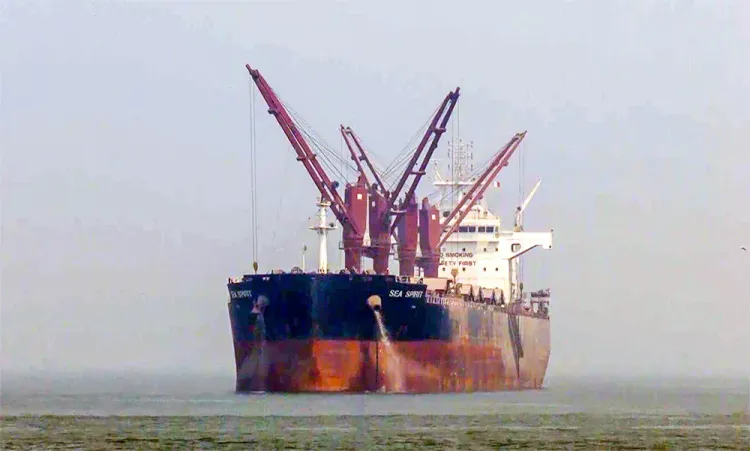
Shipping through the Strait of Hormuz remained severely disrupted on Sunday, with vessel traffic slowing sharply following the latest escalation. The Strait is a critical chokepoint for global energy flows, and any prolonged disruption could have cascading effects on Asian importers.
The Trigger: US-Iran Military Exchange
The latest escalation came after the United States and Iran exchanged fresh military strikes on Sunday, 13 July, following Tehran's attack on a vessel transiting the Strait of Hormuz. The exchange has further clouded prospects for a diplomatic resolution and raised broader concerns over global energy supply chains.
This is not the first time the Strait has come under threat during the ongoing West Asia conflict. However, experts argue that India's diversification strategy — which has expanded procurement from Russia, the Americas, and Africa in recent years — provides a meaningful cushion against a single-corridor disruption.
LNG: The One Area to Watch
While crude and LPG supplies appear secured in the near term, experts flagged liquefied natural gas (LNG) as the segment most vulnerable if the disruption persists. LNG shipments routed through the Strait of Hormuz are harder to reroute than crude, given the limited number of liquefaction terminals globally. However, experts described the risk as 'manageable' at current disruption levels.
What Comes Next
India's energy security calculus will depend on how long the Strait of Hormuz disruption continues and whether diplomatic channels between Washington and Tehran can be revived. In the interim, the government's buffer stocks and diversified sourcing are expected to prevent any supply crunch through at least the third quarter of 2025. Markets and policymakers will be watching Brent crude closely for signals on how much of the geopolitical risk premium holds.
Point of View
But the real stress test begins if the Strait of Hormuz disruption extends beyond four to six weeks — a scenario that would strain LNG procurement well before crude reserves are touched. The $10–$15 risk premium analysts are flagging is not just an energy story; it is an inflation and current account story. India's import bill sensitivity to every $10 move in Brent is well-documented, and a sustained $85 per barrel environment would complicate the Reserve Bank of India's rate trajectory. The government's decision not to reverse industrial gas supply easing is a confidence signal, but it is one that will need revisiting quickly if Brent breaks and holds above $90.
NationPress
13 Jul 2026
Frequently Asked Questions
Is India facing an energy shortage due to West Asia tensions?
No. India is not facing an immediate energy shortage. The country has crude oil stocks for about 60 days, LNG inventories for 60 days, and LPG stocks for 45 days, and has already secured crude supplies for August.
How have the US-Iran military strikes affected oil prices?
Brent crude rose more than 4% to around $80 per barrel on Monday following the exchange of military strikes between the US and Iran on 13 July. Experts say the disruption could add a risk premium of $10–$15 per barrel, pushing Brent toward $80–$85.
What is the Strait of Hormuz and why does it matter for India?
The Strait of Hormuz is a critical maritime chokepoint through which a significant share of global oil and LNG shipments pass. Disruptions there directly affect shipping timelines and procurement costs for major importers like India.
Which energy segment is most at risk for India?
Experts have identified LNG as the most vulnerable segment if the Strait of Hormuz disruption persists, as LNG shipments are harder to reroute than crude. However, the risk is currently described as manageable.
Will India raise fuel or gas prices due to the geopolitical tensions?
Officials have stated there are no immediate plans to reverse the easing of restrictions on LPG and natural gas supplies to industrial users. However, higher crude procurement costs for September and October could eventually feed through to pricing decisions if Brent remains elevated.