JD.com launches AI smart helmet for food delivery riders
Synopsis
JD.com has launched an AI-powered smart helmet for food couriers featuring a voice assistant and environment-sensing camera — the latest salvo in a three-way race with Alibaba and Meituan to embed AI into China's last-mile delivery workforce.
Key Takeaways
JD.com announced an AI smart helmet for food delivery couriers on Monday, 3 August 2026 .
The helmet combines an AI-driven voice assistant with an onboard camera that can perceive the surrounding environment.
Couriers can manage orders, contact customers, and receive navigation prompts entirely via voice, keeping hands free in poor weather.
Turn-by-turn routing is based on established paths used by experienced riders, aiding newer workers in unfamiliar areas.
The camera can automatically flag hygiene issues at restaurant pick-up points and read contactless delivery instructions.
Rivals Alibaba Group Holding and Meituan have already rolled out comparable AI helmet solutions for their own rider networks.
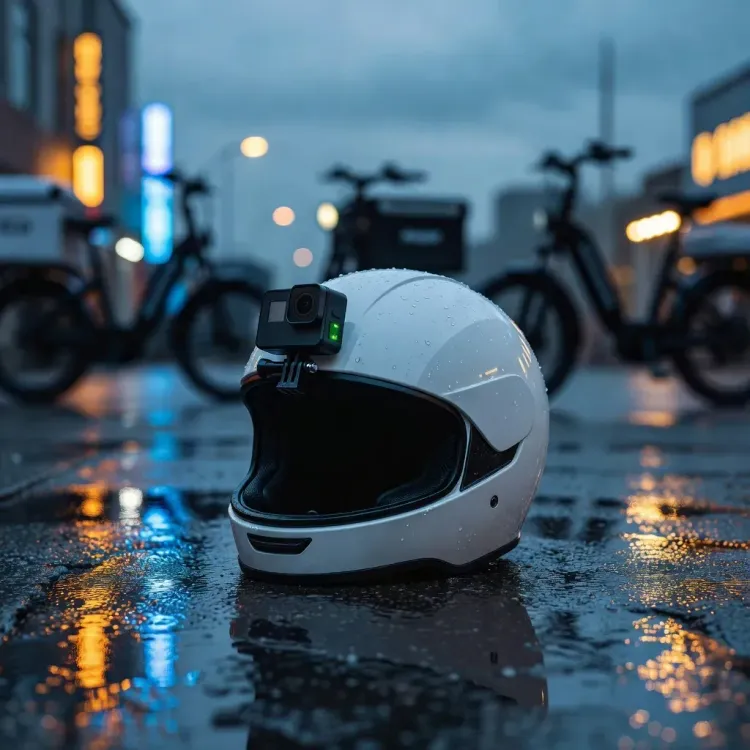
JD.com has unveiled an AI-powered smart helmet for food delivery couriers, joining rivals Alibaba Group Holding and Meituan in a race to embed artificial intelligence into last-mile logistics. The device, announced on Monday, 3 August 2026, integrates a voice assistant and an onboard camera designed to improve rider safety and delivery efficiency across China.
What the helmet does
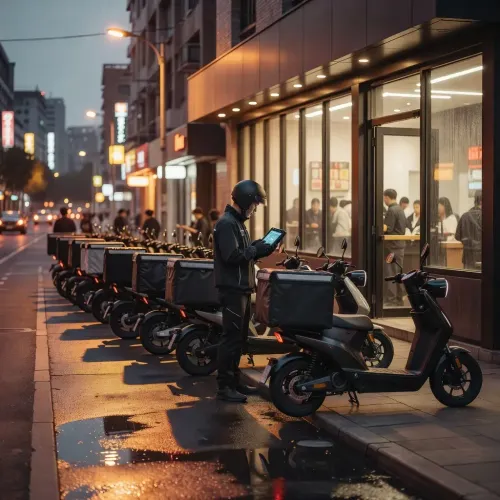
The smart helmet, developed by JD.com's food delivery unit, pairs an AI-driven voice assistant with a camera capable of perceiving the surrounding environment in real time. According to the company, the device allows couriers to manage new orders, communicate with customers, and complete essential tasks entirely through voice commands — eliminating the need to handle a smartphone while riding.
The core use case targets adverse weather conditions, where delivery riders on electric bikes frequently struggle with wet hands or reduced visibility. Rather than stopping to interact with a screen during heavy rain, couriers can keep both hands on the handlebars and rely on spoken prompts.
Navigation and route intelligence
Beyond standard map integration, the helmet delivers turn-by-turn voice navigation derived from established routes used by experienced riders. The company said this feature is specifically aimed at newer workers navigating unfamiliar delivery zones, helping them avoid delays and match the efficiency of veteran couriers.
The system effectively encodes institutional knowledge — the preferred shortcuts and building-entry points known to seasoned riders — and makes it accessible to the entire workforce on day one.
Automated hygiene and order checks
The helmet's camera also supports quality assurance at the point of collection. According to the company, the device can automatically read customer delivery instructions, including contactless drop-off requests, and flag potential hygiene issues at restaurant pick-up points. This positions the hardware as a compliance tool as much as a navigation aid.
The competitive backdrop
Alibaba Group Holding and Meituan — JD.com's two principal competitors in China's intensely contested food delivery market — have already rolled out comparable AI-assisted wearable solutions for their rider networks. The parallel launches signal that smart hardware for gig-economy workers is rapidly becoming a baseline expectation rather than a differentiator in the sector.
The broader trend reflects a shift in how Chinese tech platforms are deploying AI: moving beyond consumer-facing chatbots and recommendation engines into physical, safety-critical tools embedded in the daily workflow of millions of frontline workers.
What's next
As all three platforms scale their AI helmet programmes, attention will turn to adoption rates among riders, measurable reductions in accident frequency, and whether the technology delivers the efficiency gains companies are projecting. Regulators overseeing road safety and gig-worker conditions in China are also likely to take a close interest in how these devices perform in the field.
Point of View
Alibaba, and Meituan illustrates how China's platform economy is entering a second-order AI deployment phase — moving from software intelligence to embedded hardware in physical labour workflows. What mainstream coverage underplays is the data angle: each helmet-mounted camera generates a continuous stream of street-level, restaurant-condition, and rider-behaviour data that feeds back into platform logistics models, creating a compounding operational advantage. The hygiene-flagging feature also quietly shifts liability for food safety compliance toward the platform's own AI system rather than the individual rider. As gig-worker regulations tighten across major economies, the company that can demonstrate measurable safety improvements through hardware will hold a significant regulatory and reputational edge.
NationPress
17 Sept 2026
Frequently Asked Questions
What is the JD.com AI smart helmet for food delivery?
The JD.com AI smart helmet is a wearable device for food couriers that integrates an AI-driven voice assistant and an environment-sensing camera. It allows riders to manage orders, navigate routes, and communicate with customers via voice commands, without needing to touch a smartphone. The company announced it on 3 August 2026 .
Why did JD.com launch an AI helmet for delivery riders?
According to the company, the helmet was designed to reduce distractions and improve safety for couriers riding electric bikes in poor weather conditions, where using a smartphone is difficult or dangerous. It also aims to improve delivery efficiency by giving newer riders access to navigation routes established by experienced couriers.
Are Alibaba and Meituan also using AI helmets for riders?
Yes. Alibaba Group Holding and Meituan had already rolled out similar AI-assisted helmet solutions for their delivery rider networks before JD.com 's announcement, making smart wearables a competitive battleground in China 's food delivery sector.
What safety and quality features does the JD.com AI helmet include?
Beyond voice navigation, the helmet's camera can automatically read customer delivery instructions such as contactless drop-off requests and flag potential hygiene issues at restaurant pick-up points. These features position the device as both a rider safety tool and a food quality compliance instrument.
How does the AI helmet help new delivery riders?
The helmet provides turn-by-turn voice navigation based on routes established by experienced riders, helping newer couriers navigate unfamiliar areas more efficiently. According to the company, this effectively transfers institutional knowledge — such as building shortcuts — to the entire workforce from day one.